One. Course Details
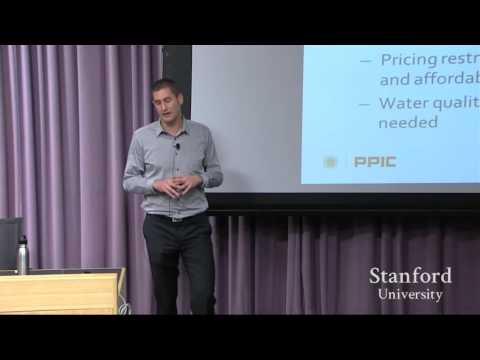
This is a guest lecture for EE292H Engineering and Climate Change at Stanford University, delivered by a senior researcher from the Public Policy Institute of California (PPIC), a leading nonpartisan, nonprofit research organization. Drawing on decades of expertise in water economics, policy, and the water-energy nexus, the speaker provides a comprehensive analysis of California’s complex water challenges, the interconnectedness of water and energy systems, and emerging entrepreneurial opportunities in the cleantech space. The lecture combines rigorous data analysis with real-world policy insights and addresses pressing questions about drought resilience, groundwater management, and equitable water access.
The lecture covers:
-
The unique geographic and climatic challenges of California’s water system
-
The causes and impacts of the 2012–2015 historic drought
-
Sustainable Groundwater Management Act (SGMA): California’s landmark groundwater reform
-
The dual nature of water as both a public good and an economic commodity
-
The water-energy nexus: How water and energy systems are inextricably linked
-
Climate change impacts on California’s water supply and demand
-
Behavioral economics and innovative approaches to water conservation
-
Promising entrepreneurship opportunities in water technology and policy
-
An open Q&A addressing water rights, desalination, and infrastructure investment
Two. Key Learning Takeaways
-
California’s water system is defined by extreme temporal and spatial variability: 70% of runoff occurs north of the Sacramento-San Joaquin Delta, while 70% of demand lies south of the Delta.
-
Agriculture accounts for 40% of California’s total water use, while urban use makes up only 10%, though per capita urban consumption is 2–3 times higher than in most European countries.
-
Groundwater has historically served as California’s drought buffer, but decades of chronic overdraft have caused severe land subsidence and aquifer depletion.
-
19% of all electricity and 30% of all natural gas consumed in California is used to extract, move, treat, and heat water, making water management a critical component of energy policy.
-
The State Water Project is the single largest consumer of electricity in California, using up to 3% of the state’s total annual electricity to pump water over the Tehachapi Mountains.
-
Climate change will reduce Sierra Nevada snowpack—California’s "natural reservoir"—and increase the frequency and severity of droughts and floods.
-
Social norm-based interventions are among the most cost-effective water conservation strategies, reducing household consumption by 5% or more with minimal investment.
-
The biggest opportunities in water entrepreneurship lie in combining technology with behavioral economics, data analytics, and market-based solutions.
Three. Course Gold Quotes
-
"Water is both a public good and an economic commodity. We cannot ignore either aspect if we want to build a sustainable water future."
-
"The Delta is the heart of California’s water system—and it is a precarious supply hub, with levees below sea level, endangered species, and a fragile ecosystem all competing for the same water."
-
"Groundwater is our insurance policy against drought, but we have been cashing in that policy for decades without ever paying the premiums."
-
"There is little or no correlation between general awareness of water conservation issues and actual household consumption. People say they care, but their water bills tell a different story."
-
"The water-energy nexus is the hidden link in climate policy. Saving water saves energy, and saving energy saves water."
-
"We don’t have a water shortage in California—we have a water management shortage. We have the technology and the knowledge to fix this; we just need the political will."
-
"The best entrepreneurs in the water space don’t just build better gadgets—they understand how people behave and how institutions work."
Four. Layered Learning Notes
Module 1: The California Water System: A Triumph of Engineering and a Study in Fragility
-
California’s Mediterranean climate creates extreme variability in precipitation: years are either wet or dry, with almost no "normal" years, and multi-year droughts are common.
-
To address this variability, California built one of the most extensive water infrastructure systems in the world over the past century, including:
-
Over 1,400 dams and reservoirs with a total storage capacity of 43 million acre-feet
-
Thousands of miles of canals and aqueducts, including the State Water Project and the federal Central Valley Project
-
Local systems like San Francisco’s Hetch Hetchy Aqueduct, which delivers water from Yosemite National Park
-
-
The Sacramento-San Joaquin Delta is the critical hub of this system, where water from northern rivers is diverted to southern California and the Central Valley.
-
The Delta faces multiple existential threats:
-
Land subsidence: Much of the Delta is below sea level due to decades of groundwater pumping and organic soil oxidation
-
Levee failure: A major earthquake could cause catastrophic levee breaches, cutting off water supplies to 25 million people
-
Ecosystem collapse: Native fish species like the Delta smelt are on the brink of extinction due to habitat loss and water diversions
-
Module 2: The 2012–2015 Drought: Impacts and Lessons Learned
-
The four-year drought was one of the most severe in California’s recorded history, with 2014 being the warmest year on record at the time.
-
Surface water supplies plummeted, forcing water managers to rely heavily on groundwater, which increased overdraft in already stressed basins like the Tulare Basin.
-
Agricultural impacts:
-
Farmers fallowed approximately 430,000 acres of land, mostly low-value field crops
-
High-value permanent crops like almonds and pistachios were prioritized due to their profitability
-
Total farm revenue remained relatively stable due to rising crop prices and technological improvements, though some rural communities suffered severe economic hardship
-
-
Urban impacts:
-
Most cities avoided severe shortages due to investments in conservation and infrastructure made after the 1987–1992 drought
-
The state implemented mandatory 25% urban water conservation targets in 2015
-
Small, rural communities were hit hardest, with hundreds of households losing access to safe drinking water
-
-
Policy outcomes:
-
The Sustainable Groundwater Management Act (SGMA) was passed in 2014, requiring local groundwater agencies to achieve basin sustainability by 2040
-
Increased investment in recycled water, stormwater capture, and other alternative water supplies
-
Module 3: Water Economics: Balancing Public Good and Market Efficiency
-
Water is a unique resource that exhibits characteristics of both a public good (non-excludable, essential for life) and a private commodity (has economic value in competing uses).
-
The Dublin Statement on Water and Sustainable Development (1992) recognizes this dual nature, stating that "water has an economic value in all its competing uses and should be recognized as an economic good."
-
Key economic principles for water management:
-
Efficient allocation: Water should be allocated to its highest-value uses
-
Marginal cost pricing: Water rates should reflect the true cost of providing service, including infrastructure, treatment, and environmental costs
-
Water markets: Allowing voluntary water transfers can improve efficiency by moving water from lower-value to higher-value uses
-
-
Behavioral economics is playing an increasingly important role in water conservation:
-
Traditional approaches like price increases and public awareness campaigns have limited effectiveness
-
Social norm-based feedback (comparing a household’s water use to that of similar neighbors) has proven highly effective
-
Smart meters and real-time usage data can empower consumers to make more informed decisions
-
Module 4: The Water-Energy Nexus: The Hidden Connection
-
The water and energy sectors are deeply interdependent:
-
Energy for water: Extracting, pumping, treating, distributing, and heating water requires enormous amounts of energy
-
Water for energy: Thermoelectric power plants use water for cooling, and hydropower is a major source of renewable electricity
-
-
In California:
-
19% of all electricity and 30% of all natural gas is used for water-related purposes
-
Residential water heating alone accounts for 2% of the state’s total greenhouse gas emissions
-
The State Water Project is the largest single electricity consumer in California
-
-
The drought reduced hydropower generation by 50% in 2015, forcing the state to rely more heavily on natural gas-fired power plants, which increased greenhouse gas emissions.
-
Opportunities for synergy:
-
Water conservation reduces energy demand and greenhouse gas emissions
-
Wastewater treatment plants can generate biogas from sewage sludge to produce electricity
-
Solar-powered desalination and water treatment can reduce the carbon footprint of alternative water supplies
-
Module 5: Global Change and Future Water Challenges
-
Climate change will exacerbate California’s water challenges through multiple pathways:
-
Rising temperatures: Increase evapotranspiration, reduce snowpack, and shift precipitation from snow to rain
-
More extreme weather: Increase the frequency and severity of both droughts and floods
-
Sea level rise: Threaten coastal infrastructure and contaminate groundwater aquifers with saltwater
-
-
Population growth and land use change will also increase water demand:
-
California’s population is projected to reach 50 million by 2050
-
Urbanization will displace agricultural land in the Central Valley, though total agricultural water use is expected to remain relatively stable
-
-
Ecosystem impacts:
-
Freshwater fish species are already in steep decline, with 83% of native species at risk of extinction by 2100
-
Wetland loss will reduce habitat for migratory birds and other wildlife
-
-
The most effective adaptation strategies will combine:
-
Increased conservation and efficiency
-
Investment in alternative water supplies (recycled water, stormwater capture, desalination)
-
Improved groundwater management
-
Ecosystem restoration
-
Module 6: Entrepreneurship and Innovation in the Water Sector
-
The water sector is ripe for innovation, with billions of dollars in market opportunities in technology, data analytics, and services.
-
Promising business models and technologies:
-
Behavioral analytics platforms: Companies like WaterSmart use social norms and personalized feedback to reduce water consumption
-
Smart water meters and leak detection: Advanced sensors and analytics can identify leaks in real time, reducing non-revenue water
-
Water market platforms: Online marketplaces that facilitate water transfers between buyers and sellers
-
Smart irrigation controllers: Weather-based controllers that automatically adjust watering schedules based on local conditions
-
Low-cost desalination and water treatment: New technologies that reduce the energy cost and environmental impact of desalination
-
-
Key challenges for water startups:
-
Long sales cycles and conservative customer bases (water utilities)
-
Regulatory complexity and fragmented governance
-
Capital intensity of infrastructure projects
-
-
The most successful water entrepreneurs combine technical expertise with a deep understanding of policy, economics, and human behavior.
Wishing you all the curiosity to explore the hidden complexities of our water systems and the creativity to develop solutions that are both technically sound and socially equitable. Water is the foundation of all life, and the challenges we face in managing it are among the most important of our time. Whether you become an engineer, a policy maker, an entrepreneur, or simply an informed citizen, your voice and your actions can make a real difference in building a water-secure future for California and beyond. Keep asking questions, challenging the status quo, and never forget that every drop counts.