One. Course Details
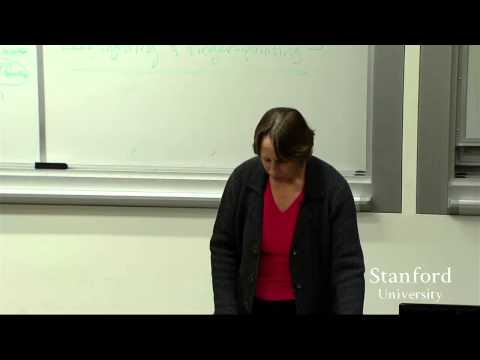
This is a guest lecture for EE292H Engineering and Climate Change at Stanford University, delivered by a 35-year veteran of the building industry and leading expert in sustainable construction. The speaker chaired the development of the U.S. Green Building Council’s LEED for Homes program and is the author of Energy Free Homes for a Small Planet, a definitive guide to zero net energy (ZNE) residential design.
The lecture debunks common myths about green building costs, explains why cultural and procedural barriers—not technology—are the biggest obstacles to industry transformation, and details California’s landmark policy goals to mandate ZNE for all new homes by 2020 and commercial buildings by 2030. It concludes with an extensive Q&A session addressing student questions about policy, utility incentives, affordable housing, and urban design.
Key related resources:
-
2014 World Sustainable Building Conference (Barcelona)
-
LEED for Neighborhood Development rating system
-
California Title 24 energy code updates
Two. Key Learning Takeaways
-
Buildings account for nearly 40% of global carbon emissions, making the construction industry the single largest contributor to climate change.
-
Green building does not cost more when performance goals are integrated into the initial design process—cost premiums only occur when sustainability is treated as an afterthought.
-
The traditional design-bid-build delivery model is fundamentally broken for high-performance projects, creating silos, rework, and missed optimization opportunities.
-
Integrated Project Delivery (IPD)—bringing all stakeholders together early in the design process—dramatically improves communication, reduces costs, and delivers better building performance.
-
As building enclosures become more efficient, occupant plug loads grow to dominate residential energy use, rising from 17% in conventional homes to over 50% in high-performance ZNE homes.
-
Land use and urban design have a greater environmental impact than individual building performance, with sprawl driving transportation emissions, water pollution, and public health crises.
-
Education is the most powerful tool for transforming the construction industry, as it changes culture and equips practitioners with the skills to build differently.
Three. Course Gold Quotes
-
"Sustainable building is not an adjective describing a building—it’s a compass direction we’re heading toward."
-
"Green building doesn’t cost more. It costs more only if you treat it as an afterthought and slap it on a conventional design."
-
"Education is not only a transmission of culture but also a provider of alternative views of the world and a strengthener of the will to explore them." – Jerome Bruner
-
"Our biggest challenges aren’t technological—they’re cultural and procedural. We know how to build zero net energy homes today. We just don’t do it consistently."
-
"Measure twice, cut once. My version: design thrice, measure twice, cut once. Get it right in the design phase, and you’ll avoid endless headaches later."
-
"Land use trumps everything when it comes to environmental impact. A well-designed compact city will always outperform even the greenest suburban sprawl."
-
"The secret to success in any team project is individual commitment to a group effort. That’s what makes high-performance buildings possible."
Four. Layered Learning Notes
Module 1: The Construction Industry’s Climate Crisis
-
The building industry is notoriously resistant to change, relying on outdated rules of thumb and sequential workflows that prioritize speed over performance.
-
A conventional home typically uses a 4-ton air conditioning system, but a well-designed high-performance home with a tight thermal enclosure can achieve the same comfort with a 1-ton system—reducing equipment costs and energy use by 75%.
-
Most performance failures in green buildings stem from poor installation and coordination, not flawed technology.
-
The speaker argues that education is the only sustainable way to drive industry transformation, as it changes how practitioners think about and approach their work.
Module 2: Debunking the Green Building Cost Myth
-
The pervasive belief that high-performance buildings cost more is based on flawed studies that assume sustainability is added to a conventional design rather than integrated from the start.
-
When ZNE is a core project objective from day one, designers can reallocate budget from oversized mechanical systems to better insulation, air sealing, and windows—resulting in no net cost increase.
-
Production builders have successfully delivered ZNE homes at the same price as conventional homes by optimizing design and construction processes.
-
High-performance homes also command higher resale values and lower operating costs, providing a better long-term return on investment for homeowners.
Module 3: Integrated Project Delivery (IPD) vs. Traditional Design-Bid-Build
-
The traditional sequential handoff model creates silos: architects design without input from engineers, engineers design without input from contractors, and contractors fix mistakes with expensive change orders.
-
Common understanding peaks at the end of a traditional project, when it is least useful. In IPD, common understanding peaks early, when design decisions have the greatest impact.
-
IPD improves:
-
Labor efficiency and material utilization
-
Communication and collaboration
-
Team dynamics and worker satisfaction
-
Problem-solving and conflict resolution
-
Overall project quality and performance
-
-
The IPD concept was originally developed by construction attorneys who observed that most project disputes stemmed from poor early communication.
Module 4: Occupant Behavior and Plug Load Challenges
-
As building envelopes become more efficient, the energy used by electronics, appliances, and other plug-in devices becomes the dominant source of residential energy consumption.
-
A study of 10 identical ZNE homes found a 3x difference in energy use between the highest and lowest consuming households, driven entirely by occupant behavior.
-
Designers must move beyond "occupant-neutral" design and create buildings that are flexible enough to accommodate different usage patterns and future changes in household composition.
-
Modular solar systems allow homeowners to add panels as their energy needs grow, addressing the variability in plug loads.
Module 5: Policy and Market Transformation
-
California’s executive order mandating ZNE for all new homes by 2020 and commercial buildings by 2030 is driving unprecedented change in the industry.
-
The California Energy Commission is updating Title 24 energy codes every three years to incrementally increase performance requirements and meet the ZNE goals.
-
Utility rate decoupling, which separates utility profits from the volume of energy sold, has eliminated most utility opposition to energy efficiency in California.
-
Utilities remain cautious about distributed generation (rooftop solar), however, as it disrupts their traditional business model of centralized power production.
Module 6: The Bigger Picture: Urban Design and Land Use
-
Sprawl and suburban development patterns have a greater environmental impact than individual building performance, driving transportation emissions, water pollution, and public health problems like obesity and heart disease.
-
LEED for Neighborhood Development was created to address these larger-scale issues, integrating walkability, mixed-use development, and transit access into sustainability ratings.
-
The biggest challenge of the 21st century will be retrofitting existing cities and suburbs for more sustainable lifestyles, not just building new green buildings.
-
Local governments have the power to drive change through zoning codes, climate action plans, and building regulations.
Wishing you all the best as you apply your engineering skills to transform the built environment and fight climate change. The construction industry needs creative, passionate problem-solvers like you to challenge outdated practices and build a more sustainable future. Keep asking tough questions, collaborating across disciplines, and never underestimate the power of education to drive meaningful change.