One. Course Details
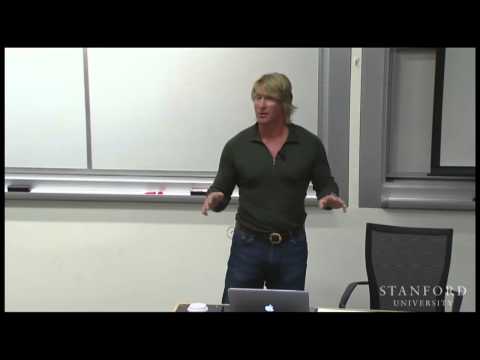
This is the fourth lecture of E292H Engineering and Climate Change, delivered by the Stanford Center for Professional Development. The guest speaker is Doug Stalp, founder of Iceax Expeditions and the world’s most traveled polar explorer, with 13 North Pole and 10 South Pole ski crossings to his name.
The course is pass/no pass, with weekly homework consisting of lecture summaries, optional readings, and one burning question for the next lecturer. Upcoming sessions include Professor Will Chu on electrochemical energy storage, followed by a final lecture on soft geoengineering and ice-based climate solutions. This lecture focuses on firsthand polar climate observations, citizen science contributions from expeditions, and the global impacts of accelerating ice melt.
Two. Key Learning Takeaways
-
The ice-albedo feedback loop is the single most impactful climate amplifier, increasing global warming by approximately 20% all on its own.
-
Arctic sea ice is declining far faster than 2007 IPCC predictions, with multi-year ice almost entirely gone from the North Pole region.
-
Polar expeditions fill critical data gaps that satellites cannot address, including ice thickness, snow depth, and local ecosystem changes.
-
Permafrost thaw releases methane, a greenhouse gas 25 times more potent than CO₂ over 100 years, creating an additional dangerous positive feedback loop.
-
Climate change is already collapsing polar food chains, starting with krill population declines that ripple up to penguins, seals, and polar bears.
-
Engineering innovation developed for extreme polar environments has direct applications to global climate solutions and sustainable design.
-
Traditional expedition skills—meticulous planning, adaptability, and resource efficiency—are exactly the mindsets needed to address climate change.
Three. Course Gold Quotes
-
"I’m not a turn-of-the-century explorer with a sextant and reindeer sleeping bag—I’m a modern explorer using technology to collect data that can save our planet." – Doug Stalp
-
"The ice-albedo feedback loop isn’t just a textbook line. I’ve watched it happen: more open ocean absorbs more sun, which melts more ice, and the cycle spins faster right in front of my eyes." – Doug Stalp
-
"Polar bears aren’t just cute mascots. They’re the canary in the coal mine for our entire planet. When they start drowning hundreds of miles from shore, that’s our warning sign." – Doug Stalp
-
"I was the last person to leave Cape Arctichesky, Russia for a North Pole expedition in 2005. Today, that spot is open water in March. That’s how fast things are changing." – Doug Stalp
-
"The hardest part of any expedition isn’t the -50°F wind or the polar bears—it’s staying motivated when everything goes wrong. The same is true for fighting climate change." – Doug Stalp
-
"You don’t need to ski to the South Pole to make a difference. Every small action adds up, but we also need bold engineering solutions to reverse what we’ve already done." – Doug Stalp
-
"If we lose the Arctic sea ice, we lose one of the planet’s biggest natural thermostats. That’s not a future we want to leave for our kids." – Doug Stalp
Four. Layered Learning Notes
Module 1: Polar Ice as Earth’s Climate Thermostat
-
Ice-Albedo Basics:
-
Fresh polar ice reflects 80-90% of incoming solar radiation back into space
-
Open ocean absorbs 90% of incoming radiation, converting it to heat
-
This positive feedback loop alone amplifies global warming by 20%, making polar ice the single largest climate lever
-
-
IPCC Prediction Failure:
-
2007 IPCC projections vastly underestimated ice melt rates
-
The Arctic is now on track for ice-free summers by 2030-2040, not 2100 as originally forecast
-
-
Antarctic Split Reality:
-
Interior Antarctica gains ~1 foot of ice annually from increased snowfall
-
The Antarctic Peninsula is experiencing catastrophic ice shelf collapse (Larsen B, Wilkins Ice Shelf) and accelerating glacier calving
-
Module 2: Firsthand Observations of Climate Disruption
-
Arctic Sea Ice Collapse:
-
Recorded 0°C (32°F) at the North Pole in April 2011
-
Rain fell in Spitsbergen (78°N) in January 2024, an event with no precedent in 40+ years of record-keeping
-
Multi-year ice (7-14 years old) has almost disappeared from the North Pole, replaced by thin, unstable single-year ice
-
-
Ecosystem Collapse:
-
Krill populations have dropped 80% in some Antarctic regions due to warming waters, collapsing the base of the food chain
-
Polar bears are drowning hundreds of miles from shore as sea ice becomes too thin and fragmented to support hunting
-
Penguin rookeries are disappearing as changing snowfall patterns bury nests and prevent egg incubation
-
-
Permafrost Crisis:
-
Siberian permafrost thaw is exposing 10,000-30,000 year old woolly mammoth carcasses
-
Thawing permafrost releases ancient methane, creating a self-reinforcing warming cycle that could trigger runaway climate change
-
Module 3: Polar Expeditions as Citizen Science
-
Beacon Innovation:
-
Doug redesigned bulky 50-pound scientific beacons into 7-kilogram carbon fiber models
-
Two beacons deployed in 2005 are still transmitting data 19 years later, far exceeding their 5-year design life
-
These beacons measure temperature, barometric pressure, and ice drift, feeding data to the Arctic Buoy Program (16 participating nations)
-
-
Critical Data Gaps:
-
Satellites only measure ice extent, not thickness, snow depth, or local temperature variations
-
On-the-ground expeditions provide ground truth for satellite measurements and collect data that remote sensors cannot capture
-
-
Collaborative Research:
-
Doug works with the Alfred Wegener Institute (Germany) and Stanford climate scientists to deploy sensors and share findings
-
His expeditions have also discovered 40-pound meteorites and documented previously unknown ice formations
-
Module 4: Extreme Environment Innovation and Lessons for Climate Action
-
Gear Design for Sustainability:
-
Doug designs most of his own equipment (sleds, harnesses, boots, stoves) to survive extreme conditions
-
His ice bike was named one of Time’s Top 30 Inventions of 2004
-
Many of these innovations have civilian applications, including lightweight insulation and portable solar power
-
-
Resource Efficiency Lessons:
-
Polar explorers burn 10,000 calories per day while carrying only 5,500 calories of food, teaching extreme resource management
-
Every gram of weight is optimized, a principle that directly applies to sustainable engineering and design
-
-
Risk Management Mindset:
-
Successful expeditions require meticulous planning and rapid adaptability to unexpected changes
-
These same skills are critical for addressing the unpredictable impacts of climate change
-
Module 5: Individual and Collective Action
-
Education and Advocacy:
-
Doug uses live satellite feeds to connect K-12 classrooms with polar expeditions
-
His clients have raised over $7 million for climate and children’s charities
-
-
Carbon Responsibility:
-
Doug offsets 100% of the carbon footprint from his expeditions and requires all clients to do the same
-
-
Engineering Opportunity:
-
The next generation of engineers will lead the development of technologies to slow ice melt, scale renewable energy, and remove carbon from the atmosphere
-
Wishing you all the best as you continue exploring the intersection of engineering and climate action. May your curiosity lead you to innovative solutions that protect our planet’s most vulnerable regions and build a more sustainable future for everyone. Remember that every great breakthrough starts with a single observation—and the courage to act on what you see.