One. Course Details
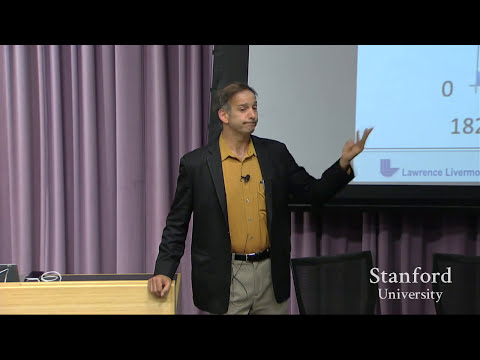
This is a guest lecture for EE292H Engineering and Climate Change at Stanford University, delivered by Dr. Julio Friedman, a former U.S. Department of Energy official and leading expert on carbon capture and storage (CCS). The lecture was given in November 2016, immediately following the entry into force of the Paris Agreement and the U.S. presidential election. Dr. Friedman combines hard climate science, global energy economics, and firsthand policy experience to separate fact from fiction in the climate debate, arguing that an "all-of-the-above" energy strategy is the only practical path to meeting global emissions targets. The lecture concludes with a candid Q&A session covering corporate climate action, policy design, and actionable steps for students.
The lecture covers:
-
The unvarnished reality of climate science and global energy demand
-
The achievements and critical limitations of the Paris Agreement
-
Why an all-of-the-above energy strategy is economically and technically necessary
-
The current state of carbon capture and storage technology and its deployment barriers
-
How energy policy is actually made in Washington, D.C.
-
The role of corporations, investors, and students in driving climate action
-
Practical policy tools that actually reduce emissions
-
The critical need for negative emissions technologies to meet 2°C and 1.5°C targets
Two. Key Learning Takeaways
-
Climate change is unequivocally real, human-caused, and accelerating, with impacts already being felt worldwide through extreme heat, wildfires, droughts, and expanding disease vectors.
-
Global energy demand will increase by 40–60% by 2050 due to population and economic growth, meaning we cannot rely solely on renewable energy to reduce emissions.
-
The Paris Agreement was a historic diplomatic breakthrough, but current national commitments would only limit warming to approximately 2.7°C, far above the 2°C and 1.5°C targets.
-
Only three things reduce absolute emissions: efficiency and conservation, carbon capture and storage, and shutting down existing fossil fuel plants. New clean energy only avoids emissions growth.
-
An all-of-the-above energy strategy is not a political compromise—it is the only approach that minimizes costs by using the cheapest available technology in each regional market.
-
Carbon capture and storage is technically proven and cost-competitive with many clean energy options, but it is not being deployed at scale due to policy failures, not technical or economic barriers.
-
Emission standards and performance mandates are far more politically feasible and effective than carbon taxes, which have failed to gain traction in nearly every country.
-
Corporate boards are increasingly aware of climate risks, but they will not make large-scale investments until clear, long-term policy signals are in place.
Three. Course Gold Quotes
-
"If you believe in climate science, believe in climate math. The math is harsh, unforgiving, and arithmetic. There’s no place to hide."
-
"All of the above is not a bumper sticker—it’s the right economics and the right engineering. Take any option off the table, and you commit yourself to higher costs for no reason."
-
"A billion tons is twice the weight of all human beings on Earth. We emit 75 times the mass of humanity in carbon dioxide every year. Changing light bulbs ain’t going to do it."
-
"Paris changed the business model of climate negotiations from a circular firing squad to a weight loss club. Everybody said, ‘I’m going to lose 10 pounds.’ That’s a huge deal."
-
"The only three things that reduce emissions are efficiency and conservation, carbon capture and storage, and shutting down plants. That’s it. That’s the full list."
-
"We don’t need to satisfy the extreme environmentalists or the coal barons. We need to get the job done, and we need something everyone can live with."
-
"This is an all-hands-on-deck exercise. Nobody gets a free pass on this. There is money to be made, and there is work to be done for engineers and entrepreneurs alike."
Four. Layered Learning Notes
Module 1: Climate Reality and the Global Energy Challenge
-
Climate change impacts are no longer hypothetical: 2016 saw record heat indices of 160°F in Iran, massive wildfires in Canada and Indonesia, and expanding ranges for mosquito-borne diseases like Zika and malaria.
-
Global energy demand will grow 40–60% by 2050, driven by population growth and economic development in emerging markets. "Peak energy" is a myth—only per capita energy consumption has peaked in developed countries.
-
Current global emissions stand at 36 billion tons of CO₂ per year. Even if all new energy demand were met with zero-emission sources, emissions would remain flat at 36 billion tons annually.
-
To hit the 2°C target, we need to not only stop emissions growth but also actively remove CO₂ from the atmosphere. By 2050, we will need to remove 10 billion tons of CO₂ per year—equivalent to the entire current emissions of the global power sector.
-
The Montreal Protocol’s recent amendment to phase out hydrofluorocarbons (HFCs) was a major victory, but it does not change the core CO₂ emissions math.
Module 2: The Paris Agreement: A Historic First Step, Not a Finish Line
-
The Paris Agreement fundamentally transformed global climate negotiations by replacing the confrontational "circular firing squad" model with a collaborative "weight loss club" approach, where each country sets its own voluntary emissions reduction targets.
-
197 countries signed the agreement, and it entered into force in November 2016. Saudi Arabia’s signature was a particularly significant milestone.
-
Critical limitations:
-
Current national commitments would only limit warming to approximately 2.7°C by 2100.
-
Many commitments are contingent on financial support from developed countries that has not yet materialized.
-
The targets are voluntary and non-binding.
-
-
Despite these flaws, the agreement eliminated the "nowhere to hide" argument: no country can claim climate action is not a global priority.
Module 3: The Case for an All-of-the-Above Energy Strategy
-
Every major global energy model—from the International Energy Agency to Stanford’s Energy Modeling Forum—reaches the same conclusion: we need all available low-carbon technologies to meet emissions targets at the lowest possible cost.
-
The reason is simple: different technologies are cheapest in different regional markets. Excluding any option forces countries to use more expensive alternatives, increasing overall costs and reducing political support for climate action.
-
A typical optimal energy mix includes:
-
40% end-use efficiency and demand reduction
-
Significant renewable energy deployment
-
6–10% nuclear energy
-
12–20% carbon capture and storage
-
Fuel switching from coal to natural gas and low-carbon fuels
-
-
Regional differences are critical: California has excellent solar and wind resources and can rely heavily on renewables, while states like Indiana and Kentucky have no viable renewable resources and will need CCS to decarbonize affordably.
Module 4: Carbon Capture and Storage: Proven, Affordable, and Underdeployed
-
CCS is not a theoretical technology: it has been operating at commercial scale for over 20 years. The Sleipner project in Norway has safely stored 20 million tons of CO₂ underground since 1996.
-
Global CCS capacity currently stands at 28 million tons per year, with projects under construction that will increase this to 40 million tons per year by 2020.
-
Cost competitiveness:
-
The new Petra Nova plant in Texas came in on time and on budget, with all-in CCS costs of approximately $100 per ton of CO₂.
-
The next plant of the same design is projected to cost $70 per ton.
-
This is cheaper than offshore wind, nuclear power, and rooftop solar, and comparable to many renewable energy subsidies.
-
-
CCS is not just for power plants: 70% of required CCS deployment by 2050 will be in heavy industry (cement, steel, fertilizer, petrochemicals), where there are virtually no other decarbonization options.
-
The only barrier to deployment is policy: CCS is excluded from most renewable portfolio standards and does not qualify for the same tax credits as wind and solar, making it impossible to finance projects despite their economic competitiveness.
Module 5: How Energy Policy Is Actually Made in Washington
-
The U.S. government is dominated by lawyers, not engineers or scientists. Most policymakers do not understand the technical and economic details of energy systems, making them hungry for expert input.
-
Policymakers are reluctant to make energy policy because they fear making bad decisions that will harm their constituents. This creates an opportunity for engineers to provide fact-based advice.
-
Effective policy tools:
-
Emission standards: The most successful environmental policy in U.S. history. The acid rain program reduced sulfur dioxide emissions by 90% using a cap-and-trade system with gradually tightening limits.
-
Performance mandates: Set a clear emissions limit (e.g., 1100 pounds of CO₂ per megawatt-hour) and let the market figure out the cheapest way to meet it.
-
Incentives: Carrots work better than sticks. Tax credits and grants are more politically feasible than taxes or regulations.
-
-
Carbon taxes are politically dead: Only Norway has implemented a meaningful carbon tax, and it has 98% hydropower and a $1 trillion sovereign wealth fund. Carbon taxes have failed in every other country where they have been proposed.
Module 6: Corporate and Investor Action
-
The Risky Business reports, led by Tom Steyer, George Shultz, and Michael Bloomberg, have had a significant impact on corporate boardrooms. Directors now understand that climate change poses material financial risks to their companies.
-
However, corporations will not make large-scale investments in low-carbon technologies until there is clear, long-term policy certainty. They do not want to build business models that depend on government policies that could change overnight.
-
Shareholder action is more effective than divestment: In 2016, 40% of Chevron shareholders and 38% of ExxonMobil shareholders voted to require the companies to disclose their long-term climate strategies. These votes send a powerful signal to management that investors take climate risk seriously.
-
Divestment has limited impact because institutional investors have already largely abandoned new coal investments. Engaging with companies as shareholders is a far more powerful tool for driving change.
Module 7: Actionable Steps for Students
-
Focus on outcomes, not technologies: Measure success by tons of CO₂ reduced, not by how many solar panels or wind turbines are installed.
-
Engage with policymakers: Write to your elected representatives, provide them with technical and economic information, and explain why climate action is important to your community.
-
Pursue shareholder action: If you own stock in any company, vote in favor of climate-related shareholder resolutions and engage with management directly.
-
Become an entrepreneur: There are enormous business opportunities in solving climate problems, from improving CCS technology to developing low-carbon industrial processes to building better energy storage systems.
-
Serve in government: Engineers and scientists are desperately needed in Washington to help develop sound, fact-based energy policy. A tour of duty in government can have a global impact.
Wishing you all the clarity to see the hard truths of climate change and the courage to act on them. The road ahead is steep, and the math is unforgiving, but we have all the tools we need to build a clean energy future—we just need the political will to deploy them. Whether you become an engineer, an entrepreneur, a policymaker, or an advocate, your unique skills and perspective are essential to this fight. Remember that every ton of CO₂ we avoid emitting or remove from the atmosphere matters, and every action you take brings us one step closer to a livable planet. Go out there, make your voice heard, and build the future we all deserve.