One. Course Details
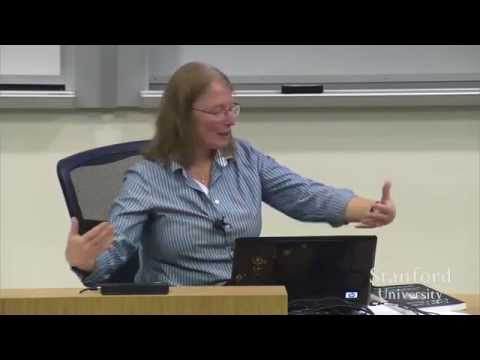
This is an early-quarter lecture for EE292H Engineering and Climate Change at Stanford University, delivered by course instructor Leslie Field, a chemical engineer, MEMS expert, and founder of Ice 911 Research. Field draws on work from leading climate scientists John Kumi, Terry Root, and Ken Caldera to frame the climate crisis, explore controversial geoengineering strategies, and share updates from her 8-year research project to slow Arctic ice melt.
The lecture covers:
-
The scientific consensus on human-caused global warming and the 2°C warming limit
-
Latest findings from the IPCC Fifth Assessment Report
-
Ecosystem and species impacts of unmitigated climate change
-
A balanced analysis of geoengineering technologies and their inherent risks
-
Field’s hands-on field testing of soft, reversible ice restoration materials
-
An open Q&A session addressing student questions about governance, scalability, and environmental ethics
Two. Key Learning Takeaways
-
Global atmospheric CO₂ concentrations are now higher than at any point in the past 800,000 years, and real-world emissions consistently exceed even the most pessimistic climate model projections.
-
MIT’s updated "Greenhouse Gamble" model shows a less than 5% chance of limiting warming to below 3°C this century, with a non-trivial risk of catastrophic 7°C+ warming under a no-policy scenario.
-
The Arctic ice albedo feedback loop now contributes 35% of global warming—up from 20% in 2006 models—as bright multi-year ice is replaced by dark, heat-absorbing open ocean.
-
Geoengineering is not a solution to climate change—it is a high-risk emergency backup that should only be considered after aggressive mitigation and adaptation efforts.
-
Soft geoengineering (localized, reversible, nature-based interventions) carries far lower risk than large-scale solar radiation management techniques like stratospheric sulfate aerosol injection.
-
Parallel entrepreneurship and rapid innovation are our greatest assets in addressing the climate crisis, as economic forecasts consistently underestimate the speed of technological change.
Three. Course Gold Quotes
-
"The climate problem is big, urgent, misunderstood—which means opportunity if you’re an engineer with the right mindset." – John Holdren
-
"If there’s no undo switch for what you’re doing, you probably shouldn’t be doing it." – Leslie Field
-
"We are entering the sixth great mass extinction event unless we can do something to change course." – Terry Root
-
"Forecasts often tell us we can’t change quickly because they don’t take into account the power of innovation." – John Kumi
-
"Business needs environmentalists and environmentalists need business. That’s the only way we’ll make real progress." – Leslie Field
-
"The scariest part of climate change isn’t the projections—it’s that we keep exceeding them every single year." – Leslie Field
-
"Start small, think big, get going. That’s the solution to the climate dilemma." – John Kumi
Four. Layered Learning Notes
Module 1: The Unprecedented Climate Emergency
-
The U.S. National Academy of Sciences and 97% of climate scientists agree that current warming is primarily human-caused, driven by fossil fuel combustion and land use changes.
-
Pre-industrial CO₂ levels fluctuated between 180-250 ppm over 800,000 years; today’s levels exceed 420 ppm and are rising faster than at any point in geological history.
-
Under a business-as-usual scenario, CO₂ concentrations will reach 4.8 times pre-industrial levels by 2100, driving a 5°C global average temperature increase.
-
Sea levels are projected to rise 1 meter by 2100 under worst-case scenarios, with coastal cities already spending billions annually on adaptation:
-
New York City: $2 billion/year on storm protection and infrastructure upgrades
-
Global costs are projected to reach trillions annually by 2050
-
-
Arctic sea ice volume has declined by 75% since 1979, with only 25% of the original thick, bright multi-year ice remaining.
Module 2: Species Extinction and Ecosystem Collapse
-
Nobel Prize-winning ecologist Terry Root’s research shows that 20-30% of known species face extinction at 2°C of warming, with near-total ecosystem collapse at higher temperatures.
-
Current extinction rates are 100 times higher than the historical baseline, making this the sixth mass extinction event in Earth’s history.
-
Species are adapting to warming by shifting their ranges poleward or upward in elevation, but mismatched migration rates between predators and prey are disrupting entire food webs.
-
Even a 3.6°F (2°C) temperature increase could drive 400,000 species extinct; a 7.2°F (4°C) increase could drive 1 million species extinct.
-
Ecosystem collapse threatens human food security, water supplies, and public health, with economic losses far exceeding the 5% of global GDP cited in early IPCC reports.
Module 3: Geoengineering – Strategies and Critical Risks
-
Two primary categories of geoengineering:
-
Carbon Dioxide Removal (CDR): Addresses the root cause of warming by removing CO₂ from the atmosphere (slow, expensive, unproven at scale)
-
Solar Radiation Management (SRM): Reflects sunlight to cool the planet rapidly (fast-acting but high risk, does nothing for ocean acidification)
-
-
Stratospheric sulfate aerosol injection is the most widely discussed SRM technique, mimicking volcanic eruptions to cool the planet. It could be deployed for less than $1 billion/year but carries catastrophic risks:
-
Abrupt termination would cause temperatures to spike faster than any species can adapt
-
Disrupted global rainfall patterns and increased mid-latitude storm severity
-
Accelerated ocean acidification from sulfuric acid deposition
-
-
The greatest moral hazard of geoengineering is that it may be used as an excuse to avoid cutting greenhouse gas emissions entirely.
Module 4: The Arctic Ice Albedo Feedback Loop
-
Multi-year Arctic ice reflects 95% of incoming sunlight, while open ocean absorbs 95% of incoming sunlight, creating a dangerous positive feedback loop.
-
Thin first-year ice (glare ice) is nearly transparent and absorbs most sunlight, providing almost no cooling benefit.
-
The loss of Arctic ice has destabilized global jet stream patterns, leading to more extreme and unpredictable weather events, including prolonged droughts and severe storms.
-
Restoring just 50,000 square kilometers of reflective Arctic ice could slow global warming by 35%, buying critical time for mitigation efforts.
Module 5: Ice 911 Research – Soft Geoengineering in Practice
-
Field founded Ice 911 in 2006 with the goal of developing gentle, reversible methods to restore Arctic ice and reboot the Earth’s natural cooling system.
-
Core design principles:
-
Reversible: All materials must be removable or biodegradable
-
Non-toxic: Safe for human consumption and marine ecosystems
-
Localized: Target critical melt zones rather than the entire Arctic
-
Low carbon footprint: Produces less CO₂ than it sequesters
-
-
6 years of field testing have been conducted in California, Canada, and Minnesota, evaluating materials including hollow glass spheres and food-grade brightening agents.
-
A breakthrough food-safe material has shown exceptional performance in lab tests, creating ice that is significantly brighter and slower to melt than natural ice.
-
The first Arctic field test is planned for Barrow, Alaska, in partnership with local Native corporations who have firsthand experience with ice melt impacts.
Module 6: Climate Action and Entrepreneurial Opportunity
-
The climate crisis presents unprecedented entrepreneurial opportunities across energy, transportation, agriculture, and water management.
-
Silicon Valley accelerators like the Cleantech Open provide funding, mentoring, and networking for climate-focused startups.
-
Simple, low-tech solutions often have the greatest impact, as they can be deployed quickly and affordably in both developed and developing countries.
-
Individual and corporate action can have a greater immediate impact than international climate summits, which have historically failed to deliver meaningful emissions reductions.
-
Most of the global energy infrastructure that will exist in 2050 will be built between now and then, creating a narrow window of opportunity to avoid catastrophic warming.
Wishing you all the passion and perseverance to turn your climate ideas into action. The road ahead is challenging, but every engineer, every innovator, and every small step brings us closer to a sustainable future. Keep learning, keep questioning, and never underestimate the power of your work to change the world.