One. Course Details
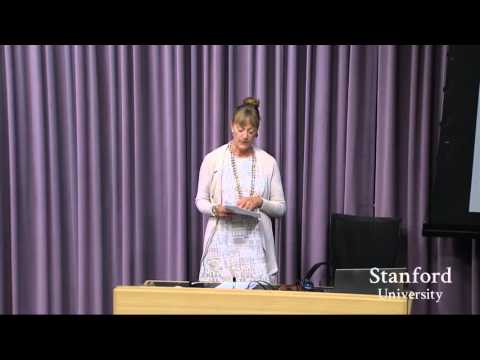
This is a guest lecture for EE292H Engineering and Climate Change at Stanford University, delivered by Nancy Pfund, founder and managing partner of DBL Partners. A pioneer in impact investing, Pfund shares her 12+ year journey building a venture capital firm that delivers both top-tier financial returns and measurable social, economic, and environmental impact. Drawing on iconic investments including Tesla, SolarCity, and Pandora, she outlines the evolution of cleantech, debunks myths about sustainable investing, and maps the next generation of high-growth opportunities in the global transition to a low-carbon economy.
The lecture covers:
-
The origins of DBL Partners and the double bottom line investment philosophy
-
Early success stories and the skepticism that surrounded cleantech investing in the 2000s
-
The transformative job creation potential of the clean energy sector
-
Policy’s critical role in scaling climate solutions
-
Five emerging investment themes driving the next wave of innovation
-
Lessons learned from navigating market crashes, regulatory battles, and industry disruption
-
An open Q&A addressing fund structure, international investing, and career paths in impact venture capital
Two. Key Learning Takeaways
-
Double bottom line investing is not a tradeoff—companies that deliver both financial returns and social impact consistently outperform traditional investments over the long term.
-
The solar industry now employs more Americans than the coal, utility, and tech giants (Google, Facebook, Twitter, Salesforce) combined, disproving the myth that clean energy kills jobs.
-
Incumbent industries will always resist disruption, but cost curves and consumer choice are irreversible forces that will drive the transition to renewable energy.
-
Policy is not an afterthought for cleantech startups—it is a core component of success. Venture capitalists must actively engage in regulatory battles to create a level playing field.
-
The clean energy transition has already reached an irreversible inflection point, with renewables accounting for 60% of all new power generation capacity added in the U.S. in 2015.
-
The next generation of climate innovation will be driven by energy storage, microgrids, international off-grid solutions, big data for agriculture, and the circular economy.
-
Successful impact investing requires measuring both financial performance and non-financial metrics including job creation, workforce diversity, and community revitalization.
Three. Course Gold Quotes
-
"We were impact investors before the term existed. We believed then—and still believe today—that you don’t have to sacrifice returns to do good."
-
"When everyone tells you you’re crazy for investing in car companies or rooftop solar, that’s exactly when you know you’re onto something big."
-
"The 20th century was about centralized, monopolistic, opaque systems. The 21st century will be about distributed, transparent, choice-driven systems—and that’s great news for both the planet and investors."
-
"Jobs are the ultimate political currency. When an industry creates hundreds of thousands of good-paying jobs, politicians will line up to support it."
-
"Solyndra made cleantech a dirty word for a while, but it didn’t change the fundamentals. The cost curves were still coming down, the demand was still growing, and the planet still needed us to succeed."
-
"We’re not just investing in companies—we’re investing in the founding fathers and mothers of the 21st century economy."
-
"The best climate solutions are the ones that don’t require people to sacrifice. If you have to choose between saving the planet and having a good life, most people will choose the good life. So we need to build solutions that give them both."
Four. Layered Learning Notes
Module 1: The Origins of DBL Partners and Double Bottom Line Investing
-
DBL Partners spun out of JPMorgan Chase in 2008, after new CEO Jamie Dimon decided to eliminate all third-party managed funds.
-
The firm’s name stands for Double Bottom Line, reflecting its mission to generate both market-rate financial returns and positive social, economic, and environmental impact.
-
DBL’s impact framework includes four core pillars:
-
Product impact: Building products that solve critical social or environmental problems
-
Workplace practices: Creating diverse, inclusive, and high-quality jobs
-
Community impact: Revitalizing underserved neighborhoods and regions
-
Policy leadership: Advocating for regulations that accelerate the transition to a sustainable economy
-
-
Pfund resisted the spinout initially, having worked at JPMorgan for 20 years, but ultimately found that independence allowed the firm to fully pursue its mission without corporate constraints.
Module 2: Early Success Stories and Overcoming Skepticism
-
PowerLight (2005): DBL invested in the commercial solar installer despite criticism from other VCs who dismissed it as "just a construction company." The company was sold to SunPower 18 months later for $345 million, delivering a strong return and proving that cleantech could generate exits.
-
Tesla (2006): DBL’s investment in Tesla was widely mocked by Silicon Valley peers, who believed car companies were too capital-intensive and risky for venture capital.
-
The firm’s downside scenario assumed Tesla would be acquired by a luxury automaker like Lamborghini or Ferrari
-
Today, Tesla has a market capitalization of ~$35 billion, half that of 108-year-old General Motors
-
-
SolarCity (2006): Inspired by PowerLight’s success, DBL invested in the residential solar installer. Despite a difficult IPO during the post-Solyndra cleantech crash, SolarCity grew to become a $4 billion public company, a quarter the size of PG&E.
-
These early successes proved that cleantech could deliver venture-scale returns while driving massive environmental impact.
Module 3: The Job Creation Revolution of Clean Energy
-
The U.S. solar industry employed 174,000 people in 2015, more than the entire coal industry.
-
Solar employs more Americans than Google, Facebook, Twitter, and Salesforce combined, and roughly the same number as Amazon.
-
In California alone, the solar industry employs 55,000 workers—more than all five major utilities combined.
-
Clean energy jobs are accessible to workers without advanced degrees, creating pathways to the middle class for diverse communities:
-
20% of SolarCity’s employees are Latino, a diversity rate far higher than the traditional tech industry
-
Manufacturing and installation jobs are geographically distributed, revitalizing regions like Buffalo, NY (SolarCity’s gigafactory) and Reno, NV (Tesla’s Gigafactory)
-
-
Job creation gives the clean energy industry significant political capital, as elected officials prioritize industries that bring employment to their districts.
Module 4: The Cleantech Crash and the Road to Recovery
-
The 2011 Solyndra bankruptcy turned cleantech into a political punching bag and dried up venture capital investment in the sector.
-
Even successful companies like SolarCity struggled during this period, with their IPO priced far below what investors had expected.
-
Despite the downturn, DBL remained committed to cleantech because they recognized the fundamental trends were still positive:
-
Solar and wind costs were continuing to fall exponentially
-
Global demand for clean energy was growing rapidly
-
The scientific consensus on climate change was strengthening
-
-
The industry reached an irreversible inflection point in 2015, when renewables accounted for 60% of all new power generation capacity added in the U.S. and 59% globally.
Module 5: Five Emerging Investment Themes for the Next Decade
-
Energy Storage and New Age Microgrids:
-
Modern microgrids integrate solar, storage, and demand response software to automatically optimize energy use and reduce costs by 25% or more
-
Storage eliminates the need for expensive peaker plants and solves the intermittency problem of renewable energy
-
-
International Off-Grid Markets:
-
Over 1 billion people worldwide lack access to electricity, and another billion have only intermittent power
-
DBL’s investment in Off-Grid Electric brings affordable solar power to Tanzania, with plans to expand across Africa
-
These solutions are now cost-competitive with kerosene lamps while delivering significant health benefits
-
-
Big Data for Agriculture and Natural Resources:
-
Drones, sensors, and mobile technology are enabling farmers to collect and analyze data to optimize yields, reduce water use, and cut inputs
-
Independent data platforms empower farmers to make better decisions, rather than relying on seed and chemical companies
-
-
Space-Based Earth Observation:
-
Small satellites are making high-frequency, high-resolution imagery of the planet affordable and accessible
-
This data will revolutionize climate science, disaster response, and natural resource management
-
-
The Circular and Sharing Economy:
-
Business models that prioritize reuse, repair, and sharing reduce waste and lower costs for consumers
-
DBL investments include The RealReal (luxury consignment) and Yertle (peer-to-peer sharing of household goods)
-
Module 6: Policy’s Critical Role in Scaling Climate Solutions
-
Policy is not optional for cleantech startups—incumbent industries have spent decades shaping regulations to protect their market power.
-
The 2006 investment tax credit (ITC) for solar was critical to the survival and growth of companies like SolarCity and PowerLight.
-
Net metering battles are currently the biggest regulatory fight in the energy sector, as utilities try to protect their revenue streams from rooftop solar.
-
DBL takes an active role in policy advocacy, with partners regularly testifying before regulatory bodies and working with policymakers to design fair and effective regulations.
-
Pfund emphasizes that policy engagement is not just good for the planet—it’s good for business, as it creates a stable and predictable market for clean energy solutions.
Module 7: Lessons Learned for Entrepreneurs and Investors
-
Stay true to your vision: The best ideas are often the ones that everyone else thinks are crazy.
-
Build a diverse team: Different perspectives lead to better decisions and help you identify opportunities that others miss.
-
Measure what matters: Track both financial and impact metrics to ensure you’re delivering on both bottom lines.
-
Engage early with policymakers: Don’t wait for regulations to be written before you get involved.
-
Be patient: Cleantech takes longer than software, but the rewards—both financial and societal—are much greater.
Wishing you all the curiosity to explore uncharted territory and the courage to build solutions that matter. The transition to a sustainable economy is the greatest entrepreneurial opportunity of our lifetime, and the world needs your talent, creativity, and passion to make it happen. Whether you become an investor, an entrepreneur, or an engineer, remember that every decision you make has the power to shape the future we all share. Keep asking questions, challenging the status quo, and building a world that is both prosperous and just.