One. Course Details
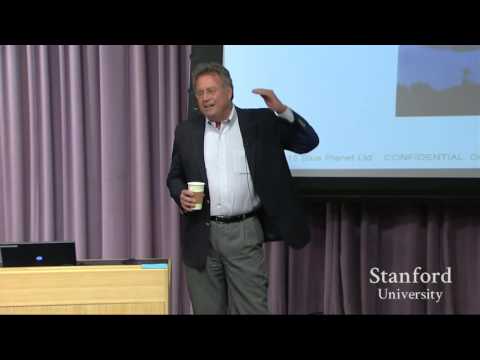
This is a guest lecture for EE292H Engineering and Climate Change at Stanford University, delivered by Dr. Brent Constantz, founder and CEO of Blue Planet. A leading biomineralization scientist and serial entrepreneur, Dr. Constantz founded Blue Planet in 2012 after a breakthrough discovery about liquid condensed phase carbon in aqueous solutions. The lecture outlines a fundamentally different approach to climate change: instead of capturing and burying carbon dioxide, Blue Planet converts raw flue gas emissions directly into high-value building materials, creating a profitable business model that scales to the gigaton level required to meaningfully impact global emissions. Dr. Constantz contrasts this approach with traditional carbon capture and storage (CCS), explains the critical role of government purchasing power in driving climate action, and shares hard-won lessons from scaling industrial climate technologies.
The lecture covers:
-
The fatal flaws of traditional carbon capture and storage (CCS)
-
The science of biomimetic carbon mineralization
-
How Blue Planet converts raw flue gas into carbon-negative concrete aggregate
-
Why government infrastructure spending is the most powerful climate policy tool
-
The hidden carbon footprint of building materials and the green building revolution
-
The difference between venture capital and project equity financing for industrial climate tech
-
Real-world deployments at San Francisco International Airport and other major projects
-
The global scalability of carbon mineralization technology
Two. Key Learning Takeaways
-
Traditional CCS is economically and technically unworkable at scale. It costs $4–5 billion to build a 1 gigawatt CCS plant, consumes 40–50% of the plant's power output, and produces pure CO₂ that has almost no commercial value.
-
Carbon mineralization is the only climate solution that operates at the required scale. The global construction industry uses 54 billion tons of rock annually—ten times more than coal—providing a massive, existing market for carbon-negative materials.
-
Government purchasing power is the most effective climate policy lever. Governments already spend trillions of dollars annually on infrastructure; redirecting this spending to carbon-negative materials can drive decarbonization without new taxes or global treaties.
-
The biggest carbon footprint in most buildings is the concrete itself, not lighting, heating, or cooling. Green building standards have historically ignored embodied carbon, creating a massive market opportunity for low-carbon materials.
-
Venture capital cannot solve climate change. Industrial climate technologies require billions of dollars in long-term project equity, not the 3–5 year return horizons of Silicon Valley investors.
-
Modular design is critical for rapid deployment. Blue Planet's 2 megawatt modular units can be manufactured globally, installed quickly at existing power plants, and moved if the plant shuts down.
-
Carbon pricing alone is insufficient. Even with carbon taxes, profitable business models that sell products people already buy are the only way to drive global adoption in developing countries.
Three. Course Gold Quotes
-
"Purified CO₂ has almost no value. You can use a little for Coca-Cola, but over 99% of all the money spent on carbon capture has been wasted because there is nothing to do with all that pure CO₂."
-
"Rock mining is the largest mass movement of material on the planet—50 billion tons per year, ten times more than coal. That is the market we need to tap to actually move the needle on climate change."
-
"The biggest lever governments have is not signing treaties that no one will follow. It is the money they already spend every year on roads, bridges, airports, and buildings."
-
"If you look at any building in the world, the single largest part of its carbon footprint is the concrete. Not the lights, not the heating, not the carpet—just the concrete."
-
"Silicon Valley cannot solve climate change. You can put all the billionaires' checkbooks together and you couldn't build two or three of these plants. We need to access the trillions of dollars in project equity that finance power plants and infrastructure."
-
"Limestone is where almost all the carbon on Earth naturally resides. We are just speeding up a geologic process that normally takes millions of years."
-
"Developing countries will never pay to reduce emissions. People worry about starving before they worry about the environment. We have to give them a solution that makes them money."
Four. Layered Learning Notes
Module 1: The Failure of Traditional Carbon Capture and Storage
-
The world's largest CCS project in Saskatchewan cost $5 billion and only captures 1 million tons of CO₂ per year. To capture 10 billion tons annually (the minimum needed to impact climate change), we would need 10,000 such plants.
-
Traditional CCS requires expensive CO₂ purification, which consumes 40–50% of the power plant's output. This makes electricity prohibitively expensive and uncompetitive with fossil fuels.
-
There is no commercial market for pure CO₂. Enhanced oil recovery (EOR) uses a small amount, but the CO₂ eventually escapes back into the atmosphere.
-
Long-term storage of CO₂ underground requires permanent monitoring and insurance, creating unfunded liabilities that no government or company is willing to accept.
-
Despite these flaws, 90% of global carbon capture funding still goes to traditional CCS because of government subsidies, not market demand.
Module 2: Blue Planet's Biomimetic Carbon Mineralization Technology
-
The technology is based on Dr. Constantz's research in biomineralization, the process by which clams, corals, and other marine organisms build shells and skeletons from CO₂ dissolved in water.
-
Key breakthrough: Blue Planet does not purify CO₂. It takes raw flue gas directly from power plants, cement kilns, or steel mills and converts it into calcium carbonate (limestone) using a proprietary geometric process.
-
This eliminates the energy cost of CO₂ purification, resulting in a parasitic load of less than 10%—four times more efficient than traditional CCS.
-
The resulting product is lightweight concrete aggregate that meets all ASTM standards and is already being used in major projects like the new terminal at San Francisco International Airport.
-
The process can use a wide range of feedstocks, including waste materials like coal fly ash, steel slag, and bauxite residue (red mud), solving multiple waste problems at once.
Module 3: The Global Market for Carbon-Negative Building Materials
-
The global construction industry uses 54 billion tons of rock annually, worth approximately $810 billion at $15 per ton. This is the only existing market large enough to absorb gigatons of CO₂.
-
Rock mining is almost entirely open-pit mining, creating massive environmental scars. Blue Planet's technology eliminates the need for new quarries and reduces the carbon footprint of transporting rock long distances.
-
Carbon-negative concrete: Replacing the aggregate in concrete with Blue Planet's product makes the concrete carbon-neutral or even carbon-negative, as each ton of aggregate sequesters approximately 440 kg of CO₂.
-
The green building market is driving demand. The Architecture 2030 movement aims to make all new buildings carbon-neutral in their operations by 2030, which will make embodied carbon in materials the dominant source of building emissions.
-
Even without carbon pricing, Blue Planet's aggregate is cost-competitive with traditional rock in many markets, especially where rock has to be transported long distances.
Module 4: Government Purchasing Power as a Climate Policy Tool
-
Governments are the largest buyers of construction materials in the world. In California alone, the state spends over $4 billion annually on rock for infrastructure.
-
California's crumb rubber law, which requires recycled tires in all state asphalt, demonstrates how government procurement can drive market transformation. Old tires have virtually disappeared from California roads as a result.
-
Similar policies requiring carbon-negative concrete in public projects would create an immediate, massive market for carbon mineralization technology.
-
The U.S. federal highway bill, which is renewed every few years, is the single most important piece of legislation for scaling this technology in the United States.
-
The Department of Defense is a particularly powerful driver, as it can implement procurement changes quickly without congressional approval. The Navy has already committed to making all its airports carbon-neutral by 2025.
Module 5: Financing and Scaling Industrial Climate Technologies
-
Venture capital is the wrong model for industrial climate tech. VC investors expect 10–100x returns in 3–5 years, but industrial projects require large upfront investments and generate steady, long-term returns over 20–30 years.
-
Project equity is the appropriate financing model. This is how power plants, pipelines, and other infrastructure are traditionally financed, with investors seeking 8–12% annual returns with low risk.
-
Blue Planet's modular design reduces financing risk. Each 2 megawatt module costs approximately $700 per kilowatt, compared to $4,000–5,000 per kilowatt for traditional CCS.
-
The business model is profitable even without carbon pricing. A 500 megawatt coal plant can generate $300 million in annual revenue from selling aggregate, delivering a 78% return on investment.
-
Strategic partnerships with large industrial companies are critical for scaling. Blue Planet has partnered with one of the world's largest manufacturing companies to produce its modular units globally.
Module 6: Critical Challenges and the Road Ahead
-
Scale is the biggest challenge. To capture 10 billion tons of CO₂ annually, the industry would need to produce approximately 18 billion tons of aggregate per year—about one-third of current global rock production.
-
Raw material supply: Carbon mineralization requires large amounts of calcium and magnesium. These are abundant in common rocks and industrial waste streams, but logistics and sourcing must be managed carefully.
-
Policy and standards: Green building standards and government procurement policies need to be updated to recognize and reward embodied carbon reductions.
-
Public awareness: Most people, including many in the green building industry, are unaware of the massive carbon footprint of concrete and other building materials.
-
Global deployment: The technology is particularly valuable in developing countries, which are experiencing the fastest growth in construction and have the highest emissions growth rates.
Module 7: Lessons for Climate Entrepreneurs
-
Think at scale from day one. If your solution cannot scale to gigatons of CO₂ per year, it will not meaningfully impact climate change.
-
Build profitable business models first. Do not rely on government subsidies or carbon pricing to make your business work. If it is not profitable on its own, it will never scale globally.
-
Use existing supply chains and infrastructure. Trying to build entirely new supply chains is too slow and too expensive.
-
Assemble the right team. Industrial climate projects require experienced operators, financiers, and government affairs experts, not just scientists and engineers.
-
Stay under the radar. Overpromising and excessive publicity can create unrealistic expectations and attract unnecessary opposition.
Wishing you all the vision to see beyond conventional climate solutions and the determination to build technologies that work at the scale the planet needs. The transition to a carbon-neutral economy will not be driven by treaties, taxes, or Silicon Valley hype—it will be driven by profitable businesses that sell products people already buy, using money that is already being spent. Whether you become an engineer, an entrepreneur, a policymaker, or a financier, remember that the most powerful climate solutions are the ones that make economic sense for everyone, everywhere. The challenge is enormous, but so is the opportunity to rebuild our global infrastructure in a way that heals the planet while improving lives. Go out there and build the future we all need.