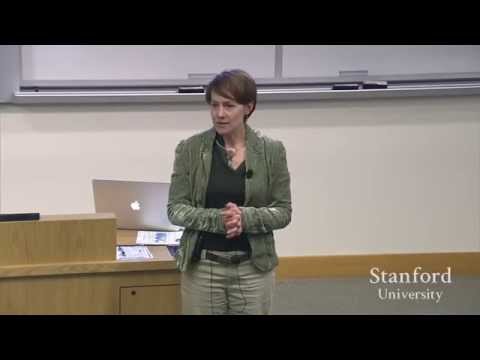
One. Course Details
This is a guest lecture for EE292H Engineering and Climate Change at Stanford University, delivered by Kate Maher, an assistant professor in the Department of Geological and Environmental Sciences and a geochemist specializing in reactive transport modeling. Her research focuses on fluid-rock interactions, mineral carbonation, and subsurface carbon storage technologies.
The lecture provides a rigorous scientific perspective on:
-
Fact-checking common climate misinformation about natural vs. anthropogenic CO₂ emissions
-
The geologic carbon cycle and Earth’s natural climate regulation mechanisms
-
Carbon Capture and Storage (CCS) technology fundamentals and global deployment status
-
Mineral carbonation as a permanent carbon sequestration strategy
-
Enhanced silicate weathering and emerging subsurface carbon reduction techniques
-
An open Q&A addressing technical challenges, policy barriers, and environmental risks
Two. Key Learning Takeaways
-
While 96% of gross CO₂ emissions are natural, human activity increases net atmospheric carbon by 70 times the natural background rate—the fastest rate of change in Earth’s known history.
-
Earth’s natural silicate weathering feedback stabilizes atmospheric CO₂ over 100,000-year timescales, far too slow to counteract anthropogenic emissions.
-
The Paleocene-Eocene Thermal Maximum (PETM) 56 million years ago, a period of 3-5°C warming from massive carbon release, is the closest geologic analog to current climate change.
-
Geologic carbon storage has three primary trapping mechanisms: structural trapping (immediate), residual/dissolved trapping (decades to centuries), and mineral trapping (permanent).
-
CCS is technically mature but economically challenged, with CO₂ capture accounting for 40-60% of total costs and requiring a $40-$60 per ton carbon price to be viable.
-
Mineral carbonation is the most stable form of carbon storage, converting CO₂ into solid carbonate rocks that cannot leak back into the atmosphere.
-
IPCC models show that only 3-5 of 100+ mitigation scenarios can limit warming to 2°C without CCS, making it a critical short-term bridge to a renewable energy future.
Three. Course Gold Quotes
-
"We’re emitting CO₂ at 70 times the natural speed limit. That’s like driving down the highway at five times the speed of sound—we’ve never seen anything like this in Earth’s history."
-
"The congressman was technically correct about gross emissions, but he forgot to mention that the 4% net human contribution is what’s breaking the entire carbon cycle."
-
"Earth will fix this eventually. The problem is that ‘eventually’ means 100,000 years, and we don’t have that kind of time."
-
"CCS is not a long-term solution to climate change. But it may be our only short-term solution that’s big enough to make a difference."
-
"The best way to store CO₂ forever is to turn it back into rock. Mother Nature has been doing this for billions of years—we just need to learn how to speed it up."
-
"Every ton of CO₂ we put underground today is a ton we don’t have to pull out of the air tomorrow at 10 times the cost."
-
"The biggest barrier to CCS isn’t technical—it’s economic. There’s simply no money in putting CO₂ into the ground unless someone pays you to do it."
Four. Layered Learning Notes
Module 1: The Carbon Cycle: Fact vs. Misinformation
-
The global carbon cycle consists of large reservoirs (ocean, atmosphere, biosphere, geosphere) and fluxes between them:
-
Natural gross fluxes: ~150 petagrams (Pg) of carbon per year from respiration/photosynthesis, ~0.1 Pg/year from volcanoes
-
Anthropogenic net flux: ~7 Pg/year from fossil fuel burning and land use change
-
-
Natural fluxes are nearly perfectly balanced, with volcanic emissions offset by sediment burial. Human activity has broken this balance, creating a net carbon surplus in the atmosphere-ocean system.
-
The Paleocene-Eocene Thermal Maximum (PETM) saw 1,000-5,000 Pg of carbon released over thousands of years, causing 3-5°C warming, ocean acidification, and mass extinctions. Today’s emissions rate is 10-100 times faster than during the PETM.
-
Ocean acidification occurs when excess CO₂ dissolves in seawater, lowering pH and reducing calcium carbonate saturation—threatening coral reefs and calcifying organisms.
Module 2: Geologic Carbon Storage (CCS) Fundamentals
-
CCS consists of four interconnected steps:
-
Capture: Separating CO₂ from flue gas at stationary sources (power plants, industrial facilities) using sorbents. This is the most energy-intensive step, reducing plant efficiency by 40-60%.
-
Transport: Compressing CO₂ into a supercritical fluid and piping it to storage sites.
-
Injection: Pumping supercritical CO₂ 800-3,000 meters underground into porous rock formations.
-
Storage: Trapping CO₂ permanently through multiple mechanisms:
-
Structural trapping: Impermeable cap rock (shale) prevents upward migration
-
Residual trapping: CO₂ trapped in rock pores as disconnected bubbles
-
Dissolved trapping: CO₂ dissolves in formation water, increasing density and preventing buoyancy
-
Mineral trapping: CO₂ reacts with rock minerals to form solid carbonates
-
-
-
Primary storage formations:
-
Depleted oil and gas reservoirs: 60 years of U.S. CO₂ storage capacity
-
Unmineable coal seams: 80 years of U.S. capacity
-
Saline aquifers: The largest storage resource, with capacity for thousands of years of emissions
-
Module 3: CCS Challenges and Global Deployment
-
Technical challenges:
-
Induced seismicity: Overpressurization from injection can trigger small earthquakes, as seen at the In Salah project in Algeria.
-
Leakage risk: Small faults undetected by seismic imaging could allow CO₂ to migrate upward.
-
Reservoir characterization: Accurately mapping subsurface geology is critical for safe storage.
-
-
Economic and policy challenges:
-
Capture costs: Currently $60/ton of CO₂, with a DOE target of $40/ton by 2030.
-
Long-term liability: No clear framework for monitoring and maintaining storage sites for 1,000+ years.
-
Lack of incentives: No national carbon price in the U.S. makes CCS unprofitable without government support.
-
-
Global demonstration projects:
-
Sleipner (Norway): The first commercial CCS project, operating since 1996, storing 1 million tons of CO₂/year.
-
Gorgon (Australia): The largest CCS project, designed to store 4 million tons of CO₂/year from natural gas production.
-
Enhanced Oil Recovery (EOR): The only profitable CCS application today, using CO₂ to extract additional oil from depleted reservoirs.
-
Module 4: Mineral Carbonation: Permanent Carbon Storage
-
Mineral carbonation mimics natural silicate weathering, reacting CO₂ with magnesium- and calcium-rich rocks to form stable carbonate minerals:
-
Olivine (Mg₂SiO₄) + 2CO₂ → 2MgCO₃ + SiO₂
-
This reaction is exothermic and produces a 95% volume increase, which can self-fracture rock and maintain permeability.
-
-
Key challenges:
-
Reaction kinetics: Natural mineral carbonation is extremely slow; industrial processes require crushing rock to increase surface area.
-
Rock availability: Reactive ultramafic rocks (serpentinite, basalt) are abundant globally but often lack porosity for subsurface injection.
-
Passivation: A silica-rich layer forms on mineral surfaces, slowing further reaction.
-
-
Demonstration projects:
-
CarbFix (Iceland): Injecting CO₂ into basalt formations, where 95% of injected CO₂ mineralizes within two years.
-
Above-ground processes: Reacting mine waste (slag, fly ash) with CO₂ to produce building materials (cement, aggregates).
-
Module 5: Emerging Carbon Removal Strategies
-
Enhanced silicate weathering: Grinding olivine and spreading it on land or oceans to accelerate natural CO₂ uptake. Studies suggest this could offset significant emissions but requires massive mining operations.
-
Subsurface abiotic CO₂ reduction: Using the natural reducing potential of petroleum reservoirs to convert CO₂ into organic molecules (formate, acetic acid) or even hydrocarbons. This is still in early laboratory stages.
-
Waste stream utilization: Using industrial byproducts (steel slag, coal ash) as feedstocks for mineral carbonation, reducing both waste and emissions.
-
Integrated systems: Combining CCS with renewable energy, hydrogen production, or direct air capture to create carbon-negative industrial processes.
Wishing you all the curiosity and determination to tackle the greatest engineering challenge of our time. Carbon sequestration is not a silver bullet, but it is a critical tool in our climate toolkit—one that requires collaboration between geologists, engineers, economists, and policymakers. Keep asking tough questions, challenging assumptions, and working toward solutions that will protect our planet for future generations.