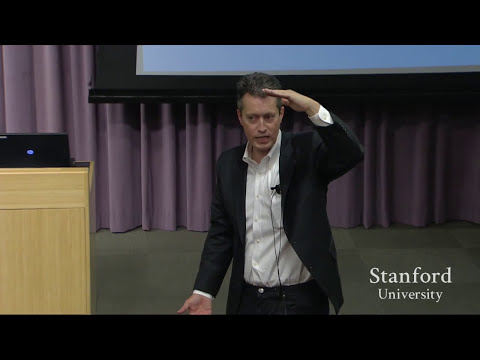
One. Course Details
This is a guest lecture for EE292H Engineering and Climate Change at Stanford University, co-hosted by Rex (former Executive Director of Cleantech Open) and Nancy Pfund, founder and managing partner of DBL Partners, the largest impact venture capital fund in the United States. The lecture bridges engineering innovation and commercial success, teaching students how to turn climate technologies into scalable, profitable businesses. It combines hands-on startup methodology, real-world venture capital insights, and deep dives into the highest-impact sectors of the clean economy, concluding with a candid Q&A addressing funding challenges, policy dynamics, and career paths in cleantech.
The lecture covers:
-
The history and mission of Cleantech Open, the world’s largest cleantech accelerator
-
Three non-negotiable principles for successful cleantech entrepreneurship
-
Applying lean startup and customer development methodologies to hardware and climate technologies
-
The double bottom line investment philosophy: financial returns + social impact
-
Market trends and opportunities in electricity, transportation, and agriculture
-
Venture capital criteria for evaluating cleantech startups
-
The critical intersection of policy and entrepreneurship in the climate space
-
Strategies for funding capital-intensive climate technologies
Two. Key Learning Takeaways
-
Cleantech entrepreneurship has higher failure rates than software, but also greater potential for global impact.
-
The three pillars of startup success are: solve a core problem better than alternatives, capture your customer’s imagination, and build trust.
-
Traditional top-down strategic planning fails for startups. Instead, start with tactics, talk to customers, and iterate rapidly using the build-measure-learn cycle.
-
Double bottom line investing proves that financial returns and social impact are not mutually exclusive—they are inherently connected.
-
Electricity, transportation, and agriculture account for over 60% of global greenhouse gas emissions, representing trillion-dollar market opportunities for disruption.
-
Venture capitalists prioritize team above all else: a strong team can pivot a mediocre product into a success, but a great product will fail with a weak team.
-
Policy is not an afterthought for cleantech startups—it is a core part of the business model, and leading startups shape the regulatory environments they operate in.
-
Capital intensity challenges can be mitigated through portfolio diversification, syndicated investments, and strategic corporate partnerships.
Three. Course Gold Quotes
-
"Entrepreneurship makes us all very humble because there’s a very high propensity to fail—and in cleantech entrepreneurship, an even greater one."
-
"No product without a market will ever reach commercial success. Many phenomenal technologies never see the light of day because entrepreneurs are too concerned about protecting their IP."
-
"Start with tactics, not strategy. The number one most important thing is the customer—get out of the building and talk to them."
-
"You don’t have to sacrifice social return for financial return or vice versa. The two are inherently connected, and we have the proof points to show it."
-
"The best way to predict the future is to invent it. Our job is to make the fossil fuel industry obsolete."
-
"If your IP is so thin that describing it to someone lets them steal the whole thing, you probably don’t have a company anyway."
-
"It takes three things to solve climate change: innovation, policy, and capital. None of them work alone."
Four. Layered Learning Notes
Module 1: Cleantech Open: Accelerating Planet-Saving Startups
-
Cleantech Open is the world’s largest cleantech accelerator, founded to address the unique challenges of climate entrepreneurship.
-
Unlike traditional nonprofits that serve marginalized communities, Cleantech Open serves a different minority: entrepreneurs who could save the planet but lack access to commercialization support.
-
The program deconstructs the entrepreneurship process, providing mentorship, funding, and networking to help startups move from garage prototypes to commercial traction.
-
Ice911 Research was the first nonprofit ever accepted into Cleantech Open, becoming a semi-finalist in 2013 and proving that mission-driven organizations can benefit from commercial startup methodologies.
Module 2: Three Non-Negotiable Principles for Startup Success
Rex distills 10 years of experience working with over 1,000 cleantech startups into three core principles that separate successful companies from failures:
-
Solve a core problem better than available alternatives
-
This is the most heavily emphasized principle. Many engineers fall in love with their technology instead of the customer’s problem.
-
A product that is a "nice to have" will never succeed. It must solve a true pain point that customers are willing to pay to fix.
-
There are exceptions (nonprofits, government contracts), but scalable impact requires commercial customers and revenue.
-
-
Capture your customer’s imagination
-
People do not buy products based solely on features—they buy into visions and movements.
-
Simon Sinek’s "Start with Why" framework is critical: lead with your mission, not your product specifications.
-
Even in industrial B2B markets, standing out from established incumbents requires inspiring customers with a better future.
-
Never assume that "cleaner or greener" is enough of a selling point on its own—always test this hypothesis with customers.
-
-
Build trust
-
This is the most overlooked principle, and the one that kills most early-stage cleantech companies.
-
Corporate customers will not buy from unproven startups unless they have confidence in the team, the technology, and the company’s long-term viability.
-
Trust is built through data, case studies, and transparency. IKEA famously demonstrated the durability of its cheap cabinets with a machine that opened and closed doors 10,000 times.
-
For cleantech products with long lifespans, customers need assurance that the company will still exist to honor warranties 10–25 years later.
-
Module 3: Lean Startup Methodology for Cleantech
-
Traditional business planning fails for startups because it is based on untested assumptions. The lean startup methodology replaces this with iterative experimentation.
-
Customer development: Get out of the building and talk to at least 100 potential customers in the first 8 weeks. You will learn more from these conversations than from any market research report.
-
Minimum Viable Product (MVP): Build the smallest possible version of your product to test your core hypothesis. Do not build 37 features when only 3 matter to customers.
-
Pivot velocity: The speed at which you can test hypotheses and change direction is more important than how much runway you have. Fast pivots save time and money.
-
Market segmentation: Do not try to boil the ocean. Dominate a small, homogeneous niche market first, then expand into adjacent markets. Trying to serve everyone means you serve no one well.
Module 4: Double Bottom Line Impact Investing
-
Nancy Pfund founded DBL Partners in 2008 to prove that you can generate top-tier venture capital returns while creating positive social and environmental impact.
-
The firm’s third fund, raised in 2015, is $400 million—the largest impact venture fund in the United States.
-
DBL’s portfolio includes iconic companies like Tesla, SolarCity, Revolution Foods, and Nextracker, all of which have delivered strong financial returns and transformative social impact.
-
The firm believes that impact drives financial performance: companies that solve real problems for people and the planet build stronger brands, more loyal customers, and more resilient businesses.
-
Impact is not limited to cleantech. DBL has invested in companies like Pandora and The RealReal, working with them to integrate social impact into their business models.
Module 5: Three Trillion-Dollar Climate Markets
Electricity, transportation, and agriculture account for over 60% of global greenhouse gas emissions and represent the greatest opportunities for climate entrepreneurship:
-
Transportation: The Mobility Trifecta
-
The future of transportation is electric, shared, and autonomous. Transportation as a service will replace car ownership for most urban residents.
-
This transition is driven by lower costs, greater convenience, improved safety, and environmental benefits.
-
Incumbent automakers are no longer the only players—startups are redefining every part of the mobility ecosystem.
-
-
Agriculture: Data-Driven Precision Farming
-
Big data, analytics, and robotics are transforming agriculture from a mechanical industry to a digital one.
-
Technologies like microsatellites (Planet), automated farm equipment (Blue River), and farmer data networks (Farmers Business Network) are reducing input costs, increasing yields, and cutting emissions.
-
Food waste reduction is another huge opportunity: Apeel Sciences’ plant-based coating extends the shelf life of produce by weeks, opening new export markets for smallholder farmers.
-
-
Energy: Distributed Renewables and Storage
-
The grid is transitioning from centralized fossil fuel power plants to distributed renewable energy, storage, and microgrids.
-
Every building will become a virtual power plant, generating, storing, and trading electricity.
-
Energy storage is the critical missing piece that solves the "duck curve" problem of intermittent solar generation.
-
Off-grid solar is bringing electricity to 1.3 billion people who lack access, leapfrogging the need for expensive centralized fossil fuel grids.
-
Module 6: Q&A Core Insights: Funding, Teams, and Policy
-
What VCs look for in cleantech startups: The three T’s—Team, Technology, and Market (Traction). Team is by far the most important. A strong team can fix a mediocre product, but a great product cannot fix a weak team.
-
IP strategy: While IP is important, overprotectiveness can kill startups. Openness allows you to get feedback, build partnerships, and attract talent. If your idea can be stolen just by describing it, it is not a defensible business.
-
Policy and entrepreneurship: Policy is not an afterthought—it is a core competency for cleantech startups. Leading companies shape the regulatory environments they operate in, hiring government affairs teams early to advocate for favorable policies.
-
Funding capital-intensive startups: Mitigate risk through portfolio diversification, syndicated investments with other VCs, and strategic corporate partnerships. Debt financing can also be used for tangible assets like equipment and manufacturing facilities.
-
Long-term capital: Traditional VC funds have 10-year lifecycles, which can be too short for deep tech climate innovations. Family offices and mission-driven investors provide longer-term capital for high-risk, high-reward technologies.
Wishing you all the courage to turn your engineering ideas into real-world solutions and the resilience to navigate the inevitable challenges of entrepreneurship. The climate crisis is the greatest challenge of our time, but it is also the greatest opportunity to build a better, more equitable, and more prosperous world. Whether you start your own company, join an existing startup, work in policy, or become an investor, your unique skills and passion can make a profound difference. Remember that every great company started with one person asking, "What if?" and then rolling up their sleeves to make it happen. Go out there, build something amazing, and change the world for the better.