One. Course Details
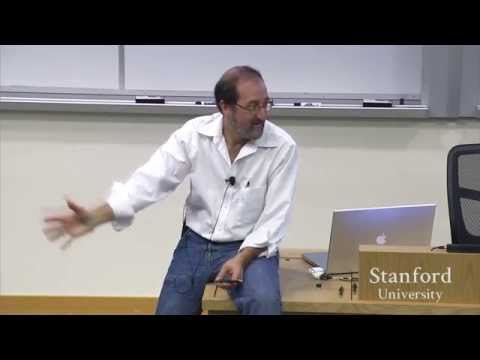
This is a guest lecture for EE292H Engineering and Climate Change at Stanford University, delivered by Rocco Mancinelli and David Beede, co-founders of Helio Bios. Rocco is a microbial ecologist and founding member of NASA’s Synthetic Biology Program, while David is a plant physiological ecologist with extensive experience in bioreactor design and ecological restoration.
The lecture covers:
-
The founders’ journey from NASA life support research to industrial biotechnology
-
The unique biological properties of marine cyanobacteria that enable low-cost sugar production
-
The eco-mimicry design principle that underpins their technology
-
A detailed technical and economic analysis of their process
-
Partnerships with national labs and aquaculture companies for scale-up
-
An open Q&A addressing environmental impacts, engineering challenges, and commercialization pathways
Two. Key Learning Takeaways
-
Marine cyanobacteria naturally excrete sugars outside their cells, eliminating the energy-intensive cell lysis and extraction steps that cripple most algae-based biofuel processes.
-
Cyanobacteria have the highest photosynthetic efficiency of any known organism, converting sunlight to chemical energy at rates far exceeding terrestrial plants.
-
A mixed, non-GMO cyanobacterial consortium is far more robust and productive than monocultures, resisting contamination and predation without pesticides or fertilizers.
-
The process uses only seawater, sunlight, and air, avoiding competition with food crops for freshwater or arable land.
-
Desalination and sugar separation account for 50% of total production costs and represent the biggest engineering challenge to commercialization.
-
An integrated coastal biorefinery model that combines cyanobacteria cultivation with aquaculture and anaerobic digestion can achieve positive energy and mass balances.
-
The technology is targeting 100 tons of sugar per acre per year—20x more productive than corn and 8x more productive than sugarcane for biofuel feedstock.
Three. Course Gold Quotes
-
"Cyanobacteria invented photosynthesis 3.5 billion years ago and gave us the oxygen we breathe. Now we’re using them to save the planet from the carbon we’ve put back into the atmosphere."
-
"Eco-mimicry isn’t just copying a single organism—it’s copying how entire ecosystems work together to cycle nutrients and energy efficiently."
-
"The biofuels industry has spent billions trying to genetically engineer organisms to do what marine cyanobacteria already do naturally: excrete sugar."
-
"You can’t compete with 100 years of oil infrastructure on price alone. You have to build a system that is more efficient, more sustainable, and creates more value from every input."
-
"The biggest mistake most biofuel startups make is trying to make one product. To survive, you need an integrated biorefinery that monetizes every single stream coming out of your process."
-
"We don’t need to modify nature to solve our problems. We just need to learn how to work with nature better."
-
"A barrel of oil isn’t just gasoline—it’s plastics, pharmaceuticals, fertilizers, and thousands of other products. We need to replace the whole barrel, not just the fuel."
Four. Layered Learning Notes
Module 1: Company Origins and Early Lessons
-
The founders began their collaboration at NASA Ames Research Center, designing closed-loop life support systems for long-duration space missions.
-
In 2005, they initially attempted to genetically engineer cyanobacteria to produce ethanol directly, but encountered three insurmountable problems:
-
High ethanol concentrations were toxic to the bacteria, killing them before significant production could occur
-
Attempts to regulate production reduced overall productivity by 70%
-
Ethanol evaporated rapidly from open ponds, requiring expensive capture systems
-
-
They abandoned the ethanol approach after observing that wild marine cyanobacteria naturally excrete large quantities of sugars into their environment—a biological trait that had been largely overlooked by the biofuels industry.
-
The company was incorporated in 2010 and incubated at the SETI Institute before partnering with SRI International for analytical support.
Module 2: Cyanobacteria Biology and Competitive Advantages
-
Cyanobacteria (formerly called blue-green algae) are prokaryotic bacteria, not true algae, and represent the oldest photosynthetic lineage on Earth.
-
Key biological properties that make them ideal for industrial use:
-
Highest photosynthetic efficiency: Convert 8-10% of incoming sunlight to chemical energy, compared to 1-2% for terrestrial plants
-
Natural sugar excretion: Marine strains release 30-50% of their fixed carbon as dissolved sugars, eliminating the need for cell harvesting and lysis
-
Nitrogen fixation: Some strains in the consortium fix atmospheric nitrogen, eliminating the need for synthetic fertilizers
-
Extreme hardiness: Thrive in high salinity, high temperature, and nutrient-poor environments
-
-
Critical differences between cyanobacteria and algae-based systems:
|
Feature |
Helio Bios Cyanobacteria |
Traditional Algae Biofuels |
|---|---|---|
|
Organism type |
Prokaryotic bacteria |
Eukaryotic algae |
|
Water source |
Seawater |
Freshwater |
|
Product location |
Extracellular (excreted) |
Intracellular (requires extraction) |
|
Culture type |
Mixed natural consortium |
Genetically modified monoculture |
|
Fertilizer required |
None |
High |
|
Pesticides required |
None |
High |
Module 3: Eco-Mimicry System Design
-
Eco-mimicry extends biomimicry to entire ecosystems, designing industrial processes that replicate natural nutrient cycles and community structures.
-
The core innovation is an artificially assembled cyanobacterial consortium containing multiple complementary strains:
-
Sugar-excreting strains that produce the primary product
-
Nitrogen-fixing strains that provide nutrients to the community
-
Helper strains that consume waste products and prevent contamination
-
-
This mixed community approach provides:
-
Inherent stability: Resists crashes from predation or contamination
-
Self-sufficiency: Requires no external inputs beyond seawater, air, and sunlight
-
Higher productivity: Synergistic interactions between strains increase overall output by 40% compared to monocultures
-
-
The system uses shallow, open raceway ponds with a 3-week batch residence time, optimized to harvest sugars at peak concentration before they can be consumed by other organisms.
Module 4: Technical and Economic Analysis
-
NREL’s ENCAP program conducted a detailed techno-economic analysis of the process, projecting a minimum sugar selling price of 12-18 cents per pound.
-
Cost breakdown:
-
Pond operation and maintenance: 30%
-
Sugar separation and desalination: 50%
-
Capital equipment: 20%
-
-
Desalination is the single largest cost and energy consumer, as sugar and salt molecules have similar molecular weights and require specialized membrane filtration.
-
Lifecycle greenhouse gas analysis shows the process produces 75% fewer emissions than petroleum gasoline, qualifying for advanced biofuel credits under the EPA’s Renewable Fuel Standard.
-
Energy return on investment (EROI) is projected to be 3:1, improving to 5:1 with integrated co-product utilization.
Module 5: Scale-Up Plan and Strategic Partnerships
-
The company is currently scaling from 150-liter laboratory cultures to 10,000-gallon pilot tanks at Moss Landing Marine Laboratory.
-
The next phase will be a 1-acre demonstration pond in partnership with Monterey Blue Water Farms, an aquaculture company.
-
Modular design allows for incremental scale-up: additional 1-acre ponds can be added as demand increases, avoiding the high capital risk of large single facilities.
-
Key strategic partners:
-
SRI International: Chemical and biological analysis
-
Lawrence Berkeley National Laboratory: Membrane technology development
-
NREL: Techno-economic and lifecycle analysis
-
NovaSep and Dow Chemical: Sugar separation system design
-
-
Target commercialization timeline: 5 years for initial bioproducts, 10 years for large-scale biofuel production.
Module 6: Integrated Coastal Biorefinery Model
-
The long-term vision is an integrated coastal biorefinery that creates a closed-loop system with zero waste:
-
Cyanobacteria ponds produce sugar and biomass
-
Sugar is converted to biofuels, bioplastics, and pharmaceuticals
-
CO₂ from fermentation is recycled back into the ponds
-
Wastewater from aquaculture operations provides nutrients for the cyanobacteria
-
Cyanobacterial biomass is used as fish feed or digested to produce biogas
-
Biogas powers the facility, making it energy self-sufficient
-
-
This model addresses the biggest challenge facing all biofuel processes: creating sufficient value to compete with fossil fuels.
-
Ideal locations are coastal desert regions with abundant sunlight, access to seawater, and low land costs, such as Baja California, the Arabian Peninsula, and North Africa.
-
Wishing you all the curiosity and creativity to explore the intersection of biology and engineering in solving our greatest climate challenges. The natural world has already developed most of the solutions we need—we just need the wisdom to learn from it and the ingenuity to apply it at scale. Keep asking questions, collaborating across disciplines, and never underestimate the power of tiny organisms to change the world.