One. Course Details
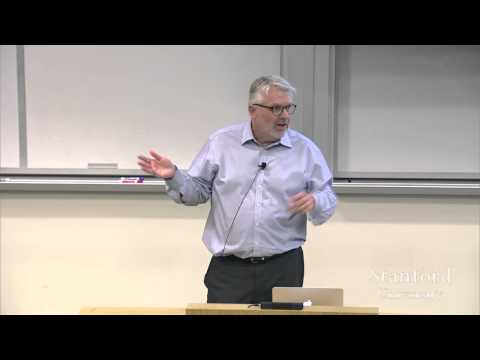
This is a guest lecture for EE292H Engineering and Climate Change at Stanford University, delivered by Jack, a Cornell-trained architect, archaeological restoration specialist, and founder of a modular building technology startup. The speaker led the restoration of the Temple of Apollo Hylates in Cyprus and draws on 30 years of architectural experience to connect ancient civilization collapse to modern climate challenges.
The lecture combines:
-
An art history perspective on how climate change destroyed major Mediterranean and European civilizations
-
A deep dive into the 47% of global electricity consumed by buildings—the single largest energy end-use sector
-
Two breakthrough building technologies: rebar-free modular concrete construction and NASA-derived super insulation
-
A business case for net-zero buildings, including U.S. Department of Defense (DOD) pilot projects
-
An open Q&A addressing building codes, resilience, and the future of the electrical grid
Two. Key Learning Takeaways
-
Climate change has repeatedly collapsed advanced civilizations throughout history, with even small temperature shifts destroying agricultural economies and major cities.
-
Reducing building energy demand is the most cost-effective climate solution, far cheaper than deploying new renewable energy generation at scale.
-
A rebar-free interlocking modular concrete system can automate construction, cut build times by 30%, and reduce material costs by 10%.
-
NASA-derived multi-layer radiant insulation achieves R-60+ thermal performance in an 8-inch wall, 2-3x better than standard code-compliant construction.
-
The widely used R-value insulation rating system is fundamentally flawed, as it ignores radiant heat transfer and systematically undervalues high-performance technologies.
-
Building-level microgrids and islanding capability are far more resilient than centralized smart grids, protecting against physical attacks and climate disasters.
-
One-third of global building stock will be replaced over the next 25 years, creating an unprecedented opportunity to deploy net-zero technologies.
Three. Course Gold Quotes
-
"Art history teaches us to see the remains of failed societies—and ask what really killed them. Climate change took down Ephesus, the New York City of the ancient world."
-
"R-values are fantasy. They’re the fiction section of the building code library, invented by the fiberglass industry to sell more fiberglass."
-
"Drive energy demand to the floor first, and every renewable technology you can think of suddenly becomes economically viable."
-
"The astronauts didn’t go to the moon wrapped in 12 inches of fiberglass. They used thin layers of radiant insulation—and we’re just now bringing that technology to buildings 50 years later."
-
"A centralized smart grid is still a single point of failure. The most resilient grid is a building that doesn’t need the grid at all."
-
"The ancients built cities that lasted 2,000 years. We build buildings that fall apart in 50. We can do better."
-
"We don’t need fancy new energy technologies to solve climate change. We just need to stop wasting 90% of the energy we already produce."
Four. Layered Learning Notes
Module 1: Climate Change and the Collapse of Ancient Civilizations
-
Three Mediterranean archaeological sites provide clear evidence of climate-driven civilization collapse:
-
Curion (Cyprus): A thriving sanctuary to Apollo the Woodland God, now surrounded by desert—evidence of a 2,000-year shift from lush forest to arid scrubland.
-
Ephesus (Turkey): The commercial capital of the ancient world, abandoned when its harbor silted up due to changing rainfall patterns and soil erosion.
-
Leptus Magna (Libya): A major Roman port city, now stranded 5 kilometers inland in the Sahara Desert.
-
-
The Scottish Borders region demonstrates how small temperature shifts transform societies:
-
During the Medieval Warm Period (1100 CE), four major abbeys (equivalent to small colleges) flourished in an area now considered too cold for large-scale agriculture.
-
The onset of the Little Ice Age (1300-1600 CE) collapsed the local economy, turned the region into a war zone, and left the abbeys in ruins.
-
-
These examples show that even 1-2°C temperature changes can have catastrophic societal impacts—making today’s projected 3-7°C warming an existential threat.
Module 2: The Building Energy Waste Crisis
-
Buildings consume 47% of all electricity generated in the United States, more than industry and transportation combined.
-
Most of this energy is wasted due to poor insulation, leaky envelopes, and oversized mechanical systems.
-
The building industry has resisted innovation for decades, relying on 100-year-old construction methods and outdated performance metrics.
-
The R-value system, developed in the 1940s, only measures conductive heat transfer and completely ignores radiant heat—accounting for 50% of heat loss in buildings.
-
This flawed system creates a regulatory barrier to high-performance technologies, as their actual energy savings are not recognized in building codes.
Module 3: Rebar-Free Modular Concrete Construction
-
The speaker’s structural technology uses large interlocking concrete blocks with male/female corners that lock together on all axes.
-
A soft caulking material is injected between blocks, creating a composite structure that is stronger than traditional reinforced concrete.
-
No rebar is required, eliminating the single largest labor cost in concrete construction and enabling full factory automation.
-
The cellular structure provides inherent earthquake resistance, with redundancy similar to a beehive—damage to one section does not compromise the entire building.
-
Construction time is reduced by 30% compared to conventional methods, and buildings can be disassembled and reused at the end of their life.
Module 4: NASA-Derived Super Insulation Technology
-
The thermal technology adapts the multi-layer radiant insulation used in Apollo spacecraft to building walls.
-
Curved wall panels create small, sealed air spaces lined with nano-deposited foil, blocking all three forms of heat transfer: conductive, convective, and radiant.
-
An 8-inch wall achieves R-60+ performance, equivalent to 18 inches of fiberglass insulation.
-
Test homes have shown 75-90% reductions in heating and cooling costs compared to code-compliant buildings.
-
The technology also creates an airtight envelope, eliminating drafts and improving indoor air quality.
Module 5: Commercialization Pathway and Market Opportunities
-
The DOD is the first major customer, as their overseas bases run on expensive diesel generators and have urgent energy security needs.
-
The speaker’s containerized buildings achieve 28x better energy efficiency than standard DOD temporary structures, cutting total lifecycle costs by 50%.
-
A single gallon of gas can heat or cool one of these buildings for 275 hours, compared to 8.8 hours for a new DOD container.
-
Commercial market targets include:
-
Senior housing and affordable housing
-
Homeless shelters and emergency housing
-
30-story urban condominiums
-
-
The buildings cost 10% less to build and 40% less to operate than conventional buildings, making them highly attractive to developers.
Module 6: Building Resilience and the Future of Energy
-
Net-zero buildings with on-site generation and storage can operate independently of the grid, providing critical resilience during climate disasters and grid failures.
-
The 2013 Metcalf substation shooting, which nearly caused a Bay Area-wide blackout, exposed the extreme vulnerability of centralized energy infrastructure.
-
Building-level microgrids are far more secure and resilient than centralized smart grids, as they eliminate single points of failure.
-
Combined heat and power (CHP) systems can provide baseload power for net-zero buildings, with solar PV and battery storage providing peak power.
-
Lawrence Livermore National Laboratory is partnering with the speaker to model the structural and thermal performance of these buildings under extreme climate conditions.
Wishing you all the creativity to bridge engineering and architecture, and the passion to build a more sustainable and resilient future. The buildings we design today will shape the world for centuries to come—just as the ancient Greeks’ buildings shaped ours. Keep questioning outdated norms, collaborating across disciplines, and never stop imagining better ways to build.