One. Course Details
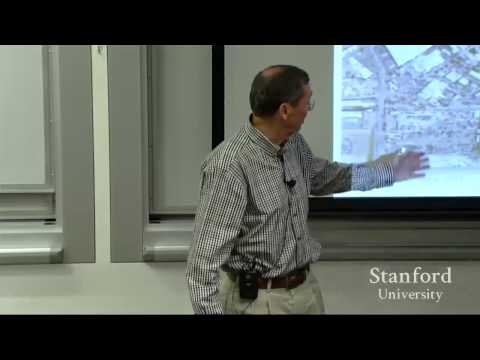
This is the final lecture of EE292H Engineering and Climate Change, delivered by the Stanford Center for Professional Development and taught by course instructor Leslie Field, a veteran engineer and climate researcher. The lecture wraps up the quarter’s curriculum, covers climate geoengineering as an emergency backup strategy, and details Field’s groundbreaking research on reversible artificial ice caps to slow Arctic melt.
Key course logistics:
-
Final homework: Submit all lecture summaries by Monday (only 9 out of 10 summaries required to pass)
-
Course videos will remain available via SCPD through the end of the week, then move to YouTube
-
Optional alumni email list available for ongoing climate discussions
-
Recommended resources: The documentary Chasing Ice and the 30,000-person AGU Earth Science Conference in San Francisco
Two. Key Learning Takeaways
-
Arctic ice melt is now accelerating 20x faster than early 2000s rates, far exceeding all IPCC projections.
-
The ice albedo feedback effect contributes at least 20% of global warming, creating a dangerous positive feedback loop as dark ocean absorbs more sunlight.
-
Geoengineering is an emergency backup only, not a replacement for carbon mitigation and adaptation.
-
Soft geoengineering (local, reversible, nature-based solutions) carries far lower risk than large-scale solar radiation management techniques.
-
The biggest challenges to climate action are not technical – they are political, governance, and moral hazard issues.
-
Current CO₂ levels already commit the planet to ~2°C of warming, even with immediate zero emissions.
-
Ocean acidification remains an unaddressed crisis that no solar radiation management technique can solve.
Three. Course Gold Quotes
-
"Climate change will be the defining issue of your careers if you choose to take it on." – Leslie Field
-
"Geoengineering is the band-aid we hope we never need, but we have to study it before our backs are against the wall." – Leslie Field
-
"The last thing we want is to panic and deploy a half-baked solution that makes things worse." – Leslie Field
-
"First do no harm. That’s the guiding principle of soft geoengineering – leave no trace, and be able to undo everything if we get it wrong." – Leslie Field
-
"Mitigation and adaptation are non-negotiable. Geoengineering can only buy us time to do the real work." – Leslie Field
-
"The best thing I can do for the climate is inspire brilliant students like you to take action. You are the hope." – Leslie Field
-
"Once you start stratospheric aerosol injection, you can never stop. If you do, temperatures spike faster than any species can adapt." – Leslie Field
Four. Layered Learning Notes
Module 1: The Unfolding Climate Emergency
-
Global CO₂ concentrations have spiked to unprecedented levels in 400,000 years, driven by fossil fuel combustion.
-
MIT’s "wheel of misfortune" projects a 3-4°C global temperature increase by mid-century under current emission trends.
-
Consequences include accelerating sea level rise (17 inches already in Chesapeake Bay), shifting weather patterns, crop failures, and a mass extinction event.
-
The Arctic is warming 2-3x faster than the rest of the planet, with summer sea ice projected to disappear entirely within decades.
Module 2: Geoengineering – Definitions and Moral Dilemmas
-
Three primary responses to climate change:
-
Mitigation: Reducing greenhouse gas emissions (the only permanent solution)
-
Adaptation: Building resilience to existing and future climate impacts
-
Geoengineering: Deliberate large-scale modification of the Earth’s climate system
-
-
Moral hazard risk: Climate deniers may use geoengineering as an excuse to avoid cutting emissions.
-
Governance gap: No international framework exists to regulate geoengineering experiments or deployments.
-
Irreversibility risk: Many large-scale geoengineering techniques would have permanent or catastrophic consequences if stopped abruptly.
Module 3: Solar Radiation Management (SRM) Techniques
-
Stratospheric sulfate aerosol injection: Mimics volcanic eruptions to reflect sunlight. Inexpensive and fast-acting, but risks disrupting global rainfall patterns and does nothing for ocean acidification.
-
Ocean iron fertilization: Dumping iron to stimulate phytoplankton growth and carbon sequestration. Unproven at scale and risks disrupting marine ecosystems.
-
Space sunshades: Trillions of tiny orbiting mirrors to block sunlight. Prohibitively expensive and logistically impossible with current technology.
-
All SRM techniques treat the symptom of global warming, not the root cause of excess CO₂.
Module 4: Soft Geoengineering – The Instructor’s Research
-
Field’s pioneering work focuses on reversible artificial ice caps to restore the ice albedo effect.
-
The technology uses small, floating recycled glass beads contained in mesh bags to reflect sunlight while allowing evaporation.
-
Field testing in Sierra Nevada lakes has shown 70cm greater ice retention under the materials compared to open water.
-
Estimated cost: ~1 cent per square meter for materials, making large-scale deployment economically feasible.
-
Key advantages: Local, reversible, low environmental impact, and uses recycled materials.
Module 5: The Ice Albedo Feedback Loop
-
Multi-year Arctic ice reflects ~90% of incoming sunlight, while open ocean absorbs ~90%.
-
As ice melts, more dark ocean is exposed, absorbing more heat and melting more ice in a self-reinforcing cycle.
-
This feedback loop is now accelerating faster than any climate model predicted, creating a tipping point for irreversible Arctic ice loss.
-
Protecting and restoring Arctic ice could slow global warming by 20% and buy critical time for carbon mitigation.
Module 6: Actionable Steps for Engineers
-
Start small: Every engineer can contribute through energy efficiency, renewable energy, and sustainable design.
-
Collaborate across disciplines: Climate solutions require mechanical, electrical, chemical, and civil engineers working with scientists, policymakers, and communities.
-
Advocate for policy: Technical solutions alone are not enough – political will is essential.
-
Consider climate careers: The field is growing rapidly, with enormous opportunities for innovation and impact.
-
Never lose hope: While the challenge is daunting, human ingenuity and collective action can still turn the tide.
Wishing you all the courage, creativity, and persistence to tackle the greatest challenge of our generation. Climate change is daunting, but every engineer, every idea, and every small action adds up to make a difference. Keep asking tough questions, collaborating across disciplines, and never lose hope that we can build a sustainable future for generations to come.