One. Course Details
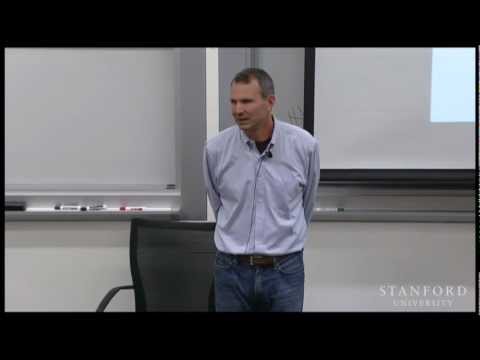
This is the sixth lecture of EE292H Engineering and Climate Change, delivered by the Stanford Center for Professional Development. The guest speaker is Dave Duff, senior mechanical engineer at Tesla Motors and a Stanford-affiliated engineer with prior experience at Lockheed Martin, Wet Design (creator of the Bellagio Fountains), and Xerox PARC’s modular robotics program.
The course follows a pass/no pass grading system, with weekly homework requiring lecture summaries, optional readings, and one burning question submitted to the instructor. Upcoming sessions will feature Professor Dick Luthie (civil and environmental engineering) discussing global water crises after the Thanksgiving break. Critical note: Professor Will Chua’s restricted electrochemical fuels lecture will be permanently removed from all access within 24 hours, marking the final opportunity to view the content.
Two. Key Learning Takeaways
-
The global transportation sector relies 99% exclusively on petroleum fuels, making it the single hardest sector to decarbonize.
-
Electric vehicles achieve 80% energy efficiency from battery to wheels, compared to just 25% for internal combustion engines.
-
Battery cost and energy density are the primary bottlenecks to mass EV adoption, not motor or power electronics technology.
-
Tesla’s top-down business model intentionally started with high-end luxury vehicles to fund the development of cheaper, mass-market models over time.
-
All-aluminum construction and extreme aerodynamic design are non-negotiable for EVs to offset heavy battery weight and maximize driving range.
-
The global automotive supply chain is extraordinarily fragile, with single-source components capable of halting production worldwide for weeks.
-
Vehicle-to-grid (V2G) technology has untapped potential to solve grid storage challenges by leveraging millions of existing EV batteries as distributed energy resources.
Three. Course Gold Quotes
-
"Fuels are just such an efficient carrier of energy that it is very difficult to do anything else in the transportation sector." – Dave Duff
-
"If battery packs were cheap, you wouldn't necessarily care how big or efficient the car was. But because they're expensive, there's a huge motivation to make them as small as possible." – Dave Duff
-
"Building a car has 5-10,000 parts, and every single one has to be there or you can't ship it. That's the unforgiving reality of manufacturing." – Dave Duff
-
"The goal of Tesla was never to be the only electric car company. It was to prove that electric cars could be real cars that people actually want to drive." – Dave Duff
-
"Elon isn't out there to beat everybody. He just wants this to be the starting point for electric vehicles everywhere." – Dave Duff
-
"You can push lithium-ion cells really hard as long as you watch their temperature. That's why supercharging works so well." – Dave Duff
-
"The biggest challenge isn't the technology. It's getting dozens of companies to agree on a single standard for anything." – Dave Duff (on battery swapping)
Four. Layered Learning Notes
Module 1: The Fundamental Energy Problem in Transportation
-
The Lawrence Livermore National Laboratory energy flow chart reveals transportation is the only major economic sector almost entirely dependent on a single fuel source.
-
Internal combustion engines are inherently inefficient: only 25% of the energy in gasoline reaches the wheels, with the remaining 75% lost as waste heat.
-
Centralized power plants achieve 40-60% efficiency because they face no weight or size constraints, making grid electricity a fundamentally better energy source for vehicles.
-
Well-to-wheels analysis confirms EVs produce far lower lifecycle emissions than gas cars, even when powered by electricity generated from fossil fuels.
Module 2: Battery Technology – The Make-or-Break Component
-
The 18650 lithium-ion cell (18mm diameter, 65mm length) became the industry standard for EVs thanks to massive economies of scale from laptop and consumer electronics production.
-
Current cells deliver approximately 200 Wh/kg at the cell level, but pack-level energy density drops to 100-140 Wh/kg due to packaging, electronics, cooling systems, and dead space.
-
Battery management systems (BMS) are critical safety components that monitor individual cell voltage, temperature, and state of charge to prevent thermal runaway.
-
Tesla uses active liquid cooling to maintain batteries within their optimal operating range, even heating packs in cold climates to improve performance and extend lifespan.
-
Battery costs currently represent 30-40% of an EV’s total purchase price (~$450/kWh for production packs). Costs must drop to $150/kWh to achieve mass market parity with gas cars.
Module 3: Tesla’s Business and Product Evolution
-
Founded in 2003, Tesla launched with the Roadster (based on the Lotus Elise chassis) to disprove the myth that EVs were slow, impractical, and only for environmental enthusiasts.
-
The Roadster delivered 240 miles of range and 0-60 mph acceleration in under 4 seconds, attracting high-profile customers and proving EVs could be desirable performance vehicles.
-
The Model S (2012) was Tesla’s first ground-up design, featuring an all-aluminum body and a flat battery pack mounted under the floor for optimal weight distribution and handling.
-
Strategic partnerships with Daimler (Mercedes-Benz) and Toyota provided critical funding and manufacturing expertise, including access to the 5 million square foot Fremont factory (formerly the NUMMI joint venture).
-
The Fremont factory houses full stamping, injection molding, and assembly capabilities, producing all major components of the Model S on-site.
Module 4: Manufacturing Challenges and Realities
-
Automotive manufacturing is uniquely complex: a single missing component (such as a door latch) can halt production for weeks and leave hundreds of finished cars sitting in parking lots.
-
Aluminum construction requires entirely different manufacturing processes than steel, including specialized extrusion, casting, and joining techniques.
-
Prototype development is extremely costly and time-consuming: custom stamping dies for body panels cost millions of dollars and take months to produce.
-
Tesla’s early production ramp-up faced numerous delays, with supply chain disruptions and quality control issues slowing deliveries of the Model S.
-
Vertical integration helps Tesla control quality, reduce costs, and mitigate supply chain risks that plague many other automakers.
Module 5: Charging Infrastructure and Future Technologies
-
Tesla’s Supercharger network delivers 150 miles of range in 30 minutes, addressing the critical issue of range anxiety for long-distance travel.
-
Battery swapping is technically feasible (Tesla demonstrated a 10-minute pack swap with four technicians) but impractical due to the near-impossibility of achieving industry-wide standardization.
-
Vehicle-to-grid (V2G) technology could turn millions of EVs into distributed grid storage, solving the intermittency problem of wind and solar energy.
-
End-of-life battery recycling is already profitable: lithium-ion cells contain valuable metals that can be recovered and reused with minimal environmental impact.
-
Future battery innovations will focus on higher energy density, lower cost, longer cycle life, and faster charging capabilities.
Module 6: Engineering Lessons and Career Opportunities
-
Hands-on engineering skills are just as important as theoretical knowledge, especially in manufacturing and product development roles.
-
EV engineering requires cross-disciplinary collaboration between mechanical, electrical, chemical, and software engineers.
-
The electric vehicle industry is still in its early stages, with enormous opportunities for innovation in batteries, motors, charging infrastructure, and autonomous driving.
-
Decarbonizing transportation is one of the most impactful ways engineers can address climate change and build a sustainable future.
-
Wishing you all the best as you explore the dynamic and rapidly growing field of electric vehicle engineering. The transition to clean transportation is one of the most important engineering challenges of our time, and your skills and creativity will be critical to building a carbon-free future. Keep building cool things, asking tough questions, and never stop pushing the boundaries of what’s possible.