Speaker Profile
This lecture is delivered by William Chueh, Assistant Professor in the Department of Materials Science and Engineering and Center Fellow at the Precourt Institute for Energy at Stanford University. A globally recognized leader in energy storage and electrochemistry, Dr. Chueh holds a BS in Applied Physics, along with an MS and PhD in Materials Science from Caltech, and has earned top honors including the 2018 MRS Outstanding Young Investigator Award, a spot on MIT Technology Review’s 2012 Top 35 Innovators Under 35 list, and the Volkswagen BASF Science Award in Electrochemistry.
Target Audience
-
Students and researchers in materials science, electrical engineering, energy policy, and environmental science
-
Utility operators, grid planners, and renewable energy industry professionals
-
Investors, startup operators, and business leaders in the clean energy and mobility sectors
-
Policymakers and regulators focused on decarbonization and grid modernization
Course Overview
In this session, Dr. Chueh breaks down the transformative impact of falling battery and renewable energy costs, and the critical role energy storage plays in two global revolutions: the full electrification of transportation, and the decarbonization of the electrical grid. He explains the core use cases for grid-scale energy storage, compares competing storage technologies, dissects the technical and economic limits of lithium-ion batteries, and emphasizes the non-negotiable link between technical innovation and real-world business use cases.
Core Topics Covered
-
Plummeting cost curves for lithium-ion batteries, wind, and solar power
-
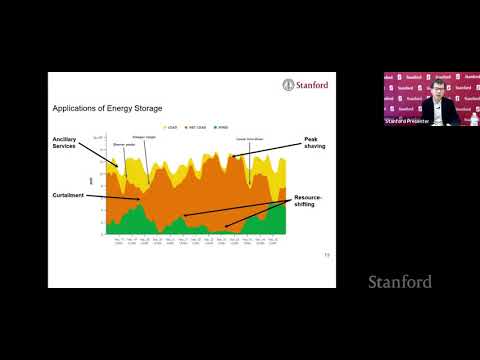
Grid storage use cases, from second-scale frequency regulation to seasonal energy shifting
-
The California duck curve, curtailment, and the technical stress of variable renewable generation
-
Critical performance metrics for energy storage technologies
-
Full taxonomy of storage solutions (electrochemical, mechanical, thermal, chemical, and electromagnetic)
-
Lithium-ion battery economics, scaling, material constraints, and future innovation pathways
-
Policy drivers for storage adoption and the emerging second-life EV battery market