One. Course Details
One-Sentence Course Summary
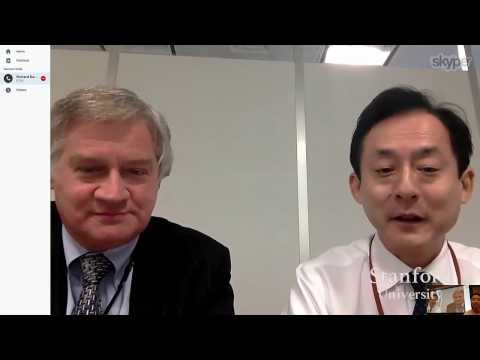
This university guest lecture, co-led by the head of international venture partnerships at Tokyo Electric Power Company (TEPCO) and the executive team of U.S. distributed wind startup United Wind, delivers an on-the-ground breakdown of Japan’s post-Fukushima electricity market overhaul, the end-to-end scalable business model for behind-the-meter distributed wind energy, and the mechanics of mutually beneficial strategic partnerships between legacy incumbent utilities and agile clean tech startups.
This live session is designed for undergraduate and graduate students in energy engineering, environmental economics, clean tech entrepreneurship, utility regulation, and international energy policy. It combines real-time market data, first-hand operational insights from both the utility and startup perspectives, and a live Q&A that addresses regulatory, financial, and technical barriers to distributed renewable energy deployment in Japan and across Asia. The lecture centers on the irreversible structural shifts reshaping the $7 trillion global energy industry, with a focus on actionable, market-proven models for decarbonization.
Two. Key Learning Takeaways
-
Japan completed full retail electricity market deregulation in April 2016, opening the market to over 100 new power suppliers and forcing incumbent utilities like TEPCO to adapt to a shrinking domestic market, intensifying competition, and post-Fukushima national energy security risks.
-
The global energy sector is being fundamentally upended by four interconnected, irreversible mega-trends, known as the 4 Ds: deregulation, decentralization, decarbonization, and digitalization.
-
United Wind’s core competitive moat comes from its zero-upfront-cost 20-year wind lease model, fully in-house project capabilities, and ironclad 20-year performance guarantee, which delivers consistent 25%+ electricity savings for rural, agricultural, and commercial customers across the U.S.
-
Cross-border partnerships between legacy utilities and clean tech startups create powerful, mutually beneficial value: utilities gain access to agile, market-proven distributed energy technology and startup speed, while startups get streamlined international market entry, unmatched regulatory and grid interconnection expertise, and strategic institutional capital.
-
The 2011 Fukushima nuclear disaster completely upended Japan’s national energy mix: all nuclear reactors (once the country’s core baseload power source) were shut down, forcing Japan to import nearly 100% of its fossil fuels at a steep global market premium, while rapidly scaling renewables via a national feed-in tariff (FIT) system launched in July 2012.
-
The primary barriers to distributed wind growth in Japan are underdeveloped regulatory frameworks for small-scale wind, a lack of granular wind resource mapping technology, and a mountainous geography that restricts utility-scale wind but creates significant untapped opportunity for small, distributed turbines in rural areas.
-
Successful renewable project financing in the U.S. relies on specialized tax structures (including the partnership flip model) to monetize federal renewable tax credits, a core structural difference from the simplified, government-guaranteed FIT models used in Japan and most of Europe.
-
The biggest friction point in utility-startup partnerships is aligning the slow, risk-averse, consensus-driven decision-making of large incumbent utilities with the fast-paced, agile execution requirements of venture-backed clean tech startups.
Three. Memorable Lecture Quotes
-
“We’re trying to disrupt ourselves before we get disrupted by someone else.”
-
“Our vision at United Wind has always been consistent: to provide affordable, clean energy to millions of property owners globally.”
-
“Drastic transformation and disruption is going on in the energy industry around the world, and that is why we need to proactively act on these challenges.”
-
“One of the biggest killers for startups is trying to do too many things too quickly and losing focus.”
-
“When you have the largest utility in the third largest economy in the world calling you with interest, it’s a phone call you want to take and take very seriously.”
-
“We look for technology and business models that will disrupt the energy industry in the future. It has to be big, it has to be disruptive.”
-
“From an energy security standpoint, we need to make use of every kind of renewable resource available in Japan.”
-
“The biggest challenge for this partnership was navigating TEPCO’s traditional, conservative, and slow internal decision-making process to make a fast-moving venture investment.”
Four. In-Depth Lecture Study Notes
Formatted as a U.S. university student’s annotated in-class lecture notes, with layered thematic breakdowns and critical on-the-record details
Module 1: TEPCO’s Post-Fukushima Transformation & Japan’s Energy Market Reform
-
TEPCO Core Background: TEPCO is Japan’s largest incumbent utility, serving 29 million customers across the Tokyo metro area and accounting for roughly one-third of Japan’s total national electricity demand. It holds the world’s highest standard for electricity supply reliability, and has delivered 600+ technical consulting projects across 70 countries in the past decade.
-
2011 Fukushima Nuclear Crisis Impact: The March 2011 earthquake and tsunami left TEPCO virtually bankrupt, resulting in full nationalization by the Japanese government. All of its nuclear reactors were shut down, forcing an emergency shift to imported fossil fuels (LNG, coal, oil) at the highest prices in the global market. Fukushima decommissioning, decontamination, and victim compensation remain the core responsibilities of TEPCO’s holding company.
-
2016 Organizational Restructuring: TEPCO shifted to a holding company structure in April 2016, with three core subsidiaries: thermal power generation, transmission & distribution, and retail energy. It also formed a joint venture with Chubu Electric Power called JERA, which handles all fuel procurement and domestic/international thermal power generation.
-
Japan’s Deregulation Timeline & Milestones:
-
2000: Launched phased retail electricity market deregulation
-
2015: Established an independent system operator (ISO) modeled directly after U.S. ISO structures
-
April 2016: Completed full retail market deregulation, allowing all residential customers to choose any electricity supplier
-
2020: Mandatory legal structural unbundling for all incumbent Japanese utilities
-
-
Domestic Market Shifts: TEPCO has already lost roughly 1 million customers to new market entrants. Japan’s overall power demand is shrinking due to population decline and nationwide energy efficiency gains, pushing TEPCO to pursue international growth, with a primary focus on fast-growing Asian markets.
-
Japan’s Evolving Energy Mix:
-
Pre-2011: Balanced mix with nuclear power as the primary baseload generation resource
-
2014: Near-total reliance on imported fossil fuels, with zero operational nuclear reactors
-
Renewable Growth: Renewable capacity grew from 1.5 GW in 2011 to nearly 10 GW by the time of the lecture, with a national 20–30 GW growth target in the coming years, driven by the 2012 FIT system.
-
Module 2: The 4 Ds of Global Energy Transformation
The lecture identifies four non-negotiable mega-trends reshaping every corner of the global energy industry:
-
Deregulation: Global shift from monopolized, vertically integrated utility markets to competitive, open retail markets, led by the U.S., UK, and Europe, with major Asian economies including Japan now following suit.
-
Decentralization: Structural shift from large, centralized fossil fuel and nuclear power plants to distributed energy resources (DERs), including small-scale wind, rooftop solar, and behind-the-meter battery storage located close to the end customer.
-
Decarbonization: Rapid global scaling of renewable energy (solar, wind, biomass) to reduce greenhouse gas emissions, with new renewable energy installations now outnumbering new fossil fuel builds in the U.S.
-
Digitalization: Integration of IT, intelligent software, and data analytics to manage distributed energy resources, optimize grid performance, and unlock new business models in the decentralized energy system.
Module 3: United Wind’s End-to-End Distributed Wind Business Model
-
Company Origins: United Wind began as Wind Analytics, a software firm that built a proprietary tool to accurately predict wind resources at a specific latitude and longitude for rural and residential customers. It merged with a leading wind installation firm in 2013 to form United Wind, later adding in-house financing capabilities to create a full-stack business model.
-
Core Business Model: Full-suite development and asset management company for distributed wind turbines (ranging from 10 kW to 900 kW in size), centered on a 20-year wind lease model for end customers.
-
Core Customer Value Proposition:
-
100% of upfront capital costs are covered by United Wind, with zero out-of-pocket expense for the customer
-
Guaranteed 25%+ electricity savings over the full 20-year lease term
-
Ironclad performance guarantee for the turbine over the life of the lease
-
End-to-end in-house service: wind resource analysis, financing, installation, and 20 years of operations & maintenance (O&M)
-
-
In-House Capability Advantage: Unlike most distributed solar firms that outsource installation and O&M, United Wind acquired its installation partner to bring all core capabilities in-house, reducing costs and improving margin control.
-
Proprietary Wind Analytics Software: The foundational core of the business, which triangulates weather station data, accounts for site obstructions, and delivers highly accurate wind resource predictions. This tool allows the company to guarantee turbine performance to both customers and institutional investors, creating a natural barrier to market entry.
-
Lease Structure & Customer Options: A 20-year fixed monthly lease for customers. At the end of the term, customers have four options: renew the lease, purchase the turbine outright, request removal (with a pre-defined cost-sharing structure), or abandon the system to allow United Wind to sell wholesale power to the local utility.
-
U.S. Market Dynamics:
-
U.S. net metering rules allow customers to receive full retail credit for excess electricity sent back to the grid, with turbines typically covering 50–100% of a customer’s on-site electricity load.
-
Primary market focus has shifted from New York to the U.S. Midwest, where wind resources are strongest, and distributed wind consistently undercuts distributed solar on cost.
-
Total addressable U.S. market is valued at multiple billions of dollars, with the company still in the early stages of national penetration.
-
-
Project Financing Structures:
-
Single-investor lease: A simple structure where developed assets are sold to an investor that captures both the tax benefits and ongoing cash flow from the project.
-
Partnership flip: A U.S.-specific tax structure that monetizes federal renewable tax credits, in partnership with large institutional tax investors (e.g., U.S. Bank), to reduce the monthly lease cost for end customers.
-
The company has raised four dedicated project funds, with the fourth fund totaling ~$200 million for Midwest market deployment.
-
Module 4: The TEPCO-United Wind Strategic Partnership
-
Origins of the Partnership: TEPCO was actively scouting innovative U.S. and European energy startups, with the introduction made by Jeffrey Chow, a serial entrepreneur and angel investor with 20+ years of experience in Japan’s venture capital market.
-
TEPCO’s Core Rationale for the Partnership:
-
Japan has no established small-scale distributed wind market, despite a generous 55 yen/kWh feed-in tariff for small wind systems.
-
United Wind’s proprietary wind analytics software solves the single biggest barrier to small wind growth in Japan: the lack of accurate wind resource mapping and predictive modeling.
-
Northern Japan has viable, underutilized wind resources for small-scale turbines, with a large potential customer base of dairy farms, rural agricultural operations, municipalities, and factories.
-
The partnership creates a clear path to expand into other fast-growing Asian markets after proving the business model in Japan.
-
-
United Wind’s Core Rationale for the Partnership:
-
Aligns with the company’s global mission to expand distributed wind access, with a credible, established local partner for international market entry.
-
TEPCO brings unmatched regulatory, grid interconnection, and local market expertise in Japan, a critical barrier for a U.S. startup to navigate alone.
-
Japan’s feed-in tariff structure is highly lucrative for the exact small-scale turbine size that United Wind specializes in.
-
-
Deal Structure: TEPCO made a strategic venture capital investment in United Wind’s corporate entity, alongside other strategic investors including Statoil (Norway), Total (France), and Infor Equity Partners (Canada). TEPCO holds no management control, with the partnership focused on joint market research and potential future joint venture development in Japan.
-
Key Challenges Overcome:
-
TEPCO’s slow, conservative internal decision-making process, a common friction point between large Japanese corporations and fast-moving U.S. startups.
-
This marked TEPCO’s first international venture capital investment in a startup, requiring extensive internal alignment and risk assessment.
-
The full due diligence and investment process was completed in just a few months, a notably fast timeline for a large Japanese incumbent utility.
-
Module 5: Market Barriers, Regulatory Risks, and Future Roadmap
-
Japan Market Barriers:
-
Underdeveloped regulatory and permitting frameworks for small-scale distributed wind, as the market has not previously existed at scale.
-
Weak grid interconnection infrastructure in Japan, limiting the share of variable renewable energy that can be reliably integrated into the grid.
-
Mountainous geography restricts utility-scale wind development, but creates significant opportunity for small, distributed turbines in rural areas.
-
-
U.S. Market Barriers:
-
Widely varying state-level permitting, zoning, and setback rules for wind turbines.
-
Grid interconnection challenges with rural electric cooperatives, which are not obligated to purchase renewable energy like investor-owned utilities (IOUs) in the U.S.
-
-
5-Year Future Roadmap:
-
Joint market research in Japan to assess customer demand, lot size constraints, and regulatory requirements, with a target of the first United Wind turbine installed in Japan within 12 months of the lecture.
-
Potential joint venture formation in Japan after validating the market opportunity.
-
Long-term goal to expand the partnership into other Asian markets after proving the model in Japan.
-
United Wind targets capturing a meaningful share of Japan’s projected 10 GW of renewable energy growth over 15 years, with expansion into 2–3 additional Asian markets within 5 years.
-
-
TEPCO’s Broader Innovation Focus:
-
Beyond distributed wind, TEPCO is prioritizing digitalization and intelligent software to manage distributed energy resources and battery storage at scale.
-
Active discussions with Japanese automakers (Toyota, Nissan, Honda) to leverage electric vehicles (EVs) as distributed grid storage resources, utilizing parked EV batteries for grid aggregation and demand response.
-
Ongoing monitoring of hydrogen storage and fuel cell technology, with large-scale national R&D underway in Japan.
-
Wishing you continued academic growth and meaningful insights as you explore the dynamic global energy transition, renewable innovation, and cross-border clean tech collaboration. May these lecture notes serve as a strong foundation for your studies and future work in building a more sustainable, resilient global energy system.
-