One. Course Details
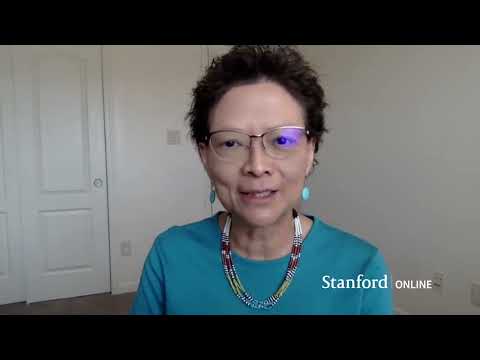
This is a Stanford University-hosted guest lecture featuring Sandra Begay, a member of the Navajo Nation, 33-year structural engineer at Sandia National Laboratories, Stanford University MS in Structural Engineering graduate, and 2021 Women in Technology Award recipient from the New Mexico Technology Council.
The talk weaves together Begay’s personal and professional journey, Navajo cultural philosophy, hard-won lessons on navigating male-dominated STEM fields as a double minority, her decades of mentorship for Native American STEM students, and her career-long work providing technical assistance to U.S. tribal nations on renewable energy projects. The intended audience includes undergraduate and graduate STEM students, engineering and renewable energy professionals, Indigenous advocacy leaders, and anyone learning about inclusive leadership and representation for underrepresented groups in tech.
Two. Key Learning Takeaways
-
The Navajo principle of walking in beauty is a holistic, life-guiding philosophy that centers intentional, positive action across your mind, body, speech, and impact on the world – not just superficial physical appearance.
-
Native American women face extreme underrepresentation in U.S. engineering: only 1 in 13,000 U.S.-born engineers are Native women, creating unique feelings of isolation and unique barriers to career advancement.
-
Breaking glass ceilings leaves behind shards of glass: unanticipated emotional, mental, and social harm from microaggressions, misinterpretation of your work, and backlash from colleagues, which requires intentional boundary-setting to navigate.
-
Vivid, specific career vision-setting is a powerful tool to overcome setbacks and stay aligned with your goals, especially for underrepresented groups in male-dominated fields.
-
Mentorship and lifting up the next generation of Native STEM students is a core act of community leadership, with tangible long-term benefits for tribal nations and broader representation in tech.
-
Work-life balance is non-negotiable: overgiving to your career can cause severe physical and mental health consequences, and learning to say "no" is a critical leadership skill, not a weakness.
-
Storytelling is a culturally aligned, deeply effective communication tool that can replace rigid corporate presentation norms to build trust, connection, and understanding in professional spaces.
-
Building genuine trust is the "secret sauce" for successful work with tribal communities, a skill that comes from lived experience and respect, not formal training.
Three. Memorable Lecture Quotes
-
"When you walk in beauty, you're trying to leave a place maybe even more beautiful than it was, through your speech, through your actions."
-
"I, as a Native woman engineer, am one out of 13,000. When I feel like I'm isolated, it's because there aren't any [people like me]."
-
"I've broken many glass ceilings. But what I did not expect is I'm actually finding shards of glass that have come and cut me – not physically, but mentally, emotionally."
-
"You cannot keep giving everything to your job. You've got to say no. There's always a balance between your work, your home life, your relationships."
-
"If you're in an airplane and the oxygen comes down, don't help others. Help yourself first. Put the oxygen mask on yourself, then you can help others."
-
"The secret sauce is you've got to learn to build trust with people. I can't teach that to you."
-
"A leader always listens."
-
"Stay away from the Eeyores. They wear a cloud over their head, and you're going to start having your ears come down too."
Four. In-Depth Layered Learning Notes
Module 1: Speaker Background & Cultural Foundations
-
Navajo Nation Identity: Begay is an enrolled member of the Navajo Nation, the largest U.S. tribe (350,000–400,000 members, spanning Arizona, New Mexico, and Utah). She was born into the Naaneesht'ézhi táchii'nii (Zuni) clan, gifted to her father’s Bitter Water clan.
-
Family & Upbringing: Raised by a matriarch mother (a public health nurse with the Indian Health Service, the first in her family to earn a college degree) and a tribal leader father, who instilled in her the values of leadership, listening, and connection to her home community of Church Rock, New Mexico.
-
Core Cultural Philosophy: Walking in beauty is the throughline of her life and career. It is a holistic framework that demands integrity, positivity, and intentional impact in every action, from professional work to personal relationships.
-
Professional Credentials: 33-year career as an engineer, 30 years at Sandia National Labs; BS from the University of New Mexico, MS in Structural Engineering from Stanford; appointed to the University of New Mexico Board of Regents by the New Mexico governor; member of the National Academies of Sciences, Engineering, and Medicine Women’s Committee.
Module 2: Navigating Barriers in Male-Dominated STEM Fields
-
Extreme Underrepresentation: As 1 of only 13,000 U.S.-born Native women engineers, Begay faced profound isolation early in her career, often being the only person who looked like her in rooms and projects.
-
Shards of Glass from Glass Ceilings: She details the unspoken harm of breaking barriers: microaggressions, misinterpretation of her work (e.g., colleagues assuming she took a child care center project for personal gain, even though she does not have children), and derogatory comments about women in leadership.
-
Navigating the Patrilineal Workplace: Raised in a matriarchal Navajo society, Begay had to adapt to the male-dominated norms of engineering, while also redefining communication to fit her cultural values (e.g., using storytelling instead of rigid corporate presentations).
-
Choosing Your Fights: She emphasizes that not every negative interaction is worth your energy. You must assess if a relationship is important, if the fight will create meaningful change, and if you have the emotional bandwidth to engage – and walk away when needed.
Module 3: Mentorship & Community Leadership
-
Tribal Technical Assistance Work: Begay created her own full-time role at Sandia, starting with seed funding 20 years ago to provide technical assistance to U.S. tribal nations on renewable energy projects. This work is rooted in respect for tribal sovereignty and community-led solutions.
-
Internship Program Legacy: She has mentored nearly 50 Native American and Alaska Native STEM college students over 20 years, using internships to build her own team, lift up the next generation, and create a pipeline of Native STEM talent. Many of her former interns now hold leadership roles in federal energy policy and tribal projects.
-
Mentorship Philosophy: She seeks interns who are aligned with community service, have clear career objectives, and are honest about their journey. She prioritizes hands-on learning and real-world experience for her interns, not just administrative work.
-
Leading by Example: Four of her second cousins (whom she views as nieces) are now working engineers, inspired solely by her career example, with no direct recruitment from her.
Module 4: Career Strategy & Vision-Setting
-
Vivid Vision-Setting: Her mentor Don Coyis taught her to create a hyper-specific, sensory vision of her career goals (e.g., picturing her first day at Lawrence Livermore National Lab, down to the smell of the air, what she had in her hands, the building she would work in). This vision helps her navigate setbacks and stay aligned with her goals.
-
Advocating for Your Work: Her first manager taught her a critical career lesson: you must talk about your work with your colleagues, managers, and upper leadership – concisely, clearly, and consistently. This is non-negotiable for performance reviews, promotions, and recognition.
-
Strategic Opportunity Selection: As your reputation grows, opportunities will come to you – but you cannot take every one. You must be strategic about which opportunities align with your vision and values.
-
Building Trust with Tribal Communities: The core of her successful tribal work is building genuine, long-term trust with tribal leaders and communities, a skill that comes from respect, listening, and showing up consistently, not just technical expertise.
Module 5: Self-Care & Boundary-Setting
-
Non-Negotiable Work-Life Balance: Begay learned this lesson the hard way, when she overgave to her role as Executive Director of AISES (American Indian Science and Engineering Society), wound up in the emergency room with severe anemia and a compromised immune system from burnout.
-
Learning to Say No: She emphasizes that saying "no" is not a weakness – it is a critical act of self-care and leadership that protects your health, your energy, and your ability to show up for the work that matters most.
-
Oxygen Mask Principle: You cannot help others if you do not take care of yourself first. This applies to career, mentorship, and community work – you must prioritize your own well-being to have a meaningful, sustainable impact.
-
Protecting Your Energy: As a natural introvert, Begay learned to protect her energy after high-stakes public speaking and networking, by taking quiet, alone time to recharge. She advises learners to understand their own energy needs and honor them.
Wishing you steady courage as you navigate your own career and life journey. May you walk in beauty in every action you take, and may you find strength in your unique voice and story as you lift up others along the way. May your goals feel clear, your boundaries feel firm, and your impact feel meaningful in every space you show up in.