One. Course Details
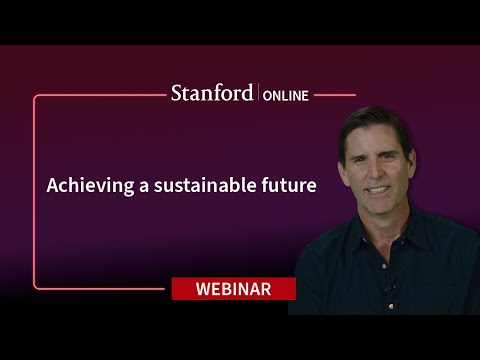
This is a foundational webinar for Stanford University’s XEIET100: Energy Innovation and Emerging Technologies core course, delivered by Dr. Mark Jacobson, Professor of Civil and Environmental Engineering at Stanford University (jointly appointed in the School of Engineering and Doerr School of Sustainability). The course is designed for students, energy industry professionals, policymakers, and sustainability advocates seeking a data-driven, actionable roadmap for global decarbonization.
The session presents Dr. Jacobson’s decades of peer-reviewed research on 100% renewable energy systems, covering the three interconnected global energy crises, proven technical solutions, a rigorous debunking of widely promoted false solutions, real-world implementation case studies, and the economic, health, and environmental benefits of a full transition to wind, water, and solar (WWS) power. The full course expands on these topics with deep dives into grid stability, policy design, and sector-specific decarbonization strategies.
Two. Key Learning Takeaways
-
We do not need miracle technologies to solve the world’s energy crises: 95% of the technologies required for a full global energy transition already exist today.
-
The world faces three interconnected, existential energy problems: air pollution (7 million annual premature deaths), accelerating global warming, and systemic energy insecurity, with a combined global social cost exceeding $60 trillion per year.
-
The only viable, cost-effective solution is to electrify all energy sectors (electricity, transportation, buildings, industry) and power the entire system exclusively with wind, water, and solar energy, paired with existing storage technologies.
-
Green hydrogen (produced via WWS-powered electrolysis) has limited, high-value use cases for long-distance heavy transport and industrial processes, but is highly inefficient and wasteful for passenger vehicles, building heating, or general grid electricity.
-
All widely promoted alternative "solutions" – including carbon capture and storage (CCS), direct air capture, biofuels, nuclear power, and geoengineering – are either technically unworkable, economically prohibitive, increase air pollution, or create worse environmental and security risks than fossil fuels themselves.
-
Full electrification and WWS power will reduce global end-use energy demand by 56.4% by 2050, eliminating the massive energy wasted on fossil fuel extraction, transportation, and refining, and leveraging the inherent efficiency of electric technologies.
-
A global WWS transition requires only 0.53% of the world’s total land area (less than the land currently occupied by the fossil fuel industry), will keep the grid fully stable, create 28 million net new long-term jobs, and cut total social energy costs by 92% compared to business as usual.
Three. Course Gold Quotes
-
"We don’t need miracle technologies to solve the problems of air pollution, global warming, and energy security. We have 95% of the technologies we need."
-
"The three things to remember about groundwater contamination from shale development is well construction, well construction, and well construction."
-
"Carbon capture is a complete waste for solving any of these problems. It’s an opportunity cost that increases air pollution and delays real decarbonization."
-
"A solar-powered electric vehicle uses 1/80th the land to go the same distance as a biofuel-powered internal combustion engine vehicle."
-
"Electricity does everything that gas does, but does it better. You don’t need two forms of energy in your home or building."
-
"We can solve 80% of the problem by 2030 and 100% by 2035. There’s no reason we shouldn’t make that our goal."
-
"The total social cost of fossil fuels is $83 trillion per year by 2050. A full WWS transition cuts that by 92%."
Four. Layered Learning Notes
Module 1: The Three Interconnected Global Energy Crises
-
Air Pollution: The single deadliest environmental crisis today, causing 7 million premature deaths annually and hundreds of millions of illnesses worldwide. Only 5 countries meet safe air quality standards for particulate matter, with a global annual health cost of $30 trillion.
-
Global Warming: Already causing severe, irreversible environmental damage, with projected annual economic costs of $30 trillion by 2050 if no action is taken. A 1.5°C warming threshold requires 80% decarbonization by 2030 and full decarbonization by 2035-2050.
-
Energy Insecurity: Driven by finite fossil fuel reserves, geopolitical dependence on foreign energy sources, and volatile pricing. Island nations and import-dependent countries face disproportionately high energy costs and supply disruption risks.
-
Critical Insight: All three crises share a single root cause – global dependence on fossil fuels. A full transition to WWS energy solves all three simultaneously, rather than addressing them in isolation.
Module 2: Core Solution – Full Electrification + 100% Wind, Water, and Solar Power
-
Sector-by-Sector Electrification Roadmap:
-
Transportation: Battery electric vehicles for passenger cars and light trucks; green hydrogen fuel cells for long-distance heavy transport (aircraft, ships, trains, heavy trucks).
-
Buildings: Electric heat pumps (75% more efficient than natural gas furnaces) for space and water heating; electric induction cooktops; district heating and cooling systems for dense urban areas.
-
Industry: Electric arc furnaces, induction furnaces, and dielectric heaters to replace fossil fuel-powered industrial processes.
-
-
Proven Storage Technologies: No breakthroughs required. Existing storage options include pumped hydroelectric power, existing hydroelectric dams, lithium-ion batteries, concentrated solar power with thermal storage, flywheels, and seasonal underground heat storage.
-
District Heating Success: Stanford University became the world’s first 100% renewable campus for electricity, heating, and cooling by replacing its natural gas cogeneration plant with a fourth-generation district heating system powered by 160 MW of solar energy.
Module 3: Hydrogen – The Good, the Bad, and the Useless
-
Only Acceptable Hydrogen Source: Green hydrogen, produced exclusively via WWS-powered electrolysis of water.
-
Unacceptable Hydrogen Sources:
-
Gray hydrogen (96% of current global production): Steam methane reforming of natural gas, high emissions and air pollution.
-
Blue hydrogen: Gray hydrogen with carbon capture, which increases energy use by 30%, increases air pollution, and only captures 60-80% of CO₂ at best.
-
Black/brown hydrogen (from coal), turquoise hydrogen (from methane pyrolysis), and nuclear-powered hydrogen: All have severe environmental, cost, or security drawbacks.
-
-
Valid Hydrogen Use Cases: Long-distance heavy transport (aircraft, ships), industrial ammonia and steel production, and remote microgrids requiring combined heat and power.
-
Wasteful Hydrogen Use Cases (To Be Avoided At All Costs): Passenger vehicles, building heating, blending hydrogen into natural gas pipelines, and general grid electricity. Hydrogen fuel cell passenger vehicles require 2-3 times more renewable energy than battery electric vehicles to travel the same distance.
Module 4: Why These "Solutions" Are Dangerous Traps
Dr. Jacobson provides a rigorous, data-driven debunking of all widely promoted non-WWS decarbonization strategies:
-
Carbon Capture and Storage (CCS): Requires 30% more energy than fossil fuel generation without CCS, increases air pollution, has low capture efficiency, and 75% of captured CO₂ is currently used for enhanced oil recovery (producing more fossil fuels to burn).
-
Direct Air Capture (DAC): Even more energy-intensive and costly than point-source CCS, with the same opportunity cost of diverting renewable energy away from directly replacing fossil fuels.
-
Bioenergy and Biofuels: Photosynthesis is only 1% efficient (vs. 20% for solar panels), requires massive amounts of land, increases air pollution from combustion, and has a negligible or negative net carbon balance.
-
Nuclear Power: Takes 17-21 years to plan and build (too slow to meet 2030 decarbonization targets), costs 15 times more per megawatt than wind and solar, and carries inherent risks of meltdown, weapons proliferation, and long-term waste storage.
-
Geoengineering (Solar Radiation Management): Sprays pollutant particles into the stratosphere, damages the ozone layer, reduces crop yields, masks global warming without solving it, and creates moral hazard that delays real decarbonization.
Module 5: Global Energy Transition – Feasibility, Costs, and Benefits
-
Energy Demand Reduction: Full electrification and WWS power will cut global end-use energy demand by 56.4% by 2050, driven by:
-
Higher efficiency of electric vehicles and industrial equipment
-
75% efficiency gain from heat pumps
-
Elimination of energy used for fossil fuel extraction, transportation, and refining (11.3% of global energy use)
-
Additional incremental efficiency improvements
-
-
Land Requirements: Only 0.17% of global land for utility-scale solar and concentrated solar power, plus 0.36% for onshore wind spacing (which can still be used for farming, ranching, or open space). Total land use is less than the 1.3% of U.S. land currently occupied by the fossil fuel industry.
-
Grid Stability: Peer-reviewed grid stability analyses for 145 countries and all 50 U.S. states confirm that a 100% WWS grid can maintain stable power every 30 seconds, 24/7, using existing storage and demand response technologies.
-
Economic Benefits:
-
Global capital cost: $62 trillion one-time investment
-
Annual energy cost: $6.6 trillion per year by 2050 (63% lower than business as usual)
-
Total social cost savings: $76 trillion per year by 2050 (92% reduction), eliminating all health and climate costs from fossil fuels
-
Net job creation: 28 million more long-term full-time jobs than lost globally
-
Module 6: Policy and Global Progress
-
The 2009 WWS global energy transition plan formed the scientific basis for the Green New Deal.
-
Current global commitments: 62 countries have committed to 100% renewable electricity, 19 U.S. states and territories, 180+ U.S. cities, and 400+ major global companies.
-
Early success stories: 9 countries already generate 100% of their electricity from WWS; South Dakota generates 126% of its consumed electricity from WWS (77% wind); Washington state is 98.5% renewable.
-
Critical Policy Need: Mandatory, sector-specific decarbonization targets with clear timelines, paired with incentives for renewable deployment and electrification.
Wishing you clarity, purpose, and momentum as you join the global movement to build a 100% renewable energy future. May your studies equip you with the knowledge to advocate for effective solutions, debunk misinformation, and drive real change in your community, workplace, and beyond. Every step toward electrification and renewable energy is a step toward cleaner air, a stable climate, and energy security for all.