One. Course Details
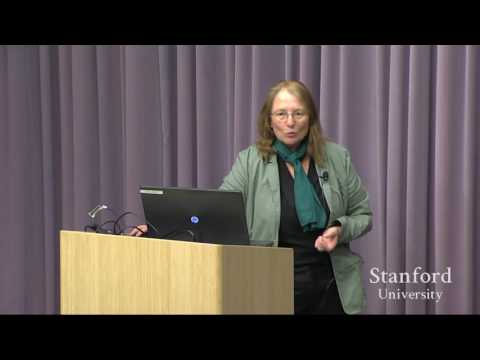
This is the capstone final lecture for Stanford University’s undergraduate and graduate-level climate solutions and clean energy entrepreneurship course, co-led by Dr. Leslie Field, an Arctic ice restoration engineer and climate tech innovator, and John, energy policy expert and author of Cold Cash, Cool Climate. The session serves as a quarter-long wrap-up, reviewing core course themes, addressing pre-submitted student questions, highlighting insights from the quarter’s guest lecturers, and outlining actionable paths for students to drive climate impact.
The lecture combines technical deep dives into climate interventions, real-world entrepreneurial lessons, live student Q&A, and unflinching discussion of the climate crisis’s urgency. Its intended audience includes students in engineering, earth systems science, environmental policy, business, and sustainability, with a focus on learners looking to build careers in climate tech, policy, or advocacy.
Two. Key Learning Takeaways
-
Climate change is not a distant future threat – it is a current, accelerating crisis, with irreversible damage already unfolding across the globe, and every 1°C of avoided warming is worth fighting for.
-
Silent acquiescence will never drive climate progress; protest, policy advocacy, technical innovation, and entrepreneurship all play complementary, non-negotiable roles in solving the crisis.
-
Geoengineering is a temporary, stopgap tool – it does not fix the root cause of climate change (fossil fuel emissions) – and must never be used as an excuse to delay rapid decarbonization.
-
To hit 1.5°C and 2°C global warming targets, the world must keep the vast majority of proven fossil fuel reserves in the ground, a reality most politicians and fossil fuel industry leaders have yet to confront.
-
Iterative risk management (fail fast, learn fast) is the most effective framework for climate entrepreneurship, as long-term forecasting of economic and technological systems is fundamentally unreliable.
-
The highest-impact climate innovations come from whole-system redesign, not incremental efficiency gains; rethinking the core task a technology serves can unlock order-of-magnitude emissions reductions.
-
Information technology and low-power sensing have massive untapped decarbonization potential, by substituting small amounts of data (bits) for high-emission physical processes and materials (atoms).
-
There is no single "right" path to climate impact: startups, medium-sized companies, government roles, and grassroots advocacy all have unique value, depending on a student’s skills, risk tolerance, and goals.
Three. Course Gold Quotes
-
"Why do we keep talking about future problems with climate change when it is today?"
-
"Every single degree is worth fighting over. If you hear people saying we’ll never hit the 2°C limit so it’s all over, that is so wrong."
-
"Geoengineering will not fix the root cause problems, but it may give us less damage while the world gets to where it needs to be with long-term sustainable solutions."
-
"If not us, who’s going to take this on? And if not now, when?"
-
"The best way to predict the future is to invent it."
-
"Physics doesn’t care about the politicians. Physics doesn’t care who we elected president. All it cares about is how many greenhouse gases you’ve put in the atmosphere."
-
"Your job as an entrepreneur is to make fossil fuel companies obsolete."
-
"We have no right to give up. Four degrees is better than five, three is better than four, and we haven’t even tried yet."
Four. Layered Learning Notes
Module 1: Climate Urgency – The Crisis Is Here, Not In The Future
-
Core Reality: The lecture opens by centering student feedback that climate change is not a distant threat – it is unfolding now, with record Arctic ice loss, a destabilized jet stream, intensifying extreme storms, historic droughts, and accelerating biodiversity collapse already impacting communities worldwide.
-
Unforgiving Climate Math: Even with current global climate policies, the world is on track for 2.5°C+ warming by 2100; a no-action scenario brings a 50/50 chance of 5°C+ warming.
-
Critical Context: Every 1°C of avoided warming drastically reduces irreversible harm: 2°C of warming puts 20-30% of known species at extinction risk, while 5°C of warming drives extinction for more than 40% of known species. There is no "point of no return" where action becomes meaningless – every fraction of a degree is worth fighting to avoid.
-
Unprecedented Planetary Shift: Atmospheric CO₂ has fluctuated between 180-300 ppm for 800,000 years; today, it exceeds 405 ppm, pushing the planet outside the stable climate range where human civilization developed.
-
Fossil Fuel Reality Check: Fossil fuel scarcity will not solve the crisis. Even burning a small fraction of proven fossil reserves will push the planet past catastrophic warming thresholds. To hit 2°C targets, the vast majority of these reserves must remain unextracted and in the ground.
Module 2: Geoengineering – Ethics, Risks, and Responsible Innovation
-
Core Framing: Geoengineering is defined as a planetary "band-aid," not a permanent solution. Its only legitimate use is to moderate climate damage while the world scales long-term, sustainable decarbonization.
-
Non-Negotiable Guardrails for Responsible Geoengineering:
-
Must be well-characterized, with fully researched and understood risks and environmental impacts.
-
Must prioritize reversible, localized interventions over untested global deployment, with a clear undo plan for every action.
-
Must never be used as an excuse to delay fossil fuel phase-out and root-cause decarbonization (the critical "moral hazard" risk).
-
-
Transparency vs. Secrecy: The lecture addresses student questions about keeping geoengineering work private to avoid moral hazard. Early in her research, Dr. Field kept her Arctic ice restoration work quiet for this reason, but now advocates for full public transparency: unregulated, secret geoengineering deployment by a single actor poses a far greater global risk than peer-reviewed, publicly scrutinized, collaborative research.
-
Arctic Ice Restoration Focus: Dr. Field’s work centers on slowing Arctic ice melt with floating, environmentally benign reflective materials that restore the albedo (sunlight reflectivity) of thinning multi-year sea ice. Arctic ice loss now drives 1/3 of global temperature rise, creating a catastrophic positive feedback loop: bright, thick ice reflects 95% of incoming sunlight, while dark open ocean absorbs 95% of solar radiation, accelerating warming further.
-
Field Testing: The team has completed on-the-ground field tests in Barrow, Alaska (with guidance and partnership from the local Inupiat community), Minnesota, and California, refining materials and collecting real-world data on performance and environmental impacts.
Module 3: Climate Entrepreneurship – Core Principles and Real-World Lessons
-
Iterative Risk Management (Fail Fast, Learn Fast): The gold standard framework for climate entrepreneurship. Long-term forecasting of economic and technological systems is fundamentally unreliable, so the most effective approach is to act, test, learn, and pivot quickly – the same evidence-based framework used by the U.S. National Research Council for national climate policy.
-
Whole-System Design Over Incremental Gains: The most transformative climate innovations don’t just make existing systems 10-20% more efficient – they completely rethink the core task a technology serves. For example, instead of optimizing a high-emission cement furnace, reimagine how to create a hard, cement-like material at room temperature (like a chicken’s eggshell) to eliminate process emissions entirely.
-
Focus on the Task, Not the Energy: To unlock breakthrough innovation, start with the end task a user needs to complete, not the energy system used to do it. This reveals opportunities to substitute low-energy information and smart design for high-emission physical processes.
-
Bits for Atoms: Information technology is one of the most powerful, underutilized decarbonization tools available. Tiny amounts of data and ultra-low-power sensing can optimize massive, high-emission systems with minimal energy input:
-
Smart parking sensors that eliminate the emissions from cars driving around searching for open spots.
-
Solar-powered smart trash compactors that optimize waste collection routes, cutting fuel use and emissions.
-
Battery-free medical sensors that eliminate the waste and emissions of battery production and disposal.
-
-
Business Model First, Technology Second: Most climate startups fail not because their technology is flawed, but because they haven’t built a viable, scalable business model. Residential energy efficiency, for example, is a notoriously difficult market, because the annual dollar savings for individual households are too small to drive consistent customer action.
-
Property Rights as a Leverage Point: Innovations in how property rights are defined (e.g., separating wind rights from land rights, extended producer responsibility for battery disposal) can unlock massive amounts of capital and accelerate clean energy deployment in ways traditional economic models fail to account for.
Module 4: Policy, Advocacy, and Collective Action
-
Protest Drives Meaningful Change: The Dakota Access Pipeline protests are highlighted as a key case study: a grassroots movement that went from a total media blackout to national and global attention, halting project construction (at least temporarily). Silent acquiescence never drives systemic change, and protest has a critical, complementary role alongside technical innovation and policy work.
-
Policy That Works: Performance Standards, Not Picking Winners: The most effective government climate policy sets clear, binding performance standards (e.g., energy efficiency requirements for appliances, mandatory emissions limits for power plants) and lets the market figure out the best technology to meet them. This avoids the risk of governments backing the wrong technology, and consistently drives faster innovation and cost reductions than initial models predict.
-
State-Level Action Is a Critical Driver: With U.S. federal climate policy often gridlocked, progressive states (California, Oregon, Washington, New York, Massachusetts) will continue to lead on climate action, setting strict standards that eventually scale to the national level.
-
The Fossil Fuel Industry Barrier: The global fossil fuel industry generates $5 trillion in annual revenue – 10x the size of the global tobacco industry – giving it unprecedented political power. Most politicians have yet to confront the reality that most fossil fuel reserves must stay in the ground, because they are unwilling to fight this deeply entrenched industry.
Module 5: Student Action – Finding Your Unique Path to Impact
-
No Single "Right" Path: The lecture directly addresses student questions about whether startups, corporate roles, or government work offer the highest climate impact. The answer depends entirely on your skills and risk tolerance:
-
Startups offer the chance to disrupt incumbent systems and build transformative new technologies, but carry high failure risk.
-
Small to medium-sized growing companies offer the chance to drive rapid change with stable revenue and far less risk than early-stage startups.
-
Government and policy roles let you set the rules of the road, creating the market conditions that make clean energy and decarbonization scalable nationwide.
-
-
Interdisciplinary Skills Are Non-Negotiable: The most successful climate leaders don’t just have deep engineering or business skills – they can communicate across disciplines, collaborate with people from wildly different fields, and understand both the technical and business sides of a solution.
-
Resilience Is Everything: Most startups fail, and climate action is a long, difficult fight. You must be resilient in the face of failure, and willing to learn from missteps rather than giving up.
-
You Have Unique Superpowers: As a student with the education, drive, and access to engage with this work, you have critical, irreplaceable skills: education, intelligence, perseverance, and care. The climate crisis needs you – there is no one else who will solve this if you don’t step up.
Wishing you unshakable resolve and boundless creativity as you step into your role in the fight for our planet. May you find the path that aligns with your unique strengths, learn fearlessly from every step forward and every misstep, and build solutions that leave the world healthier and more just for every generation to come. Every action you take matters, and every fraction of a degree you help avoid is a victory worth celebrating.