One. Course Details
One-Sentence Course Summary
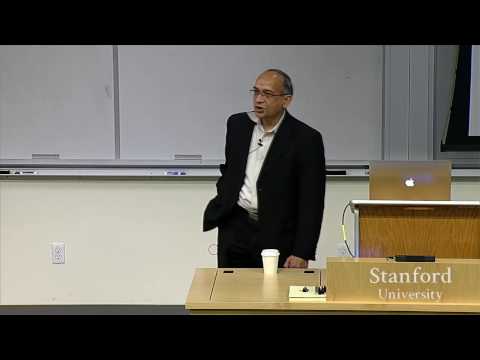
This Stanford University guest lecture, led by a strategic advisor to the modular autonomous transit startup Next, breaks down the systemic failures of personal car-centric urban transportation, introduces a revolutionary scalable, self-assembling modular pod transit system, and shares actionable lessons on startup strategy, market entry, funding, and navigating the global future of mobility.
This live session is designed for undergraduate and graduate students in sustainable urban planning, transportation engineering, clean tech entrepreneurship, and business innovation. It combines data-driven analysis of global traffic congestion, first-hand insights from building a breakthrough mobility startup, real-world case studies from Dubai to Germany, and a live audience Q&A that addresses safety, regulation, funding, and scaling challenges for early-stage mobility innovators. The lecture centers on a core thesis: the future of transit lies in mass-customized, modular, autonomous mobility that eliminates the waste, inefficiency, and externalities of both personal cars and rigid traditional public transit.
Two. Key Learning Takeaways
-
The personal automobile, while designed for individual convenience, is a massive public nuisance that imposes trillions in unpriced negative externalities on society, including congestion, pollution, greenhouse gas emissions, land use waste, lost human productivity, and strained public infrastructure.
-
Expanding highway infrastructure does not solve traffic congestion: studies confirm the principle of induced demand, where new highway lanes lead to proportional increases in traffic, leaving congestion levels unchanged in the long run.
-
Traditional fixed-route public transit (buses, metros, trains) fails to solve the core mobility problem because it cannot address the first and last mile of a user’s journey, requires expensive dedicated infrastructure, and operates at massive inefficiency during non-peak hours.
-
The core innovation of the Next system is self-assembling, autonomous modular transit pods: 6-passenger electric pods that can couple and decouple while in motion, creating dynamically sized "bus trains" for high-traffic routes while enabling individual drop-offs and pick-ups for door-to-door service.
-
The system redefines the transit experience with a "life in motion" framework: specialized modular pods (coffee shops, offices, cinemas, hotel rooms, battery swaps) can attach to a user’s pod during travel, turning wasted commute time into productive, enjoyable time.
-
Early-stage startup success hinges on the 3 Cs of company building: Choices (the strategic partners, funding, and markets you select), Controls (the ownership and decision-making authority you retain), and Consequences (the irreversible path your business takes based on those first two choices).
-
The most viable early market for breakthrough mobility innovation is not mature Western markets with entrenched transit systems, but fast-growing, innovation-hungry markets like Dubai, where political will, funding, and regulatory flexibility enable rapid real-world testing and deployment.
-
Beyond passenger transit, the biggest near-term commercial opportunity for modular autonomous vehicles lies in cargo and last-mile delivery, where the technology can streamline supply chains, reduce delivery costs, and automate the movement of goods with far less infrastructure risk than passenger transit.
Three. Memorable Lecture Quotes
-
"In the pursuit of personal convenience, we have created a public menace."
-
"If someone from outer space could take a look at what we are doing every day, they would say these humans have gone mad."
-
"Transit need not be a waste of time. Transit is something that you do while you are doing something more."
-
"The three Cs you have to watch when running a company: first is choices, second is controls, and then you have to live with the consequences."
-
"Everyone is solving for personal optimality and ends up that no one is optimal, because we are all sitting in this macro parking lot."
-
"We are entering a world of disruption, and we are going to redefine what it means to have a job."
-
"The more dangerous entity on the road is the human driver: drunk, inattentive, you name it."
-
"May you live in interesting times. A related proverb might be: may you live in interesting spaces. Stanford is certainly one of those spaces that produces the potential to change life outcomes."
Four. In-Depth Lecture Study Notes
Formatted as a U.S. university student’s annotated in-class lecture notes, with layered thematic breakdowns and critical on-the-record details
Module 1: The Systemic Failure of Car-Centric Urban Transportation
-
The Hidden Externalities of Personal Cars: The lecture opens with a breakdown of the true cost of personal vehicle ownership, which extends far beyond the purchase price and fuel costs. Unpriced externalities include:
-
Public infrastructure costs: parking, road construction and maintenance, water and sewer services for sprawling development
-
Environmental harm: local air pollution, greenhouse gas emissions, water contamination
-
Economic waste: congestion, lost productivity, and inefficient use of urban land
-
-
Space Inefficiency & the "Shy Distance": A single 15-foot personal car requires 200 feet of road space at 60 mph to maintain a safe stopping distance from the vehicle ahead. This "shy distance" turns highways into massively inefficient people-moving systems, with 10 cars occupying 60 meters of road space to carry just 10 people, compared to 50 passengers in 53 feet of road space with the Next modular system.
-
Induced Demand & the Myth of "More Lanes = Less Congestion": Academic studies confirm that adding highway lanes does not reduce congestion – it increases traffic proportionally, as more drivers are incentivized to use the expanded roadways. The Bay Area’s 101 freeway expansion is a real-world example: despite billions in investment and new lanes, congestion levels remain identical to pre-expansion levels.
-
The Human Productivity Crisis: The average Bay Area commuter loses 2+ hours per day to traffic, reducing their effective workday productivity by 25%. Traditional corporate efforts to boost productivity ignore this single biggest drain on worker time and focus.
-
The Flaws of Traditional Public Transit:
-
Metros and trains require billions in dedicated, fixed infrastructure, take decades to build, and fail to solve the first/last mile problem for most riders.
-
Buses operate at massive inefficiency: fleets and drivers are paid to run full routes during off-peak hours, even with nearly zero passengers, creating enormous operational waste.
-
All fixed-route systems force riders to adapt their schedules and journeys to the transit system, rather than the other way around.
-
Module 2: The Next Modular Transit System – Core Technology & Value Proposition
-
Company Origins: Next was founded by an Italian engineer and designer, described as "the blend of Michelangelo and Elon Musk", with a vision to create a scalable, mass-customized transit system that combines the convenience of ride-hailing with the efficiency of high-capacity public transit.
-
Core Technical Innovation: The system is built around fully electric, autonomous 6-passenger pods with four independently steered, motorized wheels. The key breakthrough is the pods’ ability to couple and decouple while in motion:
-
Pods pick up passengers door-to-door, then link up with other pods traveling along the same route to form a dynamically sized "bus train" for highway and high-traffic travel.
-
When coupled, the interior doors between pods open, allowing passengers to move freely between pods during their journey.
-
As the train approaches its destination, pods decouple individually to drop off passengers at their exact end point, eliminating transfers and fixed routes entirely.
-
-
Efficiency & Performance Benefits:
-
Traffic Reduction: The system guarantees an 80% reduction in traffic congestion, with the same road space carrying exponentially more people than personal cars.
-
Fuel & Emissions Savings: 31% lower energy consumption than traditional transit, with fully electric zero-emission operation.
-
Load Factor Optimization: Unlike buses and trains that run half-empty during off-peak hours, the system dynamically adjusts the number of pods in use to match real-time demand, delivering near-100% occupancy at all times.
-
Cost Efficiency: The system’s estimated cost per passenger kilometer is just $0.08, far lower than buses, ride-hailing, or personal car ownership.
-
-
The "Life in Motion" Vision: The system redefines what commuting can be, with specialized modular pods that attach to a passenger’s pod during travel:
-
Service pods: coffee shops, restaurants, and retail units that deliver goods and services on the move
-
Productivity pods: office spaces, meeting rooms, and co-working units for business travelers
-
Hospitality pods: hotel rooms, cinemas, and entertainment units for long-distance travel
-
Utility pods: battery swap units that enable non-stop cross-country travel without charging stops
-
Module 3: Business Model, Market Entry, and Real-World Traction
-
Core Business Model: The company’s go-to-market strategy focuses on three core verticals:
-
Public Transit Fleet Replacement: Selling modular pods to municipal public transit agencies to replace inefficient, aging bus fleets. For example, Singapore’s 4,000-bus fleet represents a $1B+ market opportunity with 10-60% projected fleet conversion rates.
-
Closed Campus & Private Fleet Deployments: Early adopter use cases include corporate campuses, factory complexes, universities, and resort communities, where the system can operate in a controlled, regulated environment with dedicated lanes.
-
Consumer & Shared Mobility: A long-term vision for consumer-owned pods that can be used for personal travel, or shared into the network when not in use to generate passive income for the owner, similar to Tesla’s proposed shared autonomy network.
-
-
Market Entry Strategy: The lecture breaks down three potential global markets, and the company’s chosen path:
-
Mature Western Markets (U.S., EU): While these markets have the capital and existing transit infrastructure, they have low regulatory flexibility and entrenched incumbent interests, making rapid deployment difficult.
-
Emerging Megacities (India, China): These markets are building new infrastructure from scratch, but face bureaucratic barriers and inconsistent rules for innovative mobility technology.
-
Innovation-First Markets (Dubai): The company’s primary early market, chosen for its combination of capital, political will, and regulatory flexibility. Dubai’s ruler has set a mandate that 25% of all traffic in the city will be autonomous by 2030, creating a clear path to deployment.
-
-
Real-World Traction & Milestones:
-
Selected as one of 30 companies (out of 2,000 applicants) for the Dubai Future Accelerators program, alongside Hyperloop, in the road and transport segment.
-
Built and demonstrated full-scale working prototypes, including two pods coupling and decoupling in motion for Dubai’s leadership.
-
Signed a strategic partnership with Careem (the "Uber of the Middle East") to launch driverless pod tests in Dubai within 12 months.
-
Selected as a proposed mobility solution provider for the Dubai 2020 World Expo.
-
Received unsolicited purchase requests from a German town mayor, who wanted to replace the town’s 50 idling off-peak buses with Next pods.
-
Module 4: Startup Funding, Strategy, and the 3 Cs of Company Building
-
Company Stage & Funding Status: Next is an early-stage startup with ~15 employees, fully self-funded at the time of the lecture, and preparing to raise its Series A funding round.
-
The 3 Cs of Startup Decision-Making: The lecture’s core framework for early-stage startup strategy, built around three non-negotiable factors:
-
Choices: Every strategic decision – from funding partners to market entry to strategic alliances – defines the company’s future path. Even a well-intentioned investment from a large automaker can lock the startup out of partnerships with other manufacturers, closing off global market opportunities.
-
Controls: The choices you make directly impact how much control you retain over the company’s vision, roadmap, and destiny. Taking funding from a strategic investor means ceding some level of control, which can fundamentally change the company’s trajectory.
-
Consequences: You must live with the long-term outcomes of your choices and the control you give up. Many promising startups are derailed when a large corporate acquirer or investor shuts down their project after acquisition, leaving the founding team with no path forward.
-
-
Funding Philosophy: The company is prioritizing strategic funding that aligns with its long-term vision, rather than taking the largest check at the earliest opportunity. The team is focused on retaining control of the company’s core innovation and mission, while building partnerships that enable global scaling.
Module 5: Safety, Regulation, and Scaling Challenges
-
Safety Engineering: The system is designed to meet all global automotive safety standards, with seatbelts, airbags, and a low center of gravity (batteries mounted below the chassis) that makes rollover nearly impossible. The lecture notes that safety is a regulatory requirement, not a technical hurdle, and can be addressed with standard automotive engineering practices.
-
Regulatory Strategy: The company is following the Uber playbook: innovate first, and work with regulators to adapt rules to the new technology, rather than waiting for regulation to be written before building the product. Early deployments in closed campuses and controlled environments (like Dubai) allow the company to refine the technology and build a safety track record before seeking full public road approval in mature markets.
-
Core Technical Hurdle: The most complex engineering challenge is the simultaneous independent steering of all wheels across multiple coupled pods, especially at highway speeds and during turns. Each pod has four independently steerable wheels, requiring complex software to optimize steering across an 8-pod "train" while in motion. The company has demonstrated this technology at low speeds for two pods, with ongoing development for larger configurations at highway speeds.
-
Long-Term Scaling Opportunities: Beyond passenger transit, the company sees massive potential in autonomous cargo and last-mile delivery, with modular pods designed to move packages from distribution centers to retail stores and residential addresses. The system can also be adapted for waste management, medical supply delivery, and other urban logistics use cases, with far less regulatory friction than passenger transit.
Wishing you continued curiosity and meaningful insights as you explore the future of urban mobility, sustainable transportation, and entrepreneurial innovation. May these lecture notes serve as a strong foundation for your studies, projects, and work in building more efficient, equitable, and human-centered cities around the world.