One. Course Details
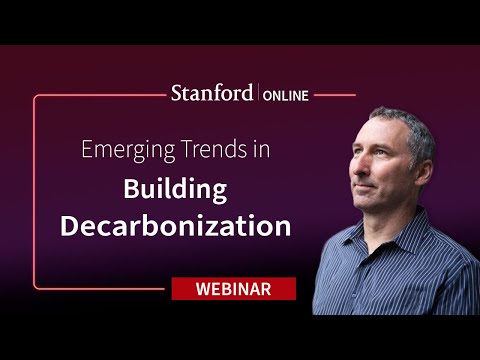
This is a foundational webinar hosted by the Stanford Building Decarbonization Learning Accelerator (BDLA), delivered by Peter Rumsey, founder of Point Energy Innovations and a Stanford lecturer with over 40 years of industry experience. Rumsey is the most decorated LEED Platinum engineer in the U.S., having led 50 LEED Platinum projects, and is widely recognized as a pioneer in net-zero building design.
The session provides a practical, action-oriented roadmap for building decarbonization, covering both operational and embodied carbon reduction strategies. It combines technical deep dives, real-world case studies, and policy analysis to equip architects, engineers, developers, and sustainability professionals with the tools to design and deliver zero-carbon buildings. The presentation also addresses common industry challenges, including cost barriers, technology adoption, and human factors in organizational change.
Two. Key Learning Takeaways
-
Buildings account for 40% of global greenhouse gas emissions, split roughly between operational carbon (energy use during occupancy) and embodied carbon (emissions from construction materials and processes).
-
The proven three-step decarbonization hierarchy is non-negotiable: maximize energy efficiency first, then fully electrify the building, and finally power the efficient all-electric building with renewable energy.
-
Energy efficiency has delivered more global energy savings since the 1970s than all new energy sources combined, including nuclear, wind, and solar power.
-
Heat pumps are the single most important technology for building electrification, delivering 3 units of heat for every 1 unit of electricity input – 3x more efficient than even the best gas boilers.
-
Building reuse is the most effective embodied carbon reduction strategy, saving approximately 75% of the embodied carbon compared to new construction by preserving the carbon already locked in existing structures.
-
Federal and state policies – including the Inflation Reduction Act (IRA), New York’s Local Law 97, and California’s SB 100 – are driving unprecedented market transformation toward decarbonization.
-
The future energy system will be a hybrid of distributed on-site renewables (for resilience and cost savings) and utility-scale off-site renewables (for affordability and scalability).
Three. Course Gold Quotes
-
"Energy efficiency is the foundation of all decarbonization. It’s not an afterthought – it’s the first and most important step."
-
"A good gas boiler gives you 100 units of heat for 105 units of gas. A heat pump gives you 100 units of heat for 33 units of electricity. That’s not a small improvement – that’s a revolution."
-
"Reusing a building blows every other embodied carbon reduction measure out of the water. Nothing else comes close to the savings you get from not building new."
-
"The biggest barrier to decarbonization today isn’t technology or cost – it’s perceived risk and the lack of incentives for middle managers to take action."
-
"We don’t need miracle technologies to decarbonize buildings. We have everything we need right now – we just need to deploy it faster."
-
"Gas appliances aren’t more reliable than electric ones. Almost all modern gas appliances require electricity to operate anyway. When the power goes out, your gas furnace won’t work either."
-
"Energy efficiency isn’t about doing without. It’s about providing the same or better service using less energy."
Four. Layered Learning Notes
Module 1: The Urgency of Building Decarbonization
-
Multifaceted Drivers:
-
Climate Change: Buildings are responsible for 40% of global greenhouse gas emissions, making them the single largest contributor to climate change.
-
Public Health: Fossil fuel combustion causes air pollution that kills 7 million people annually worldwide, with disproportionate impacts on Black, Indigenous, and low-income communities.
-
Economic Reality: U.S. gas infrastructure maintenance costs have increased 300% in the last 10 years, and will continue to rise as the 50+ year-old pipeline network ages.
-
Policy Mandates: 22 U.S. states have committed to 100% carbon-free electricity by 2050, and major cities have passed natural gas bans for new construction.
-
-
Critical Timeline: We have only 7 years left to cut global emissions by 43% to avoid the worst impacts of 1.5°C warming, making immediate action in the building sector imperative.
Module 2: Dual Carbon Reduction Pathways
-
Embodied Carbon Reduction Hierarchy:
-
Reuse First: Renovate existing buildings instead of building new whenever possible.
-
Carbon-Sequestering Materials: Use sustainably harvested mass timber and other biogenic materials that store carbon.
-
Low-Carbon Materials: Specify low-carbon concrete, recycled steel, and other low-emission products.
-
High-Quality Offsets: Only use offsets for remaining unavoidable emissions, prioritizing projects that deliver direct, verifiable benefits.
-
-
Operational Carbon Reduction Hierarchy:
-
Maximize Energy Efficiency: Reduce baseline demand through passive design and high-performance systems.
-
Full Electrification: Eliminate all on-site fossil fuel use, primarily through heat pumps and induction cooking.
-
Renewable Energy: Meet remaining demand with on-site solar and off-site renewable power purchase agreements (PPAs).
-
Module 3: Energy Efficiency – The Unsung Hero
-
Past Efficiency Blockbusters:
-
LED lighting: Reduced global lighting energy use by 75%, eliminating the need for hundreds of power plants.
-
Variable speed drives: Equally impactful as LED lighting globally, reducing energy use in motors, pumps, and fans.
-
Low-emissivity glazing: Cut building envelope heat gain and loss by 50% compared to single-pane glass.
-
Variable air volume (VAV) systems: Reduced commercial HVAC energy use by at least 50%.
-
-
Next-Generation Efficiency Breakthroughs:
-
AI-Powered Building Controls: Smart systems that learn occupant behavior and optimize energy use in real time.
-
Low-Pressure Drop Systems: Reducing duct and pipe friction losses can cut HVAC energy use by an additional 20-30%.
-
Personal Comfort Systems: Individual heating and cooling solutions that improve occupant satisfaction while reducing overall energy use.
-
Integrative Design: Holistic design that optimizes the entire building system rather than individual components.
-
-
Proven Potential: Combining state-of-the-shelf efficiency technologies can reduce building energy use by 40% compared to code-compliant buildings, with no significant increase in construction cost.
Module 4: Building Electrification and Heat Pump Technology
-
Heat Pump Fundamentals:
-
Heat pumps move heat rather than generate it, making them inherently more efficient than combustion systems.
-
Modern cold-climate heat pumps work efficiently even at temperatures well below 0°F, eliminating the need for backup gas heating in most U.S. climates.
-
Heat pumps provide both heating and cooling in a single unit, reducing equipment complexity and maintenance costs.
-
-
Cooking Electrification:
-
Induction cooking is faster, more precise, and safer than gas cooking, and eliminates indoor air pollution from gas combustion.
-
Stanford research has found that gas stoves release benzene and other harmful pollutants at levels that exceed EPA outdoor air quality standards.
-
-
Infrastructure Implications:
-
Targeted neighborhood electrification allows utilities to decommission gas infrastructure in specific areas, reducing maintenance costs for remaining customers.
-
Most existing buildings can be fully electrified without upgrading their electrical service if efficiency improvements are implemented first.
-
Module 5: Renewable Energy and Energy Storage
-
Solar Energy Growth: 75-80% of all new electricity generation capacity added in the U.S. in recent years has been renewable, with solar accounting for the majority.
-
Battery Storage: Falling battery costs are making on-site storage economically viable, allowing buildings to shift energy use to times when the grid is cleanest and avoid peak demand charges.
-
Hybrid Energy System: The optimal future grid will combine:
-
Utility-scale renewables: The lowest cost source of bulk electricity.
-
Distributed on-site solar: Provides resilience, reduces grid congestion, and is often cheaper than utility electricity for building owners.
-
Grid-scale and distributed storage: Solves the intermittency challenge of wind and solar.
-
Module 6: Real-World Case Studies
-
RMI Innovation Center (Basalt, Colorado):
-
A 15,000 square foot office building that achieved net-zero energy through extreme passive design.
-
Super-insulated envelope, high-performance windows, and passive solar heating eliminated the need for a central heating system.
-
The building is heated by the equivalent of six hairdryers worth of electric resistance heat, at a lower total cost than a conventional ground-source heat pump system.
-
-
AIA Headquarters Renovation (Washington, D.C.):
-
A deep energy retrofit of a 1970s office building that achieved 76% embodied carbon savings by reusing the existing structure.
-
Full electrification with heat pumps, LED lighting, and high-performance glazing reduced operational energy use by 60%.
-
10% of energy is generated on-site with solar panels, with the remaining 90% purchased from off-site renewable sources.
-
Innovative offset strategy: Donated solar panels to Habitat for Humanity to offset remaining embodied carbon, providing direct benefits to low-income communities.
-
-
Infosys Corporate Campus (India):
-
The largest corporate energy efficiency program in history, reducing electricity use per employee by 55% across 30 million square feet of office space.
-
Module 7: Challenges and Solutions
-
Carbon Offset Quality: Most offsets are low-quality and do not deliver real emissions reductions. High-quality offsets should be verifiable, additional, and permanent.
-
Human and Organizational Barriers: Middle managers and facilities staff are often the biggest barrier to decarbonization, as they bear the risk of new technologies but receive no incentives for success. Financial incentives and recognition programs can overcome this barrier.
-
Grid Reliability: All-electric buildings paired with on-site solar and storage are more resilient than gas buildings during power outages, as modern gas appliances require electricity to operate.
Wishing you every success as you apply these proven decarbonization strategies to your projects and help lead the transformation of the built environment. May your designs not only slash carbon emissions but also create healthier, more comfortable, and more resilient spaces for everyone who uses them. Every efficiency upgrade, every heat pump installation, and every decision to reuse rather than rebuild brings us one step closer to a net-zero carbon future.