One. Course Details
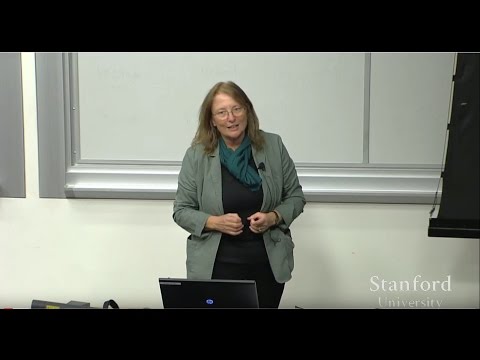
This is a Stanford University climate science guest lecture, delivered by two veteran engineering researchers: Leslie Field, a materials scientist focused on Arctic ice restoration, and Armand Neukermans, a retired Silicon Valley engineer leading marine cloud brightening research. The talk is part of a semester-long course on climate change solutions, targeted at undergraduate and graduate students in environmental engineering, climate science, sustainability policy, and earth systems science.
The lecture breaks down the urgent scientific case for geoengineering, core solar radiation modification technologies, their inherent risks and ethical tradeoffs, and the non-negotiable need for rigorous, transparent research before any large-scale deployment. It combines peer-reviewed climate data, first-hand field and lab research insights, and honest discussion of the governance and moral challenges of planetary-scale climate intervention.
Two. Key Learning Takeaways
-
Geoengineering is a planetary Band-Aid, not a replacement for decarbonization, designed exclusively to buy time for global emissions reductions, not fix the root cause of climate change.
-
Even with current Paris Accord policies, there is a nearly 50% chance of exceeding 2°C of global warming by 2100; a "no policy" scenario brings a greater than 50% risk of 5°C+ warming.
-
Arctic ice loss drives 1/3 of current global temperature rise, creating a catastrophic positive feedback loop: reflective multi-year ice is replaced by dark ocean water, which absorbs 95% of incoming sunlight, accelerating warming further.
-
Two primary solar radiation modification (SRM) pathways dominate geoengineering research: stratospheric aerosol injection and marine cloud brightening, with vastly different risk and reversibility profiles.
-
Stratospheric sulfate aerosol injection carries a fatal risk of termination shock: if deployment stops abruptly, global temperatures will spike far faster than natural warming, pushing ecosystems past collapse thresholds.
-
The single greatest ethical risk of geoengineering is moral hazard: the danger that governments and fossil fuel corporations will delay critical decarbonization, relying on geoengineering as a "get out of jail free" card.
-
All responsible geoengineering research must prioritize three non-negotiables: reversibility, localized controlled testing, and a clear undo plan to mitigate unforeseen consequences.
-
Marine cloud brightening (MCB) is a uniquely promising, low-risk SRM technique, with a 50-100 million x energy return on investment and full reversibility within 2-3 days if deployment stops.
Three. Course Gold Quotes
-
"Geoengineering is just this series of planetary Band-Aids to buy time. It’s a possible emergency backup."
-
"There is no real tech fix for the root problem of climate change. You’re not going to fix it with geoengineering – you’re just giving people time to do what we already know we need to do."
-
"We are running an experiment that hasn’t been run on Earth in at least the last 800,000 years."
-
"First, do no harm. Make sure it’s localized, make sure you understand the effects, and have an undo plan."
-
"This is a bad idea whose time has come."
-
"There is no Planet B. Those billions would be much better spent on our own planet than colonizing Mars."
-
"We’re now in an era of consequences. It’s up to us whether we keep our first-class seats on the Titanic or change course."
-
"We’re in the beginning of the sixth wave of extinction. It’s not so good."
Four. Layered Learning Notes
Module 1: The Urgent Scientific Case for Geoengineering
-
Climate Crisis Baseline: The IPCC’s consensus projections, while conservative, confirm that current emissions reduction efforts are moving too slowly to avoid catastrophic warming. 2°C of warming puts 20-30% of known species at extinction risk; 5°C of warming drives extinction for over 40% of species.
-
Current Action Gaps:
-
Mitigation: Energy efficiency, renewable energy transition, and emissions cuts are the only permanent solution, but global adoption is not on track to hit 2°C targets.
-
Adaptation: Sea walls, flood-proofed infrastructure, and drought-resistant agriculture are already standard in city planning, but cannot keep pace with accelerating climate change.
-
Geoengineering: Framed as an emergency stopgap, not a solution, to prevent crossing irreversible climate tipping points while the world scales decarbonization.
-
-
Irreversible Tipping Points Already Underway:
-
Arctic multi-year ice has lost 50% of its area and 75% of its volume in just 30 years.
-
Global sea level rise, ocean acidification, and destabilized jet stream patterns are driving more intense storms, droughts, and heatwaves.
-
Thawing Arctic permafrost threatens to release massive amounts of methane, a greenhouse gas 28x more potent than CO2 over a 100-year period.
-
Module 2: Core Geoengineering Technologies Deep Dive
Stratospheric Sulfate Aerosol Injection
-
How it works: Mimics the cooling effect of large volcanic eruptions by spraying sulfate aerosols into the stratosphere, which reflect incoming sunlight away from Earth.
-
Pros: Technically feasible, low annual cost (a few billion dollars per year), and can rapidly lower global average temperatures.
-
Cons: Severe, well-documented risks:
-
Disrupted global rainfall patterns, including failed monsoons in South Asia and Africa that feed billions of people.
-
Accelerated damage to the stratospheric ozone layer.
-
Fatal termination shock if deployment is halted abruptly.
-
Global, unregulated deployment with no existing international governance framework.
-
Marine Cloud Brightening (MCB)
-
How it works: Sprays tiny, uniform seawater droplets into low-lying marine stratocumulus clouds to increase the number of cloud nuclei, boosting the cloud’s reflectivity (albedo) by 6-7%.
-
Core Advantages:
-
Extreme energy efficiency: 200 watts of spray power can reflect 2.5 gigawatts of solar energy for 3+ days, a 50-100 million x return on investment.
-
Full reversibility: Cloud effects dissipate completely in 2-3 days if spraying stops, eliminating termination shock risk.
-
Localized deployment: Can be targeted to high-impact areas (e.g., the Arctic, coral reef regions, hurricane formation zones) without global climate disruption.
-
-
Research Progress: The lecture’s research team developed effervescent atomization nozzles that produce 3 trillion uniform droplets per second, with a size distribution optimized for cloud formation. The project is now led by the University of Washington for further field testing.
Arctic Ice Albedo Restoration
-
How it works: Deploys benign, floating reflective materials on Arctic ice and melt ponds to restore the reflectivity of multi-year ice, slowing melt and potentially rebuilding strategic ice formations.
-
Secondary Benefits: Can slow permafrost thaw and methane release, protect coastal Arctic communities from erosion, and reduce the pace of global temperature rise.
-
Field Testing: The team has completed small-scale tests in the Alaskan Arctic, Minnesota, and California, proving the materials reduce water temperature and evaporative loss in reservoirs.
Module 3: Ethics, Governance, and Non-Negotiable Guardrails
-
Moral Hazard: The single greatest ethical risk of geoengineering research. If policymakers and fossil fuel interests believe geoengineering can "fix" climate change, they will delay the urgent, permanent work of decarbonization. The lecture explicitly states that geoengineering can never replace emissions cuts.
-
Governance Gap: No international legal framework exists to regulate geoengineering deployment. A single nation, corporation, or even wealthy individual could unilaterally deploy large-scale SRM, with global consequences.
-
Non-Negotiable Guardrails for Responsible Research:
-
First, do no harm: Prioritize the lowest-risk, most reversible technologies first.
-
No patents on core technologies: Avoid profit-driven incentives that could prioritize deployment over safety.
-
Localized testing first: Start with small, controlled field tests before any regional or global deployment.
-
Full transparency: All research must be peer-reviewed and publicly available to the global scientific community.
-
Centering frontline communities: Prioritize input from communities most vulnerable to climate change and geoengineering side effects.
-
Module 4: Research Roadmap and Call to Action
-
Core Research Goal: The lecture’s speakers emphasize that their work is not to advocate for geoengineering deployment, but to complete rigorous research so the global community has well-understood, viable options if a climate emergency becomes unavoidable.
-
Near-Term Next Steps:
-
Expand field testing of Arctic reflective materials and marine cloud brightening nozzles.
-
Partner with global climate scientists to model localized and regional impacts of SRM techniques.
-
Advocate for international governance frameworks for geoengineering research and deployment.
-
-
Call to Action: The lecture frames the work as a recruiting mission for young scientists, engineers, and policymakers. The speakers emphasize that diverse, cross-disciplinary teams are critical to ensuring geoengineering is developed responsibly, not recklessly.
Wishing you clarity and purpose as you explore the high-stakes world of climate action and responsible geoengineering research. May your work help build a safer, more sustainable future for our planet, and may you always balance innovation with deep care for the ecosystems and communities we all depend on.