Course Overview & Details
-
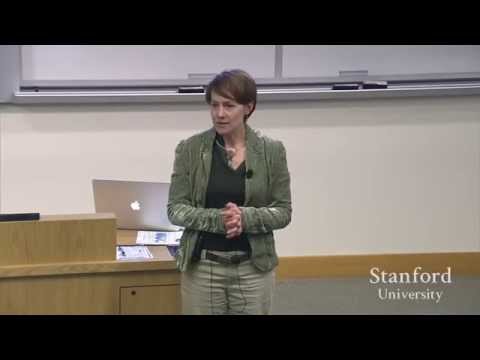
Presenter: Kate, Assistant Professor in Stanford’s Department of Geological and Environmental Sciences, a geochemist specializing in reactive transport (which she describes as “chemical engineering for rocks, minerals, and earth materials”). Her research spans basin-scale geologic carbon storage, mineral carbonation, and subsurface CO2 reactions, with funding from the Global Climate and Energy Project (GCEP).
-
Host Context: Stanford University guest lecture for a graduate-level climate action, geological engineering, and energy policy curriculum, tailored for earth science, environmental engineering, and clean tech students.
-
Session Format: 50-minute technical presentation + 30-minute live audience Q&A, with geochemical data, phase diagrams, paleoclimate context, field site examples, and IPCC mitigation analysis.
-
Core Audience: Geological/environmental engineering grad students, earth science researchers, climate policy analysts, and carbon tech entrepreneurs.
-
Central Thesis: Human activity is pumping CO2 into the atmosphere 70x faster than natural geologic processes, and while the earth’s natural silicate weathering cycle will rebalance the carbon cycle over 100,000 years, we do not have that kind of time to avoid catastrophic climate tipping points. Carbon capture and sequestration (CCS) is not a long-term silver bullet, nor is it an excuse to keep burning fossil fuels – but it is the only large-scale, technologically mature short-term solution we have to hit critical 450 ppm climate targets. For permanent, zero-liability storage, mineral carbonation (locking CO2 into solid rock) is the gold standard, even with its remaining engineering challenges.