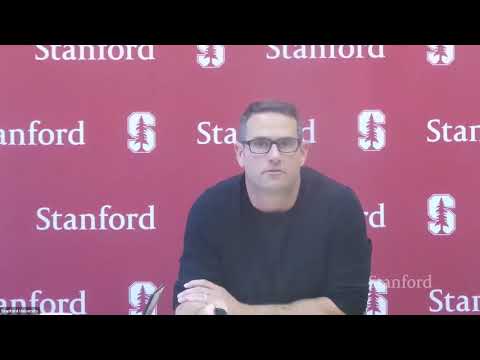
Speaker Profile
This lecture is delivered by Matt Rothe, co-founder of the FEED Collaborative at Stanford University, lecturer at the Stanford Graduate School of Business Executive Education program, and former d.school fellow at Stanford. A leading educator and practitioner in design thinking and sustainable food system innovation, Matt brings a unique on-the-ground perspective: he was raised on a 10,000-acre conventional corn farm in Colorado, held operations executive roles at Attune and Niman Ranch, and served as Director of the Stanford Sustainable Food Program. He holds a BA in Environmental Earth Science from Dartmouth College and an MBA from the Stanford Graduate School of Business.
Target Audience
-
Social entrepreneurs, corporate executives, and innovators seeking to drive social and environmental impact
-
Product managers, designers, and business leaders focused on human-centered innovation
-
Students and professionals in agriculture, sustainability, and food systems
-
Anyone struggling to solve persistent organizational or systemic challenges with ineffective solutions
Course Overview
In this session, Matt Rothe challenges the default approach to problem-solving: most organizations and innovators fixate on finding the right solution, while almost entirely neglecting the critical work of defining the right problem. Drawing on decades of experience in sustainable agriculture, design thinking, and executive education, he breaks down actionable frameworks to reframe problems, uncover root causes and hidden constraints, and center human needs in the innovation process. He uses real-world case studies — from a building manager’s elevator complaint problem to the systemic collapse of agricultural soil health — to demonstrate how reframing problems unlocks creative, elegant, and sustainable solutions that address the true root of a challenge.
Core Topics Covered
-
The critical flaw in conventional problem-solving: prioritizing solutions over problem definition
-
A step-by-step framework to reframe problems by mapping root causes and constraints
-
How to distinguish between explicit and implicit human needs to unlock broader solution sets
-
The risks of technology-first solutions and unintended consequences of solving for constraints
-
Systemic problem reframing through the lens of industrial agriculture and soil health
-
Actionable techniques to validate problem definitions through hypothesis testing and iteration
-
How Maslow’s Hierarchy of Needs informs human-centered problem framing