One. Course Details
This is the seventh lecture of Stanford University's CS224R Deep Reinforcement Learning course, taught by Professor Chelsea Finn. It marks a major shift from online reinforcement learning methods to offline reinforcement learning—a paradigm that enables agents to learn entirely from pre-collected datasets without any further interaction with the environment.The lecture begins with a recap of value function estimation techniques from previous lectures, then motivates offline RL by highlighting its critical applications in safety-critical domains where online exploration is too risky or expensive. It covers the fundamental challenge of distribution shift that breaks standard off-policy algorithms, presents two state-of-the-art offline RL methods—Advantage-Weighted Regression (AWR) and Implicit Q-Learning (IQL)—and compares offline RL to imitation learning, explaining how offline RL can outperform the behavior policy that generated the dataset.Offline RL is one of the fastest-growing areas of deep reinforcement learning, with transformative potential for autonomous driving, healthcare, robotics, and any domain where real-world data is abundant but online experimentation is impractical.Two. Key Learning Objectives
By the end of this lecture, students should be able to:-
Distinguish between online RL, off-policy RL, and pure offline RL
-
Explain the core challenge of distribution shift and why standard off-policy algorithms fail catastrophically in offline settings
-
Describe the trajectory stitching capability that sets offline RL apart from vanilla imitation learning
-
Implement the Advantage-Weighted Regression (AWR) algorithm and explain its stability properties
-
Understand how asymmetric loss functions enable Implicit Q-Learning to learn better-than-average policies
-
Compare the strengths and weaknesses of filtered imitation learning, AWR, and IQL
-
Identify appropriate use cases for offline RL and design effective offline RL pipelines
Three. Memorable Course Quotes
-
"Offline reinforcement learning lets you learn from data someone else collected, which is a game-changer for safety-critical applications where online exploration is too risky."
-
"The core challenge of offline RL is distribution shift—your learned policy will inevitably try to exploit inaccuracies in Q-values for actions never seen in the dataset."
-
"Good offline RL methods can stitch together good behaviors from different trajectories, something vanilla imitation learning can never do."
-
"Advantage-weighted regression is just weighted imitation learning, where you weight actions by how much better they are than the average behavior in your dataset."
-
"Implicit Q-learning uses asymmetric loss to learn value functions for better-than-average policies without ever querying out-of-distribution actions."
-
"If your offline dataset has no variability in actions for a given state, all offline RL methods will gracefully fall back to vanilla imitation learning."
Four. Detailed Study Notes
4.1 Recap: Value Function Estimation Methods
Before diving into offline RL, Professor Finn recaps the three main approaches to value function estimation covered in previous lectures:-
Monte Carlo estimation: Fit value functions to the actual sum of future rewards observed in trajectories (unbiased but high variance)
-
Temporal difference (TD) learning: Use bootstrapping to fit value functions to
r + γV(s')(lower variance but biased) -
Off-policy Q-function estimation: Fit Q-functions using data from old policies by sampling next actions from the current policy
4.2 What is Offline RL and Why Does It Matter?
Offline reinforcement learning (also called batch RL) is the problem of learning a good policy entirely from a fixed, pre-collected dataset of trajectories, with no ability to collect additional data from the environment.This is in stark contrast to online RL, which follows an iterative loop of collecting data, updating the policy, and collecting new data with the updated policy.Offline RL is uniquely valuable in three scenarios:-
Safety-critical domains: Autonomous driving, medical treatment, and industrial control where online exploration could cause harm
-
Expensive data collection: Robotics and real-world systems where each second of experience costs significant time and resources
-
Reusable datasets: Leveraging existing datasets from human operators, hand-designed controllers, or previous RL experiments to avoid redundant data collection
4.3 The Core Challenge of Offline RL: Distribution Shift and Q-Value Overestimation
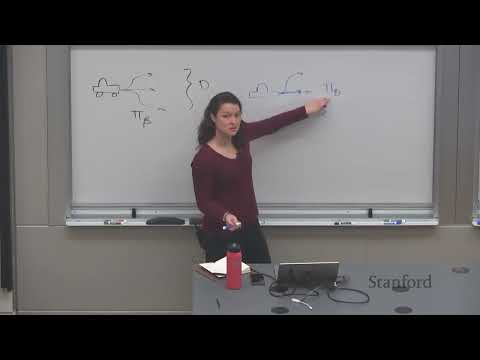
The fundamental problem with applying standard off-policy algorithms (like SAC or DQN) to offline datasets is distribution shift between the behavior policyπ_β that generated the dataset and the learned policy π_θ that we are trying to optimize.When training an off-policy algorithm on offline data:
-
The Q-function is only trained on actions present in the dataset
-
For out-of-distribution actions (actions never taken by the behavior policy), the Q-function outputs arbitrary, randomly initialized values
-
The policy update step will always seek out actions with the highest Q-values, which will almost always be these inaccurate out-of-distribution actions
-
This creates a feedback loop where the policy becomes increasingly biased toward overestimated actions, leading to catastrophic performance collapse
4.4 Baseline Method: Filtered Imitation Learning
The simplest approach to offline RL is to treat it as a supervised learning problem with reward information:-
Filter the dataset to retain only the top k% of trajectories with the highest total reward
-
Train a policy using standard behavior cloning to imitate the actions in the filtered dataset
-
It cannot perform trajectory stitching—it cannot combine good parts from different trajectories
-
It discards all information from lower-performing trajectories, even if they contain useful intermediate behaviors
4.5 Advantage-Weighted Regression (AWR)
Advantage-Weighted Regression is a simple but powerful offline RL algorithm that solves the distribution shift problem by never querying the Q-function for out-of-distribution actions.The core insight of AWR is to frame offline RL as weighted imitation learning, where each action in the dataset is weighted by how much better it is than the average action in that state.The AWR objective function is:L_AWR(θ) = E_{(s,a) ~ D} [ exp( A(s,a) / α ) * log π_θ(a | s) ] where A(s,a) is the advantage of action a in state s, and α is a temperature hyperparameter that controls how aggressively the policy focuses on high-advantage actions.
4.5.1 Estimating Advantages for AWR
The simplest and most common way to estimate advantages for AWR is:-
Fit a value function
V(s)to the dataset using Monte Carlo regression to predict the sum of future rewards -
Compute the advantage for each state-action pair as
A(s,a) = R(s,a) - V(s), whereR(s,a)is the actual sum of future rewards observed in the trajectory
-
It only uses actions present in the dataset
-
It never queries the value function or Q-function for out-of-distribution actions
-
If there is no variability in actions for a given state, all advantages become zero and AWR falls back to vanilla imitation learning
4.5.2 Trajectory Stitching with AWR
The key advantage of AWR over filtered imitation learning is its ability to perform trajectory stitching. If the dataset contains:-
A trajectory that has a good first half but bad second half
-
Another trajectory that has a bad first half but good second half
4.6 Implicit Q-Learning (IQL)
Implicit Q-Learning builds on AWR and addresses its main limitation: the high variance of Monte Carlo advantage estimates. IQL uses bootstrapped TD updates to get lower-variance value estimates while still never querying out-of-distribution actions.The core innovation of IQL is the use of asymmetric loss functions (expectile regression) to learn value functions for policies that are better than the behavior policy.4.6.1 Expectile Regression with Asymmetric Loss
Standard L2 loss fits the mean of the reward distribution for each state. IQL instead uses an asymmetric loss function that penalizes underestimation more heavily than overestimation:L_expectile(e) = |λ - I(e < 0)| * e² where e is the prediction error, and λ is a hyperparameter between 0 and 1.When λ > 0.5, this loss function fits a higher expectile of the reward distribution rather than the mean. This allows IQL to learn a value function that represents the expected return of a better-than-average policy, not just the behavior policy.
4.6.2 Full IQL Algorithm
The complete IQL algorithm has three steps:-
Fit a value function
V(s)using the asymmetric expectile loss -
Fit a Q-function
Q(s,a)using standard TD learning with targetsr + γV(s') -
Train a policy using the same advantage-weighted objective as AWR, with advantages computed as
A(s,a) = Q(s,a) - V(s)
4.7 Offline RL vs. Imitation Learning
| Aspect | Vanilla Imitation Learning | Offline RL (AWR/IQL) |
|---|---|---|
| Maximum Performance | Equal to the best behavior in the dataset | Can exceed the behavior policy by stitching good behaviors |
| Trajectory Stitching | Impossible | Native capability |
| Uses Reward Information | No | Yes |
| Stability | Extremely stable | Very stable |
| Data Requirements | Works with small datasets | Requires larger datasets with action variability |
These are my structured study notes and in-depth interpretations compiled by watching the open course. I hope this knowledge framework helps you master the content of this subject thoroughly. Wish you continuous academic progress and great achievements in your studies.