One. Course Details
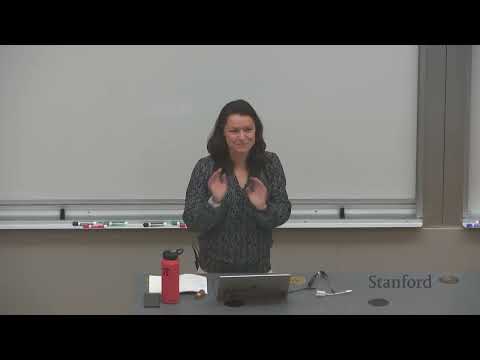
This is the thirteenth lecture of Stanford University's CS224R Deep Reinforcement Learning course, delivered by Professor Chelsea Finn. It provides a comprehensive introduction to meta reinforcement learning (meta-RL), a paradigm that enables agents to learn how to learn from previous task experience.The lecture begins by distinguishing meta-RL from related concepts like transfer learning and multi-task learning. It then focuses on black-box meta-RL methods, explaining how sequence models with memory can be trained to quickly adapt to new tasks with minimal experience. The lecture covers architectural choices, training procedures, and real-world applications in maze navigation, legged robotics, and large language models. It concludes with an in-depth analysis of the unique exploration-exploitation coupling challenge in meta-RL and initial approaches to addressing it.Two. Key Learning Objectives
By the end of this lecture, students should be able to:-
Distinguish meta reinforcement learning from transfer learning and multi-task learning based on their core objectives and capabilities
-
Explain the core intuition behind black-box meta-RL and how it enables few-shot adaptation to new tasks
-
Implement a meta-RL algorithm using recurrent neural networks or transformers with cross-episode memory
-
Analyze the exploration-exploitation coupling problem unique to meta-RL and its underlying causes
-
Apply meta-RL principles to optimize test-time compute usage in large language models
-
Interpret meta-RL as a partially observable Markov decision process (POMDP) where the task identity is hidden
Three. Memorable Course Quotes
-
"If we think about what is the difference between a person and a reinforcement learning system, one of the big differences is that people aren't starting from scratch."
-
"Meta-learning is often concerned with, instead of zero-shot transfer, something that's called few-shot transfer, where with a little bit of experience, a few examples or a few trials of a task, can you adapt to that task?"
-
"One of the things that's pretty cool about this, when you optimize this whole thing end-to-end, is that it will make decisions on whether or not to explore or to exploit."
-
"It's hard to learn how to explore and exploit at the same time. You have this chicken and egg problem between learning how to explore and learning how to solve the task using that information."
-
"The best exploration/exploitation trade-off is going to depend on the number of episodes that you give it."
Four. Detailed Study Notes
4.1 Meta-RL Problem Motivation & Definition
The core motivation for meta-RL comes from the dramatic gap between human and AI learning speeds:-
A human can learn to operate a new espresso machine in minutes using prior experience with similar appliances and general motor skills
-
A standard reinforcement learning agent would require thousands of trials to learn the same task from scratch
4.2 Key Concept Distinctions
It is critical to distinguish meta-RL from three related but distinct paradigms:|
Paradigm |
Core Objective |
Data Requirements |
Task Similarity Requirement |
|---|---|---|---|
|
Transfer Learning (Fine-tuning) |
Transfer knowledge from one source task to one target task |
Moderate amount of target task data |
Source and target tasks must be extremely similar |
|
Multi-Task Learning |
Learn a single policy that can perform many tasks simultaneously |
Large number of training tasks |
New tasks must be within the training task distribution |
|
Meta Reinforcement Learning |
Learn how to learn, enabling rapid few-shot adaptation to new tasks |
Large number of training tasks |
New tasks must be within the training task distribution |
4.3 Black-Box Meta-RL: Core Idea & Algorithm
Black-box meta-RL is the most conceptually simple and empirically successful approach to meta-RL.Core Insight: Train a single sequence model policy with memory that takes as input all of its past experience in the current task (states, actions, and rewards) and outputs the next action. The policy learns to use this experience to automatically adapt its behavior to the current task.Complete Training Algorithm:-
Sample a task MDP Tᵢ from the training task distribution
-
Run the memory-augmented policy π in Tᵢ for N episodes
-
(Optional) Store the collected trajectories in a replay buffer for task Tᵢ
-
Update the policy parameters θ to maximize the expected sum of rewards across all tasks
-
Repeat until convergence
-
Deploy the trained policy to a new, unseen task Tⱼ
-
The policy will automatically use the experience from the first N episodes to adapt its behavior
-
After N episodes, the policy should be able to perform the task optimally
4.4 Architectural Choices for Meta-RL Policies
Meta-RL policies require memory that persists across episodes, which differentiates them from standard RL policies:-
Recurrent Neural Networks (RNN/LSTM): The earliest architectures used for meta-RL. The hidden state stores all past experience across episodes.
-
Transformer/Self-Attention Architectures: The current state-of-the-art choice. Self-attention allows the policy to selectively attend to relevant parts of its past experience, making it much more effective for long sequences and complex tasks.
-
Deep Sets: A feedforward architecture that averages embeddings of past experiences. It is computationally very fast and highly parallelizable but less expressive than transformers.
-
All past states from all episodes in the current task
-
All past actions from all episodes in the current task
-
All past rewards from all episodes in the current task
4.5 Real-World Applications
4.5.1 Visual Maze Navigation
-
Training: Train the policy on 1,000 small, procedurally generated mazes
-
Test: Deploy to completely new, unseen mazes
-
Behavior: The policy learns to efficiently explore the maze in the first episode, then uses that memory to go directly to the goal in the second episode
-
Result: Outperforms random policies and LSTM-based policies by a significant margin, even on larger mazes than those seen during training
4.5.2 Legged Robot Terrain Adaptation
-
Meta-RL enables legged robots to quickly adapt to new terrains, slopes, and friction conditions with only a few seconds of experience
-
This is particularly valuable for robots operating in unstructured real-world environments
4.5.3 Test-Time Compute Optimization for Large Language Models
-
Modern reasoning models like DeepSeek-R1 use significant test-time compute to solve hard problems
-
Meta-RL can be used to train models to use this compute efficiently:
-
Spend little time thinking about simple problems
-
Spend as much time as needed on complex problems
-
-
Result: Higher performance with the same average compute budget, or equivalent performance with less compute
4.6 Meta-RL as a Partially Observable MDP
A powerful theoretical perspective on meta-RL is to view it as a POMDP:-
The true task identity zᵢ is a hidden, unobservable state variable
-
The agent's observations are the states, actions, and rewards it experiences
-
The agent's goal is to infer the hidden task identity zᵢ through exploration, then execute the optimal policy for that task
4.7 Sample Efficiency of Meta-Training
The sample efficiency of the meta-training process is entirely inherited from the base RL algorithm used to update the policy:-
Most efficient: Off-policy algorithms like SAC with replay buffers
-
Moderately efficient: PPO and other near-on-policy algorithms
-
Least efficient: Vanilla policy gradient and other pure on-policy algorithms
4.8 The Core Challenge: Exploration-Exploitation Coupling
Meta-RL introduces a unique and fundamental challenge that does not exist in standard RL: exploration and exploitation are tightly coupled.The Chicken-and-Egg Problem:-
To learn how to solve a task, the agent must first learn how to explore effectively to collect information about the task
-
To learn how to explore effectively, the agent must first learn how to solve tasks to receive reward signal
-
In theory, end-to-end training can discover the optimal exploration-exploitation trade-off
-
In practice, it is extremely difficult to optimize, especially in sparse reward environments
-
The agent only receives useful learning signal if it successfully explores and exploits in the same sequence of episodes
-
Most trajectories either fail to explore (get no reward) or fail to exploit (get reward but learn nothing about exploration)
-
Auxiliary Exploration Objectives: Add intrinsic rewards that encourage the agent to collect information about the task, not just maximize extrinsic reward
-
Posterior Sampling (Thompson Sampling):
-
Maintain a posterior distribution over possible task identities
-
Sample a task from this distribution
-
Act as if that sampled task is the true task
-
Update the posterior distribution based on new experience
-
-
Information-Seeking Exploration: Encourage the agent to visit states that maximally reduce uncertainty about the task identity
These are my structured study notes and in-depth interpretations compiled by watching the open course. I hope this knowledge framework helps you master the content of this subject thoroughly. Wish you continuous academic progress and great achievements in your studies.