One. Course Details
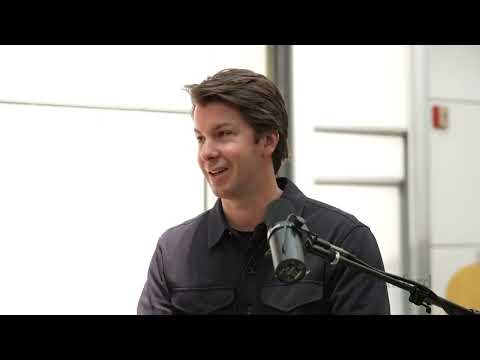
This is week six of CS 153: Frontier Systems (AI Coachella) at Stanford University, featuring guest speaker Scott Nolan, CEO of General Matter and former partner at Founders Fund. Scott is a mechanical and aerospace engineer by training, with early experience at SpaceX, and has spent over a decade investing in hard technology and energy startups.
The lecture addresses the most underdiscussed bottleneck to AI progress: energy and electricity. Scott explains how the exponential growth of AI compute demand is overwhelming the global power grid, why nuclear energy is the only viable long-term solution, and how the United States has lost its leadership in uranium enrichment—the critical missing link in the nuclear supply chain. He also shares his journey building General Matter from a concept in late 2022 to a company with a $900 million Department of Energy contract just 24 months later.
The lecture covers:
-
The systems-level view of the AI factory and energy's central role
-
The exponential growth of AI power demand and the grid's inability to keep up
-
How Bitcoin mining served as a dress rehearsal for AI data center infrastructure
-
The safety and environmental advantages of nuclear energy
-
The global uranium supply chain and the US enrichment crisis
-
Lessons from building a critical infrastructure startup in record time
-
The relationship between AI growth and job creation in physical industries
Two. Key Learning Takeaways
-
Energy is the ultimate bottleneck to AI progress—even if you have unlimited chips and data centers, you cannot train or run models without reliable, affordable electricity.
-
Uranium enrichment is the hidden bottleneck to nuclear energy, and the United States currently has less than 0.1% of global enrichment capacity, relying almost entirely on imports from Europe and Russia.
-
Bitcoin mining was a critical dress rehearsal for AI, pioneering techniques for utilizing stranded energy and building distributed computing infrastructure in remote locations.
-
Cultural narratives often obscure fundamental technical reality—nuclear energy is the safest and cleanest baseload power source available, despite decades of negative public perception.
-
Government and private sector alignment can accelerate critical infrastructure development dramatically, as demonstrated by General Matter's $900 million DOE contract awarded just 24 months after founding.
-
AI creates far more jobs than it eliminates, including thousands of new positions in construction, manufacturing, and engineering to build the physical infrastructure required for AI to scale.
-
The next decade will see a renaissance in physical infrastructure, as the digital revolution finally collides with the physical world of energy, manufacturing, and construction.
Three. Course Gold Quotes
-
"Everything converges to the cost of electricity. Chips are going to get cheaper, models are going to get cheaper, but energy is fundamentally what you consume when you're running these models." — Sam Altman
-
"Despite a few very famous nuclear accidents, the safety track record of nuclear is so much better than anything else. Even Fukushima resulted in one measurable fatality, compared to thousands from the tsunami that caused it."
-
"The best framework for choosing what to work on is: what's the really important problem that's not getting solved, that's not going to get solved by someone else, that your skill set lines you up to be really useful for?"
-
"Bitcoin mining was a bit of a dress rehearsal for AI. Many of the innovations that companies like Crusoe developed during the Bitcoin era have directly translated into building infrastructure for the AI era."
-
"There's this narrative that AI eliminates jobs. The reality is that AI is creating entirely new categories of jobs, both in the knowledge sector and in the physical world, that didn't exist five years ago."
-
"We went from zero to a $900 million DOE contract in 24 months. The timelines on which you can make a difference, especially if you do the right systems analysis, are quite extraordinary."
-
"The United States was 86% of global enrichment capacity in the 1980s. Today we're less than 0.1%. That's the single biggest threat to our energy independence and AI leadership."
Four. Layered Learning Notes
Module 1: The AI Factory and Energy's Central Role
-
The course uses the "AI factory" mental model to describe how intelligence is manufactured: data → compute → algorithms → pre-training → foundation models → mid-training → post-training → deployment to agents.
-
While most attention focuses on the model pipeline itself, the entire system depends on critical supporting infrastructure that is often overlooked.
-
Compute is widely recognized as a bottleneck, but electricity is the bottleneck upstream of compute. A data center without power is just an expensive building full of silicon.
-
The energy crisis began in early 2023, immediately after the launch of ChatGPT, when the world suddenly realized that AI had real consumer utility and demand exploded.
-
The release of Claude 4.6 in December 2025 marked a second inflection point, as enterprises finally recognized AI's transformative potential and began massive deployments.
-
This created a "Groundhog Day moment" for the energy industry, as demand that was projected for 2030 arrived five years early.
-
From an urgency perspective, electricity is a far more pressing bottleneck than data centers or chips. You can build a data center in 18-24 months, but bringing new power generation online takes 5-10 years or more.
Module 2: The Exponential Energy Demand Crisis
-
AI power demand is growing super-linearly, with projections showing we will need approximately 1 terawatt of additional electricity within the next decade just to power AI data centers.
-
This is a staggering number: the entire United States currently generates about 1 terawatt of electricity total.
-
The problem is that grid expansion has been almost completely stagnant for the past 20 years in the United States. We have not built the transmission lines or power generation capacity needed to support this level of growth.
-
To meet AI demand, we need to go from almost a complete standstill on grid expansion to nearly vertical growth—a rate of progress that has never been achieved before in US history.
-
All major tech leaders agree on this point:
-
Sam Altman has repeatedly testified that energy is the fundamental constraint on AI progress.
-
Jensen Huang, despite having every incentive to highlight chips as the bottleneck, has admitted that energy is the real limiting factor.
-
Elon Musk has identified energy as the biggest bottleneck for both SpaceX and Tesla.
-
-
The Financial Times and other mainstream financial publications have also begun to recognize that power, not chips, is the upstream constraint on all technology growth.
Module 3: From Bitcoin Mining to AI Data Centers
-
The first wave of demand for stranded energy came from Bitcoin mining in the late 2010s and early 2020s.
-
Stranded energy is defined as power generation that exists but has no nearby population or industry to consume it—examples include hydroelectric dams in remote regions, isolated geothermal plants, and wind farms in West Texas.
-
Bitcoin mining was the perfect use case for stranded energy because it requires very little connectivity and can be located almost anywhere.
-
Companies like Crusoe Energy pioneered the model of building modular data centers next to stranded energy sources, initially for Bitcoin mining.
-
This turned out to be an invaluable dress rehearsal for AI:
-
They developed techniques for managing large fleets of servers in remote locations.
-
They learned how to negotiate with utilities and landowners for power access.
-
They built the operational expertise needed to run 24/7 computing infrastructure with minimal on-site staff.
-
-
Today, almost all of these Bitcoin mining companies have pivoted to AI data centers, bringing their hard-earned expertise to the new industry.
-
Unfortunately, almost all of the easily accessible stranded energy resources have now been claimed. We can no longer rely on stranded power to meet future demand—we need to build massive amounts of new power generation from scratch.
Module 4: Nuclear Energy as the Only Viable Long-Term Solution
-
Data centers require extremely high uptime (99.99% or better), which makes intermittent renewable sources like solar and wind impractical without massive amounts of battery storage.
-
When you factor in the cost of batteries needed to provide 24/7 power, solar and wind become significantly more expensive than baseload power sources.
-
Natural gas is currently the most common power source for new AI data centers, but it has two major problems:
-
Turbine lead times have exploded to 3-5 years, and production cannot keep up with demand.
-
It produces significant carbon emissions, which conflict with climate goals.
-
-
When you evaluate all power sources based on safety, carbon emissions, and baseload capacity, nuclear energy stands out as the clear winner:
-
It has the lowest carbon emissions of any power source, including wind and solar.
-
It is essentially tied with wind as the safest power source per terawatt-hour generated.
-
It provides 24/7 baseload power with extremely high energy density.
-
-
All major hyperscalers (OpenAI, Anthropic, Google, Meta) have recognized this and are making massive long-term bets on nuclear energy.
-
The challenge is that nuclear plants take 5-10 years to build, so we are in a race against time to bring enough capacity online before we hit the energy wall.
Module 5: Uranium Enrichment – The Hidden Bottleneck
-
Every nuclear reactor requires fuel, which must be replenished every 1-10 years depending on the reactor design.
-
The nuclear fuel supply chain has five steps:
-
Mining uranium ore
-
Converting ore to uranium hexafluoride gas (UF6)
-
Enriching the gas to increase the concentration of U-235 (the fissile isotope)
-
Converting enriched gas back to solid form
-
Fabricating fuel pellets and rods
-
-
While the United States has adequate capacity for mining, conversion, and fabrication, we have almost no enrichment capacity.
-
In the 1980s, the US was 86% of global enrichment capacity. Today we are less than 0.1%, relying almost entirely on imports from Europe and even Russia (despite sanctions).
-
This is a national security crisis as well as an energy crisis: we cannot build a domestic nuclear industry if we depend on foreign adversaries for our fuel supply.
-
Enrichment is also the single largest cost component of nuclear fuel, making it the key to making nuclear energy affordable at scale.
-
General Matter was founded specifically to solve this problem, building a new enrichment facility in Paducah, Kentucky—the same site where the last US commercial enrichment plant operated until 2013.
Module 6: Breaking Through Cultural Narratives
-
Many critical technologies are held back not by technical limitations, but by negative cultural narratives and public perception.
-
Nuclear energy is the most striking example: despite having the best safety record of any baseload power source, it has been effectively sidelined in the US for 50 years due to fear from a small number of highly publicized accidents.
-
Germany provides a tragic cautionary tale: they shut down all their perfectly functional nuclear reactors with the goal of transitioning to renewables, but instead ended up replacing most of that capacity with coal and natural gas.
-
The result has been higher carbon emissions, worse air quality, and higher energy prices for German consumers.
-
France, by contrast, gets 70% of its electricity from nuclear energy and has some of the cleanest and cheapest electricity in Europe.
-
Public perception of nuclear is finally shifting rapidly, with polls now showing majority support for nuclear energy in the United States.
-
The lesson for students is: don't let surface-level cultural narratives dictate what problems you work on. Go deep into the fundamentals and work on the most important problems, even if they are unpopular.
Module 7: The General Matter Playbook – From Idea to $900 Million in 24 Months
-
Scott Nolan began researching the uranium enrichment problem in December 2022, shortly after the launch of ChatGPT.
-
He spent all of 2023 doing deep due diligence, talking to experts across the nuclear industry, and confirming that enrichment was indeed the critical bottleneck.
-
General Matter was officially founded in January 2024 with a clear mission: bring commercial uranium enrichment back to the United States at scale.
-
The company's rapid success can be attributed to three key factors:
-
Perfect timing: They identified a critical, time-sensitive problem just as the rest of the world was waking up to it.
-
Alignment with national interests: Energy independence and AI leadership are bipartisan priorities in Washington, creating strong government support.
-
The right team: They assembled a world-class team with experience from national labs, the nuclear industry, and high-velocity startups like SpaceX and Tesla.
-
-
The first few months of the company involved 100-hour workweeks to develop a detailed technical and business plan for the DOE contract.
-
They selected Paducah, Kentucky as their site because it has existing infrastructure, a supportive local community, and a workforce with experience in nuclear enrichment.
-
In January 2026, just 24 months after founding, General Matter was awarded a $900 million contract from the Department of Energy to build its enrichment facility.
-
The company expects to be online and producing fuel before the end of the decade, with plans to scale rapidly to meet the growing demand from both existing and advanced reactors.
Module 8: AI, Jobs, and the Physical Renaissance
-
There is a widespread narrative that AI will eliminate millions of jobs and lead to mass unemployment.
-
The reality is exactly the opposite: AI is creating entirely new categories of jobs that didn't exist before, both in the digital and physical worlds.
-
General Matter alone expects to create approximately 1,000 new jobs over the next four years, split between high-skilled engineering roles in California and manufacturing/construction jobs in Kentucky.
-
This is just one company—there are hundreds of similar startups being founded to build the physical infrastructure required for AI to scale.
-
The AI revolution is not just a digital revolution—it is igniting a renaissance in the physical world of energy, manufacturing, construction, and transportation.
-
The biggest challenge for these companies is not finding capital, but finding enough skilled workers to fill all the open positions.
-
For students, this means there are enormous opportunities in fields that were previously considered stagnant or declining, like nuclear engineering, civil engineering, and construction management.
Wishing you all the insight to see beyond the hype and identify the real bottlenecks that will shape the next decade of technology. The AI revolution will not be won by those who only write code—it will be won by those who build the physical infrastructure that powers the code. Whether you're interested in energy, manufacturing, or software, there has never been a more exciting time to be a builder. Stay curious, go deep into the fundamentals, and don't be afraid to work on problems that others have written off. The future belongs to those who are willing to roll up their sleeves and build the world we need. Good luck on your journey!