One. Course Details
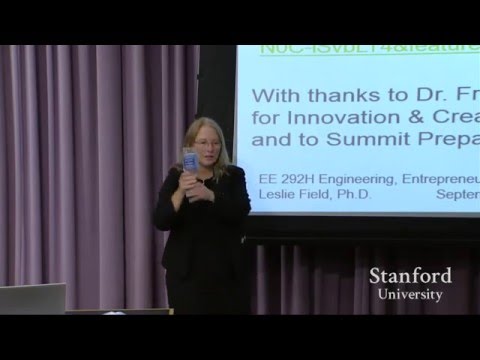
This is the concluding lecture for EE292H Engineering and Climate Change at Stanford University, delivered by Dr. Leslie Field, founder and chief scientist of Ice911 Research. A chemical and electrical engineer specializing in MEMS technology, Dr. Field shares her nine-year journey developing a reversible, low-cost intervention to slow Arctic ice melt. The lecture coincides with the 2015 UN COP21 climate conference in Paris, balancing updates on global climate progress with the urgent need for backup solutions. It covers the science of ice albedo feedback, seven years of field testing results, ethical principles for soft geoengineering, and practical lessons for building grassroots climate solutions.
The lecture covers:
-
The 2015 Paris climate conference and the global turning point in renewable energy
-
The ice albedo feedback loop and its role in accelerating global warming
-
The development of Ice911’s reflective hollow glass sphere technology
-
Field testing results from Minnesota, California, and Barrow, Alaska
-
Soft geoengineering: ethical principles for reversible climate intervention
-
Commercial applications for water conservation and wildlife protection
-
Practical advice for starting your own climate solution from scratch
-
An open discussion of individual and collective climate actions
Two. Key Learning Takeaways
-
Arctic ice albedo feedback now drives 33% of global temperature rise, up from 20% in 2006, as bright reflective sea ice is replaced by heat-absorbing open ocean.
-
Arctic sea ice has lost 75% of its volume and 50% of its summer area since 1980, melting far faster than even the worst-case IPCC predictions.
-
Ice911’s hollow reflective glass spheres increase the albedo of thin first-year ice, slowing melt and allowing natural ice regeneration.
-
Soft geoengineering prioritizes reversible, low-impact interventions that can be fully undone if unintended consequences arise—a critical ethical safeguard.
-
New renewable energy installations now outnumber fossil fuel installations globally, marking an irreversible economic turning point in the energy transition.
-
Simple, low-cost technologies can have transformative impact: a plastic bottle filled with water and bleach provides free daylight to low-income homes.
-
Ice911’s materials reduce reservoir evaporation by 26% at 1/10 the cost of desalination and 1/2 the cost of traditional conservation measures.
Three. Course Gold Quotes
-
"It is the best of times and the worst of times for climate action. We have hit a turning point with renewable energy, but we still have a long way to go to avoid catastrophic warming."
-
"You can work on really complicated technologies, but if you know what people really need and make a couple simple observations, you can have a profound effect for almost nothing."
-
"If you’re ever going to muck with things on a large scale, you’ve just got to live with first do no harm and be able to undo what you’re doing."
-
"I started this in my kitchen, in my home office, just walking around obsessing about what could help. You don’t need a big budget to start making a difference."
-
"Doing nothing is a bad option. What’s the eco impact of putting this material out there? What’s the eco impact of having the ice disappear entirely?"
-
"Geoengineering is not a replacement for cutting emissions. It’s a backup plan to buy us time while we finish the transition to renewable energy."
-
"We don’t need glamorous techno fixes. We need solutions that work for people, that are affordable, and that we can scale right now."
Four. Layered Learning Notes
Module 1: The Climate Turning Point: Progress and Peril
-
The 2015 Paris COP21 conference marked a historic milestone, with 122 countries submitting pre-conference emissions reduction commitments.
-
While current pledges are projected to limit warming to approximately 2.7°C (above the 2°C target), they represent the first coordinated global action on climate change.
-
Renewable energy has crossed an economic tipping point: new solar and wind installations now outnumber new fossil fuel power plants globally, driven by plummeting costs.
-
The fossil fuel industry’s decades-long disinformation campaign is being exposed, including Exxon’s internal 1970s research confirming climate change while publicly denying it.
-
Despite progress, the MIT Greenhouse Gamble model now estimates almost no chance of staying below 3°C of warming without additional intervention, highlighting the need for backup solutions.
Module 2: The Arctic Ice Albedo Crisis
-
Albedo is a measure of surface reflectivity, ranging from 0 (perfect absorber) to 1 (perfect reflector). Bright multi-year sea ice reflects 95% of sunlight, while open ocean absorbs 95%.
-
The loss of Arctic summer sea ice creates a dangerous positive feedback loop: less ice means more heat absorbed, which melts more ice, leading to even more heat absorption.
-
This feedback loop now accounts for one-third of all global temperature rise, making it the single largest driver of accelerating climate change.
-
Arctic sea ice is declining far faster than predicted: the IPCC Fourth Assessment Report’s worst-case scenario has already been exceeded.
-
The complete loss of summer Arctic sea ice would raise global temperatures by an additional 0.5°C, triggering cascading effects including sea level rise, extreme weather, and methane clathrate release from permafrost.
Module 3: Ice911: A Reversible Backup Plan
-
Dr. Field began developing Ice911 in 2006, starting with kitchen experiments and web research after seeing An Inconvenient Truth.
-
The core concept is simple: float bright, reflective materials on thin first-year ice and open water to increase albedo and slow melt.
-
After testing dozens of materials (including daisies, plastic bottles, and various powders), the team settled on hollow glass spheres as the optimal solution:
-
Highly reflective (albedo > 0.8)
-
Non-toxic and environmentally benign (made from sand)
-
Floats indefinitely and percolates to the top through freeze-thaw cycles
-
Affordable to manufacture at scale
-
-
The technology is designed to be temporary: spheres naturally degrade over time, and the entire deployment can be reversed if needed.
Module 4: Soft Geoengineering: Ethics and Principles
-
Traditional geoengineering proposals (such as sulfate aerosols) are controversial due to their potential for global unintended consequences and lack of reversibility.
-
Soft geoengineering (also called eco-engineering) is a more cautious approach that:
-
Uses natural or benign materials
-
Operates on local or regional scales
-
Is fully reversible
-
Prioritizes "first do no harm"
-
-
Dr. Field emphasizes that geoengineering is not a replacement for emissions reductions, but a necessary backup plan to buy time while the world transitions to renewable energy.
-
A key principle is to characterize all potential impacts in advance and maintain the ability to stop or reverse the intervention at any time.
Module 5: Seven Years of Field Testing
-
Ice911 has conducted over seven years of field testing, starting with small-scale experiments in the Sierra Nevada mountains.
-
Extensive testing at a research pond in Minnesota has consistently shown that the reflective materials preserve ice 2–3 weeks longer than control areas, even during warm spring conditions.
-
In 2015, the team conducted their first Arctic field test in Barrow, Alaska, working with local Inupiat whaling captains who provided invaluable local knowledge and logistical support.
-
The Alaska test confirmed that the materials perform well in real Arctic conditions, though limited funding prevented full quantitative analysis.
-
Future testing will focus on larger-scale deployments in the Fram Strait, a critical area where Arctic ice flows into the Atlantic Ocean.
Module 6: Commercial Applications: Funding the Mission
-
While the primary mission of Ice911 is to save the Arctic, the technology has valuable commercial applications that can fund further development.
-
California reservoir water conservation: The reflective materials reduce evaporation by 26% at a fraction of the cost of desalination or traditional conservation measures.
-
Unlike Los Angeles’ black plastic shade balls (which warm the water and harm wildlife), Ice911’s materials cool the water, reducing fish die-offs and improving water quality.
-
Other commercial applications include:
-
Snow preservation for ski resorts
-
Cooling rivers and lakes to protect salmon and other cold-water fish
-
Reducing cooling costs for industrial facilities
-
-
The team is currently pursuing for-profit commercialization of these applications to support the nonprofit Arctic mission.
Module 7: How to Start a Climate Solution
-
You don’t need a big budget or institutional support to make a difference: Dr. Field began Ice911 in her spare time with her own money.
-
Volunteer your time and skills: Ice911 has been built almost entirely by volunteers, including engineers, scientists, and students.
-
Start small and test everything: even the best ideas need to be validated through real-world experimentation.
-
Build partnerships with local communities: the Inupiat whaling captains provided critical support for the Alaska test.
-
Combine idealism with pragmatism: pursuing commercial applications can provide the funding needed to advance your nonprofit mission.
Wishing you all the courage to turn your climate concerns into action and the creativity to find simple, elegant solutions to the world’s most complex problems. Every great movement starts with one person asking, "What can I do?" and then rolling up their sleeves to do it. Whether you become an engineer, an entrepreneur, a policy maker, or an advocate, your unique skills and passion can help build a cooler, more sustainable future for all. Never underestimate the power of one person to spark change—and never forget that the best time to start is right now.