One. Course Details
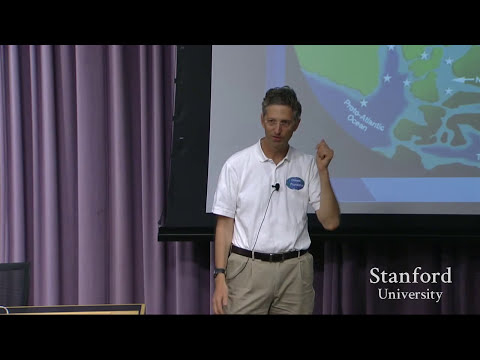
This is a guest lecture for EE292H Engineering and Climate Change at Stanford University, delivered by a senior researcher from the Climate Foundation, a leading organization developing scalable, nature-based climate solutions. The lecture re-frames climate action from a focus on reducing carbon footprints to building carbon handprints—positive, profitable interventions that actively remove carbon from the atmosphere at gigaton scale. Drawing on decades of engineering and entrepreneurial experience, the speaker presents proven natural blueprints for carbon sequestration, addresses the intersection of policy and technology, and outlines actionable opportunities for climate entrepreneurship.
The lecture covers:
-
The critical distinction between carbon footprints and carbon handprints
-
Coral reef bleaching mitigation using deep seawater air conditioning waste heat
-
The Azolla Event: nature’s blueprint for gigaton-scale biological carbon sequestration
-
Three categories of climate solutions: reduction, adaptation, and active carbon removal
-
The carbon dividend: a bipartisan policy framework for carbon pricing
-
Biochar and terra preta for soil restoration and long-term carbon storage
-
Marine permaculture: restoring ocean productivity, fisheries, and carbon sinks
-
The power of positive outliers in engineering and climate problem-solving
-
An open Q&A addressing methane clathrates, ocean acidification, and scalable business models
Two. Key Learning Takeaways
-
Carbon handprints prioritize scalable, positive climate action rather than just emission reductions, enabling us to go carbon negative (climate positive).
-
The Azolla Event 50 million years ago removed 3,000 parts per million of CO₂ from the atmosphere in 800,000 years, proving biology can sequester carbon at a scale sufficient to reverse climate change.
-
Biochar stores carbon in soils for 100–1,000 years while improving water retention, nutrient cycling, and agricultural productivity in degraded lands.
-
Marine permaculture can reverse the 40% decline in ocean primary productivity since 1950, restore fisheries, and sequester gigatons of carbon annually.
-
The carbon dividend is a revenue-neutral, bipartisan policy that puts a predictable, rising price on carbon and returns 100% of proceeds to all citizens equally.
-
Positive outliers—unusually successful natural or human systems—provide the most promising blueprints for scalable climate solutions.
-
94% of global warming is absorbed by the surface ocean, creating a thick warm layer that blocks nutrient upwelling and threatens the entire marine food web.
Three. Course Gold Quotes
-
"Carbon footprints are a depressing story. Carbon handprints are how we take positive action at the gigaton scale to restore carbon balance."
-
"Nature has already solved our climate problem. We just need to listen to the positive outliers—like Azolla, like terra preta—and scale what works."
-
"Companies are the engines of creation. They are the vehicles by which we scale. It’s the intersection of engineering, entrepreneurship, and climate change that gives us the tools to make a difference."
-
"Half the problem is political will. The other half is system engineering. We need to be multidisciplinary to solve this."
-
"Coral reefs are the canaries in the coal mine. They live within five degrees of mortality their entire lives, and they are the first to go during mass extinctions."
-
"There’s plenty of room at the bottom of the ocean. It bodes well for deep seawater air conditioning, ocean thermal energy, and balancing our carbon budget."
-
"Soil carbon is soil capital. When you put biochar in the ground, you’re making a deposit that pays interest in higher food productivity for decades."
Four. Layered Learning Notes
Module 1: From Carbon Footprints to Carbon Handprints
-
Traditional climate discourse focuses on measuring and reducing individual and corporate carbon footprints, which often leaves audiences feeling demotivated and powerless.
-
Carbon handprints shift the narrative to building solutions that actively remove carbon from the atmosphere while addressing interconnected global challenges like food security and sanitation.
-
Of the top 10 historical carbon emitters, only the United States and Russia have not implemented a national price on carbon.
-
The core mission is to build profitable, sustainable businesses that can sequester at least one gigaton of carbon per year while creating jobs and improving quality of life.
Module 2: Coral Reef Bleaching and Deep Seawater Cooling
-
Coral reefs support 25% of all marine species and act as nurseries for the global ocean ecosystem.
-
50–90% of corals in Hawaii and American Samoa bleached in 2014–2015, driven by thermally induced photobleaching—the deadly combination of high water temperatures and sunlight.
-
Experimental cooling of a small coral reef by 1°C reversed bleaching in less than 24 hours, demonstrating that temperature is the primary driver of acute coral mortality.
-
The Honolulu Seawater Air Conditioning project will provide 100 megawatts of cooling to downtown Honolulu using 44°F water pumped from 500 meters deep, eliminating the need for fossil fuel-powered air conditioning.
-
The system will have 150 megawatts of leftover thermal capacity, which can be used to seasonally cool kilometers of nearby coral reefs and prevent bleaching events.
-
The U.S. Navy is adopting this technology for bases in Guam and other Pacific locations, protecting high-value military and ecological assets.
Module 3: The Azolla Event: Nature’s Gigaton Carbon Solution
-
50 million years ago, the Azolla Event transformed Earth’s climate from a hothouse state to the current ice age cycle.
-
A tiny aquatic fern called Azolla grew exponentially in the closed Arctic Ocean, forming a symbiosis with nitrogen-fixing cyanobacteria that allowed it to thrive without fertilizers.
-
Azolla has a doubling time of just two days, covering 1 million square kilometers of the Arctic Ocean every summer.
-
Each winter, the ferns died and sank to the anoxic depths of the Arctic Ocean, where they were preserved and eventually formed the Alaska oil reserves.
-
Over 800,000 years, this single plant removed 3,000 parts per million of CO₂ from the atmosphere—more than enough to reverse all human-caused emissions.
-
This natural positive outlier proves that biological systems can sequester carbon at a scale sufficient to solve the climate crisis.
Module 4: Three Pathways to Climate Stability
-
Tim Flannery’s Atmosphere of Hope outlines three complementary approaches to addressing climate change:
-
Reduction: Lowering carbon intensity through energy efficiency, renewable energy, and public transportation (can address approximately 80% of emissions).
-
Adaptation: Preparing for unavoidable impacts like sea level rise, which will cost an estimated $11 trillion in U.S. coastal real estate alone.
-
Carbon removal: Actively pulling CO₂ from the atmosphere (climate positive), which is essential to stay below 2°C of warming.
-
-
Carbon removal technologies fall into three categories:
-
Biological: Biochar, marine permaculture, reforestation, and soil restoration
-
Chemical: Direct air capture and mineral carbonation
-
Physical: CO₂ storage in deep marine sediments and Antarctic CO₂ snow capture
-
-
Deep-sea CO₂ storage is particularly promising: liquid CO₂ becomes denser than seawater below 3 kilometers, forming stable hydrates in marine sediments that can last for millennia.
Module 5: The Carbon Dividend: Bipartisan Carbon Pricing
-
The Citizens Climate Lobby advocates for a carbon dividend: a rising price on carbon charged at the point of extraction, with 100% of revenues returned equally to all U.S. citizens.
-
The policy is modeled after Alaska’s Permanent Fund Dividend, which has distributed annual oil revenues to all Alaska residents for 30 years and remains extremely popular in a Republican state.
-
A independent study by the conservative REMI think tank found the carbon dividend would create 2.1 million jobs, grow the U.S. economy, and reduce emissions by 50% by 2035 without negative economic impacts.
-
Border carbon adjustments would ensure fair trade with countries that do not have a carbon price, complying fully with World Trade Organization rules.
-
This policy creates a level playing field for low-carbon technologies and empowers consumers to choose cheaper, sustainable alternatives.
Module 6: Biochar and Terra Preta: Restoring Soils and Sequestering Carbon
-
Terra preta ("black earth") is a fertile, carbon-rich soil created by indigenous peoples in the Amazon Basin over 1,500 years ago, using charcoal, fish bones, and organic waste.
-
Biochar is a porous, graphene-based material produced by the pyrolysis of organic matter in the absence of oxygen.
-
Key benefits of biochar:
-
Improves water retention by 3–5 times, making crops more drought-resistant.
-
Increases cation exchange capacity, holding nutrients like phosphate and nitrate near plant roots and reducing fertilizer runoff.
-
Inoculates soils with beneficial microorganisms, creating living, self-sustaining soil ecosystems.
-
-
Global potential: Converting just 20% of agricultural residues to biochar could sequester 3 gigatons of carbon per year.
-
Mobile biochar reactors can provide sustainable sanitation in developing nations, converting human waste to pathogen-free biochar while eliminating open defecation.
-
The technology is currently being deployed in India, rural Alaska (Kivalina village), and across the United States.
Module 7: Marine Permaculture: Restoring the Oceans and Feeding the World
-
94% of global warming is absorbed by the surface ocean, creating a thick warm layer that blocks nutrient upwelling from the deep ocean.
-
This has caused a 40% decline in ocean primary productivity (phytoplankton) since 1950, threatening the entire marine food web and reducing the ocean’s ability to absorb CO₂.
-
Marine permaculture uses wave-powered pumps to upwell nutrient-rich deep water to the surface, supporting kelp forests and phytoplankton blooms.
-
Heat exchangers warm the upwelled water to within 2°C of the surface temperature, and natural salinity differences keep the nutrient-rich water floating.
-
Giant kelp grows up to 2 feet per day, providing habitat for forage fish, sequestering carbon, and producing valuable products like alginate, carrageenan, and omega-3 fatty acids.
-
The system is hurricane-resistant, decouples from the surface in rough seas, and can be scaled to 100 million square kilometers of underutilized subtropical and tropical oceans.
-
A 1-square-kilometer system can produce 60 tons of biomass per day, restoring fisheries and sequestering carbon at gigaton scale.
Wishing you all the curiosity to find the hidden positive outliers in nature and the courage to turn those discoveries into scalable solutions that heal our planet. The climate crisis is the greatest challenge of our time, but it is also the greatest opportunity to build a more sustainable, equitable, and prosperous world for all. Whether you become an engineer, an entrepreneur, a policy maker, or an advocate, your unique skills and passion can make a real difference in restoring carbon balance and ensuring a livable future for generations to come. Keep asking bold questions, keep collaborating across disciplines, and never underestimate the power of one person to spark a movement that changes the world.