







 Note Wisdom
Animal Party: A Kindergarten Zoo Adventure
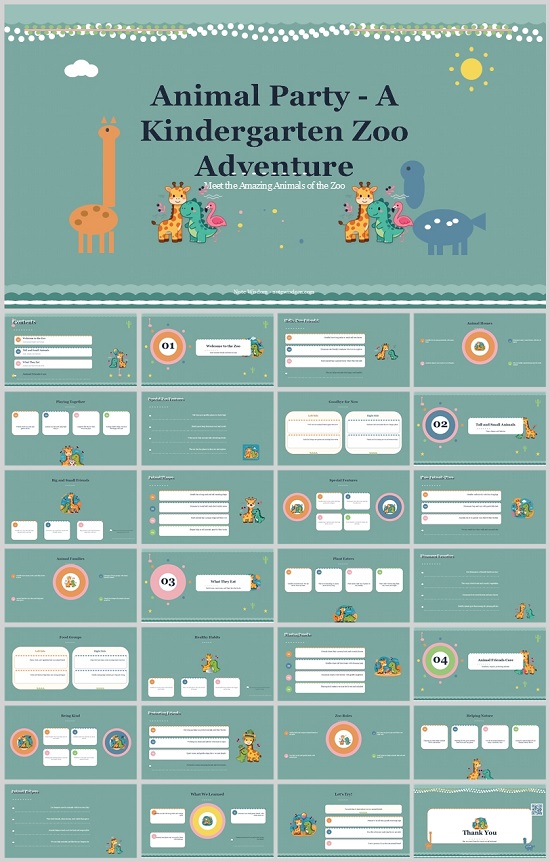
This kindergarten zoo presentation uses playful cartoon animals and soft nature tones to teach young learners about animal sizes, habitats, diets, and kindness. It offers a structured, engaging slide-by-slide plan for teachers and families to explore the
- Download this PPT
- Commercial use (1 project)
- Present publicly
1. PPT Title
Animal Party: A Kindergarten Zoo Adventure
2. Design Concept
Core design philosophy: “Playful Zoo Discovery” – Using bright, friendly cartoon animals and soft nature-inspired tones to introduce young learners to the wonders of the animal kingdom in a joyful, safe, and structured way.
1. Color System
-
Primary: Muted sage teal (#7BA8A1) for backgrounds, creating a calm, nature-inspired canvas.
-
Secondary: Cream/off-white (#FDF8F0) for content cards and text boxes.
-
Accent: Warm orange (#F2994A), coral pink (#F28B82), sky blue (#8ECAE6), sunny yellow (#FFD166), and dark slate (#2F4F4F) for titles and icons.
2. Visual Elements
-
Cute cartoon zoo animals: giraffe, crocodile, flamingo, elephant, blue whale.
-
Polka-dot scalloped borders, sun, cloud, scattered stars, and dots.
-
Rounded rectangular content cards, circular numbered badges (01–04), dotted connecting lines.
3. Layout & Typography
-
Layout: Centered title slide; grid-based content slides with generous white space; left-aligned or split-screen text blocks paired with animal illustrations.
-
Typography: Elegant serif titles (e.g., Playfair Display) with rounded sans-serif body text (e.g., Nunito, Quicksand) for early-reader clarity.
4. Design Goal
To help kindergarteners and their families explore animal types, habitats, diets, and kindness toward animals through a cheerful, easy-to-follow visual story.
Conclusion
A cohesive, zoo-themed kindergarten presentation that blends early science concepts with playful animal illustrations, making learning feel like a fun animal party.
3. Slide-by-Slide Outline
Slide 1: Title Slide
-
Title: Animal Party: A Kindergarten Zoo Adventure
-
Key Content: Main title, subtitle “Meet the Amazing Animals of the Zoo,” and a warm welcome line.
-
Layout Suggestion: Center-aligned text. Scalloped polka-dot borders top and bottom.
-
Image/Icon Suggestion: Cartoon giraffe, crocodile, flamingo, elephant, and whale; sun and cloud.
Slide 2: Contents / Agenda
-
Title: Our Zoo Adventure Today
-
Key Content: Four sections: 01 Welcome to the Zoo, 02 Tall and Small Animals, 03 What They Eat, 04 Animal Friends Care.
-
Layout Suggestion: Vertical list on left with circular number badges; small animal illustration on right.
-
Image/Icon Suggestion: Tiny icons: paw, leaf, apple, heart.
Slide 3: Section 01 Divider
-
Title: 01 Welcome to the Zoo
-
Key Content: Transition into the zoo environment and animal greetings.
-
Layout Suggestion: Large circular “01” badge; title below with dotted underline.
-
Image/Icon Suggestion: Cartoon giraffe waving.
Slide 4: Hello, New Friends!
-
Title: Hello, New Friends!
-
Key Content: Meeting zoo animals; saying hello; using kind words; observing quietly.
-
Layout Suggestion: Three horizontal cards with icons and short text.
-
Image/Icon Suggestion: Waving hand, smiling animal faces, speech bubble.
Slide 5: Animal Homes
-
Title: Animal Homes
-
Key Content: Where zoo animals live: enclosures, habitats, water, trees, grass.
-
Layout Suggestion: Split screen: text on left, large illustration on right.
-
Image/Icon Suggestion: Giraffe in savanna, flamingo in water, elephant in grassland.
Slide 6: Playing Together
-
Title: Playing Together
-
Key Content: Animals play, rest, eat, and explore; zoo animals have daily routines.
-
Layout Suggestion: Grid of four small illustration cards with captions.
-
Image/Icon Suggestion: Animals eating, playing, sleeping, swimming.
Slide 7: Special Zoo Features
-
Title: Special Zoo Features
-
Key Content: Zookeepers, feeding times, signs, and safe viewing.
-
Layout Suggestion: Split screen: text bullets left, illustration right.
-
Image/Icon Suggestion: Zookeeper, food bucket, map sign.
Slide 8: Goodbye for Now
-
Title: Goodbye for Now
-
Key Content: Recap of zoo visit; saying goodbye; leaving animals to rest.
-
Layout Suggestion: Two columns: “Let’s Say” and “Right Time.”
-
Image/Icon Suggestion: Waving animals, sunset, gate.
Slide 9: Section 02 Divider
-
Title: 02 Tall and Small Animals
-
Key Content: Transition into animal sizes and features.
-
Layout Suggestion: Large circular “02” badge; title below.
-
Image/Icon Suggestion: Giraffe and small turtle.
Slide 10: Big and Small Friends
-
Title: Big and Small Friends
-
Key Content: Comparing animal sizes: elephant is big, turtle is small, giraffe is tall.
-
Layout Suggestion: Three horizontal cards with size words and pictures.
-
Image/Icon Suggestion: Elephant, turtle, giraffe.
Slide 11: Animal Shapes
-
Title: Animal Shapes
-
Key Content: Long necks, round bodies, big ears, flippers, wings.
-
Layout Suggestion: Grid of four mini cards with shape descriptions.
-
Image/Icon Suggestion: Giraffe neck, elephant ear, whale flipper, bird wing.
Slide 12: Special Features
-
Title: Special Features
-
Key Content: Trunks, humps, stripes, spots, feathers, scales.
-
Layout Suggestion: Split screen: text left, illustration right.
-
Image/Icon Suggestion: Elephant trunk, zebra stripes, flamingo feathers.
Slide 13: How Animals Move
-
Title: How Animals Move
-
Key Content: Walk, run, swim, fly, climb, waddle.
-
Layout Suggestion: Three horizontal cards with movement words.
-
Image/Icon Suggestion: Giraffe walking, whale swimming, bird flying.
Slide 14: Animal Families
-
Title: Animal Families
-
Key Content: Animal moms, dads, and babies; family groups.
-
Layout Suggestion: Split screen: text left, illustration right.
-
Image/Icon Suggestion: Elephant family, giraffe mother and baby.
Slide 15: Section 03 Divider
-
Title: 03 What They Eat
-
Key Content: Transition into animal diets.
-
Layout Suggestion: Large circular “03” badge; title below.
-
Image/Icon Suggestion: Cartoon crocodile and food bowl.
Slide 16: Plant Eaters
-
Title: Plant Eaters
-
Key Content: Herbivores eat leaves, grass, fruit, and plants.
-
Layout Suggestion: Split screen: text left, illustration right.
-
Image/Icon Suggestion: Giraffe eating leaves, elephant eating grass.
Slide 17: Fierce Hunters
-
Title: Fierce Hunters
-
Key Content: Carnivores eat meat; lions, tigers, crocodiles.
-
Layout Suggestion: Three horizontal cards with simple facts.
-
Image/Icon Suggestion: Lion, crocodile, tiger.
Slide 18: Food Groups
-
Title: Food Groups
-
Key Content: Some animals eat plants, some eat meat, some eat both.
-
Layout Suggestion: Two columns: “Plant Eaters” and “Meat Eaters.”
-
Image/Icon Suggestion: Leaf, fruit, meat, fish.
Slide 19: Healthy Habits
-
Title: Healthy Habits
-
Key Content: Animals need clean water, right food, exercise, and rest.
-
Layout Suggestion: Split screen: text left, illustration right.
-
Image/Icon Suggestion: Water bowl, food, sleeping animal.
Slide 20: Fun Animal Snacks
-
Title: Fun Animal Snacks
-
Key Content: Zookeepers prepare special snacks; animals have favorite foods.
-
Layout Suggestion: Grid of four small cards with snack icons.
-
Image/Icon Suggestion: Banana, fish, leaves, carrot.
Slide 21: Section 04 Divider
-
Title: 04 Animal Friends Care
-
Key Content: Transition into kindness and animal protection.
-
Layout Suggestion: Large circular “04” badge; title below.
-
Image/Icon Suggestion: Cartoon child hugging an animal.
Slide 22: Being Kind
-
Title: Being Kind
-
Key Content: Speak softly, do not tease, keep distance, respect animals.
-
Layout Suggestion: Three horizontal cards with kind actions.
-
Image/Icon Suggestion: Quiet voice, gentle hands, observing sign.
Slide 23: Protecting Friends
-
Title: Protecting Friends
-
Key Content: Do not litter, protect habitats, save water, plant trees.
-
Layout Suggestion: Split screen: text left, illustration right.
-
Image/Icon Suggestion: Recycling bin, tree planting, clean water.
Slide 24: Zoo Rules
-
Title: Zoo Rules
-
Key Content: Follow signs, stay with adults, do not feed animals, use quiet voices.
-
Layout Suggestion: Grid of four rule cards with icons.
-
Image/Icon Suggestion: Sign, adult and child, no feeding symbol, quiet mouth.
Slide 25: Helping Nature
-
Title: Helping Nature
-
Key Content: Animals need clean air, water, and safe places to live.
-
Layout Suggestion: Split screen: text left, illustration right.
-
Image/Icon Suggestion: Clean river, forest, birds.
Slide 26: Animal Friends
-
Title: Animal Friends
-
Key Content: Review of animal friends, their needs, and how we care for them.
-
Layout Suggestion: Three horizontal cards with animal groups.
-
Image/Icon Suggestion: Giraffe, elephant, flamingo, whale.
Slide 27: What We Learned
-
Title: What We Learned
-
Key Content: Summary: zoo animals, sizes, diets, kindness, protection.
-
Layout Suggestion: Three circular badges in center with radiating text.
-
Image/Icon Suggestion: Paw, leaf, heart, globe.
Slide 28: Let’s Try!
-
Title: Let’s Try!
-
Key Content: Interactive review: “Name one big animal, one small animal, one plant eater, and one kind action.”
-
Layout Suggestion: Checklist or fill-in prompt.
-
Image/Icon Suggestion: Cartoon child with pencil and animal stickers.
Slide 29: Thank You
-
Title: Thank You!
-
Key Content: Closing message, thank you, QR code/contact.
-
Layout Suggestion: Centered text with large animal group illustration.
-
Image/Icon Suggestion: All cartoon animals waving goodbye.
4. Speaker Notes
-
Slide 1: “Welcome, friends! Today we are going on a kindergarten zoo adventure. We will meet amazing animals, learn where they live, what they eat, and how we can be kind to them.”
-
Slide 2: “Here is our plan: we will visit the zoo, compare tall and small animals, discover what they eat, and learn how to care for our animal friends.”
-
Slide 3: “Let’s start our first section: Welcome to the Zoo. Get ready to say hello to some new animal friends!”
-
Slide 4: “When we meet animals, we use quiet voices and kind words. We wave hello and give them space.”
-
Slide 5: “Animals live in different homes. Giraffes like tall trees, flamingos like water, and elephants like grassy areas.”
-
Slide 6: “Animals play, rest, eat, and explore, just like us. Zoo animals have routines that help them stay happy and healthy.”
-
Slide 7: “Zookeepers take care of animals. They bring food, clean homes, and make sure animals are safe.”
-
Slide 8: “At the end of our visit, we say goodbye quietly so animals can rest. What was your favorite animal today?”
-
Slide 9: “Now let’s move to our second section: Tall and Small Animals. Animals come in many shapes and sizes!”
-
Slide 10: “Elephants are big, turtles are small, and giraffes are tall. We can compare animals by size.”
-
Slide 11: “Animals have different body shapes. Long necks, round bodies, big ears, and flippers help them live in their homes.”
-
Slide 12: “Special features like trunks, stripes, spots, and feathers help animals survive and stay safe.”
-
Slide 13: “Animals move in many ways. They walk, run, swim, fly, climb, and waddle. Let’s move like animals!”
-
Slide 14: “Animal families care for their babies. Elephant moms and dads protect their calves, and giraffe mothers watch over their young.”
-
Slide 15: “Our third section is: What They Eat. Every animal needs the right food to grow and stay strong.”
-
Slide 16: “Plant eaters, called herbivores, eat leaves, grass, and fruit. Giraffes and elephants are plant eaters.”
-
Slide 17: “Fierce hunters, called carnivores, eat meat. Lions, tigers, and crocodiles are hunters.”
-
Slide 18: “Some animals eat only plants, some eat only meat, and some eat both. We can sort animals by what they eat.”
-
Slide 19: “Healthy habits for animals include clean water, the right food, exercise, and plenty of rest.”
-
Slide 20: “Zookeepers make fun snacks for animals. Some like bananas, some like fish, and some like carrots.”
-
Slide 21: “Our final section is: Animal Friends Care. It is our job to be kind to animals and protect their homes.”
-
Slide 22: “Being kind means using soft voices, not teasing, and keeping a safe distance. Animals feel safe when we are gentle.”
-
Slide 23: “We can protect animals by not littering, saving water, planting trees, and keeping nature clean.”
-
Slide 24: “At the zoo, we follow rules: stay with adults, follow signs, do not feed animals, and use quiet voices.”
-
Slide 25: “Helping nature means keeping air, water, and land clean so animals can live safely.”
-
Slide 26: “Let’s remember our animal friends: giraffes, elephants, flamingos, whales, and more. They all need our care.”
-
Slide 27: “So what did we learn? We learned about animal sizes, shapes, foods, homes, and how to be kind to them.”
-
Slide 28: “Now let’s try! Can you name one big animal? One small animal? One plant eater? One kind action?”
-
Slide 29: “Thank you for joining our animal party! Remember to be kind to animals every day. Goodbye, friends!”
Article + Bundle Download