This course focuses on market opportunities and practical challenges in China’s energy and environmental sectors. Led by seasoned investors and green tech entrepreneurs with deep experience in the China-U.S. and China-Hong Kong markets, it provides a comprehensive breakdown—from industry trends and technological products to hands-on cross-border entrepreneurship—of how green tech companies can capitalize on the transformation window in the Chinese market. It offers a practical, multi-dimensional guide—spanning technology and business—for professionals looking to enter this sector.
The course begins by addressing China’s current energy and environmental challenges: China supports 21% of the world’s population with only 7% of the world’s freshwater resources, and 68% of its energy comes from highly polluting coal. This has led to severe water, soil, and air pollution—3.3 million hectares of farmland are unfit for cultivation due to pollution, 20% of the country’s soil exceeds pollution standards, nearly 300 cities suffer from severe air pollution, and over 1.6 million people die annually from breathing toxic air. Meanwhile, China’s coal reserves are projected to last only 28 years, creating a dual crisis of energy scarcity and environmental pressure. Yet these challenges have spawned immense market opportunities, with smart cities, smart buildings, and industrial IoT emerging as key focal points for policy and capital.
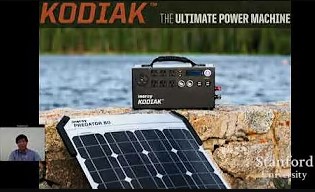
Subsequently, two entrepreneurs presented their respective implementation projects: Shawn from Energy Solar presented a bottom-up distributed renewable energy solution, launching a product portfolio ranging from portable solar power banks and 1.1-kWh emergency generators to 6-kWh whole-home energy storage systems. This addresses industry pain points such as apartment dwellers’ inability to install rooftop solar panels and the lack of grid coverage in remote areas. By rapidly penetrating the market through consumer-grade products, the company aims to replicate the leapfrog development path seen when mobile phones replaced landlines. Henry’s smart LED lighting project, meanwhile, addresses issues with traditional LEDs—such as incompatible drivers, eye-straining flicker, and electronic waste from electrolytic capacitors—by developing universal drivers and flicker-free, healthy lighting. These are paired with a tool-free, self-organizing IoT system, and the project is rapidly advancing product deployment by leveraging Hong Kong’s entrepreneurial ecosystem.
Finally, the roundtable session delved into practical challenges of cross-border entrepreneurship, including differences in product certification between China and the U.S., China’s complex multi-tiered distribution system, cross-border payment challenges, and multi-layered strategies for intellectual property protection. It also analyzed current policy incentives and industry shifts in the Chinese market.
This course is suitable for a wide range of individuals interested in the green technology sector: First, overseas green tech entrepreneurs planning to enter the Chinese market—particularly founders in the energy hardware and smart hardware sectors—who can gain practical experience in local market implementation; second, investors focused on the energy and environmental protection sectors who wish to understand the investment logic, key project evaluation criteria, and risk mitigation methods in the Chinese market; Third, professionals in the traditional energy and lighting industries seeking to transition toward clean energy and smart hardware; furthermore, operators of industrial parks and startup incubators, as well as policymakers looking to draw inspiration from Hong Kong’s startup support policies, can also gain valuable insights; finally, cross-disciplinary learners focused on environmental governance and seeking to address pollution through technology can use this course to understand the practical pathways for technology implementation.
Through this course, participants will first develop a comprehensive understanding of China’s energy and environmental protection market, clearly identify opportunities in niche sectors addressing industry pain points, and grasp the market potential of emerging fields such as distributed energy and healthy lighting. Second, they will master practical methods for cross-border green tech entrepreneurship, learning how to adapt product strategies for the Chinese market and navigate localization challenges such as multi-tiered distribution, certification differences, and cross-border payment collection. Additionally, participants will learn intellectual property protection strategies for hardware startups, utilizing multi-layered mechanisms—such as hardware encryption, software verification, and cloud-based authentication—to effectively combat plagiarism and counterfeiting. Furthermore, they will gain insight into Hong Kong’s startup support policies and tools, including R&D subsidies, patent grants, and export credit insurance, enabling them to leverage these policy benefits to reduce startup costs. Finally, you’ll gain insights into current trends in China’s green tech market from the perspectives of investors and seasoned entrepreneurs, helping you navigate policy and capital trends to inform your own startup or investment decisions.
I. Course Overview
The course begins by addressing China’s current energy and environmental challenges: China supports 21% of the world’s population with only 7% of the world’s freshwater resources, and 68% of its energy comes from highly polluting coal. This has led to severe water, soil, and air pollution—3.3 million hectares of farmland are unfit for cultivation due to pollution, 20% of the country’s soil exceeds pollution standards, nearly 300 cities suffer from severe air pollution, and over 1.6 million people die annually from breathing toxic air. Meanwhile, China’s coal reserves are projected to last only 28 years, creating a dual crisis of energy scarcity and environmental pressure. Yet these challenges have spawned immense market opportunities, with smart cities, smart buildings, and industrial IoT emerging as key focal points for policy and capital.
Subsequently, two entrepreneurs presented their respective implementation projects: Shawn from Energy Solar presented a bottom-up distributed renewable energy solution, launching a product portfolio ranging from portable solar power banks and 1.1-kWh emergency generators to 6-kWh whole-home energy storage systems. This addresses industry pain points such as apartment dwellers’ inability to install rooftop solar panels and the lack of grid coverage in remote areas. By rapidly penetrating the market through consumer-grade products, the company aims to replicate the leapfrog development path seen when mobile phones replaced landlines. Henry’s smart LED lighting project, meanwhile, addresses issues with traditional LEDs—such as incompatible drivers, eye-straining flicker, and electronic waste from electrolytic capacitors—by developing universal drivers and flicker-free, healthy lighting. These are paired with a tool-free, self-organizing IoT system, and the project is rapidly advancing product deployment by leveraging Hong Kong’s entrepreneurial ecosystem.
Finally, the roundtable session delved into practical challenges of cross-border entrepreneurship, including differences in product certification between China and the U.S., China’s complex multi-tiered distribution system, cross-border payment challenges, and multi-layered strategies for intellectual property protection. It also analyzed current policy incentives and industry shifts in the Chinese market.
II. Who Should Take This Course
This course is suitable for a wide range of individuals interested in the green technology sector: First, overseas green tech entrepreneurs planning to enter the Chinese market—particularly founders in the energy hardware and smart hardware sectors—who can gain practical experience in local market implementation; second, investors focused on the energy and environmental protection sectors who wish to understand the investment logic, key project evaluation criteria, and risk mitigation methods in the Chinese market; Third, professionals in the traditional energy and lighting industries seeking to transition toward clean energy and smart hardware; furthermore, operators of industrial parks and startup incubators, as well as policymakers looking to draw inspiration from Hong Kong’s startup support policies, can also gain valuable insights; finally, cross-disciplinary learners focused on environmental governance and seeking to address pollution through technology can use this course to understand the practical pathways for technology implementation.
III. What You Will Learn
Through this course, participants will first develop a comprehensive understanding of China’s energy and environmental protection market, clearly identify opportunities in niche sectors addressing industry pain points, and grasp the market potential of emerging fields such as distributed energy and healthy lighting. Second, they will master practical methods for cross-border green tech entrepreneurship, learning how to adapt product strategies for the Chinese market and navigate localization challenges such as multi-tiered distribution, certification differences, and cross-border payment collection. Additionally, participants will learn intellectual property protection strategies for hardware startups, utilizing multi-layered mechanisms—such as hardware encryption, software verification, and cloud-based authentication—to effectively combat plagiarism and counterfeiting. Furthermore, they will gain insight into Hong Kong’s startup support policies and tools, including R&D subsidies, patent grants, and export credit insurance, enabling them to leverage these policy benefits to reduce startup costs. Finally, you’ll gain insights into current trends in China’s green tech market from the perspectives of investors and seasoned entrepreneurs, helping you navigate policy and capital trends to inform your own startup or investment decisions.